

From 2 episodes and 4 videos
How long should I rest between sets to build muscle?
Answered by Nikkiey Stott and her guests · Updated
The short answer
Nikkiey's starting point is 60 to 90 seconds between sets for compound lifts like squats, deadlifts and presses, and about 45 to 60 seconds for isolation moves like curls. On heavier compound work she'll go up to two minutes. Above all, time it, because four or five minutes of scrolling breaks up the training effect.
Hear Nikkiey answer it
Tap play to start right where it's answered. It keeps playing while you browse.

Nikkiey on why 30 years of no-rest training held back her muscle gains
Plays from 5:28 · Video: 7 Simple Daily Habits for Losing Fat After Menopause
Two minutes for compounds, about 60 seconds for isolation, and how long rest eats time
Plays from 10:44 · Ep. 397: How Long Should Workouts Be for Women Over 40?

Why resting too long breaks the training effect, plus her timer rule for rest
Plays from 0:31 · Video: Training Rules Built for Men That Women Over 40 Should Drop
Finding the 60-second to two-minute sweet spot and cutting rest as progressive overload
Plays from 24:03 · Ep. 97: Progressive Overload for Women: What It Is and How to Do It
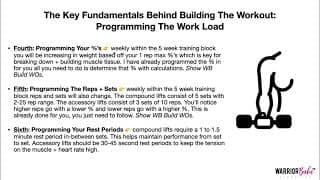
Rest periods for compound lifts versus accessory supersets in a 5-day program
Plays from 15:45 · Video: How to Write a 5-Day Lifting Program Around Your 1-Rep Max
The full answer
Nikkiey explains that rest has one job: to let your muscles recover just enough to do the next set at the same intensity. She trained for 30 years with almost no rest and says it held her back. When you skip rest, each set gets weaker, you lift less and you build less muscle. Once she started resting 60 to 90 seconds, she got stronger faster and the muscle finally came in.
The numbers shift a little across episodes, so here is the full range she gives:
- Compound lifts (squats, deadlifts, presses, rows): 60 to 90 seconds in her videos. On Ep. 397 she says two minutes is appropriate, and she takes about two minutes between heavy deadlift and hip thrust sets.
- Isolation work (curls, lateral raises): 45 to 60 seconds in one video. On Ep. 397 she says 60 to 90 seconds, leaning toward 60.
- Accessory supersets: 30 to 45 seconds, to keep tension on the muscle and your heart rate up.
The bigger problem for most women is resting too long without realizing it. Nikkiey says that checking your phone, chatting and wandering for water easily turns into four to six minutes. On Ep. 397 she points out that this alone can add 30 to 40 minutes to a session, and in her videos she says your muscles cool down and you lose the stimulus you just built. Her rule is simple: set a timer, and start the next set when it goes off, not before. She also notes that women tend to recover between efforts faster than they expect.
Rest is also something you can adjust on purpose. On Ep. 97 she describes cutting rest, for example from 90 seconds to 60, as one way to apply progressive overload, because it raises the demand on the muscle. If your workouts have felt like a lot of effort for little change, the fix may be the plan, not you.
From Nikkiey Stott and WarriorBabe's coaching. For education, not medical advice: talk to your doctor about your own health.
Women also ask
More questions →
Strength Training for Women
How should I warm up before lifting weights?
Warm up for 5 to 10 minutes, not 30, Nikkiey says. Do a few minutes of light cardio to raise your heart rate, some gentle mobility like arm circles or glute bridges, then one or two lighter, high-rep sets of your first exercise so your joints, muscles and movement pattern are ready before your working sets.
Read the answer →
Strength Training for Women
Are full body workouts better than body part splits for women over 40?
For most women over 40, Nikkiey Stott recommends full body workouts over body part splits. One exercise per muscle group, four to five days a week, spreads the work out so you recover between sessions and stay consistent. She's clear that bro splits aren't bad, though. Progressive overload is what matters most.
Read the answer →
Strength Training for Women
What is progressive overload?
Progressive overload is gradually increasing the stress you place on your muscles over time so they keep having a reason to adapt and grow. Nikkiey explains you do it by adding small amounts of weight, reps, sets, or changing tempo and rest, while sticking with the same exercises long enough to measure progress.
Read the answer →
Watch or listen in full
More on this topic → 19 min
How to Write a 5-Day Lifting Program Around Your 1-Rep Max
Video · Nov 30, 2020
 32 min
Progressive Overload for Women: What It Is and How to Do It
Episode 97 · Oct 2, 2023
 18 min
Training Rules Built for Men That Women Over 40 Should Drop
Video · Oct 14, 2026