

From 2 episodes and 2 videos
How can a woman build muscle after 50?
Answered by Nikkiey Stott and WarriorBabe's coaches · Updated
The short answer
Lift weights and eat enough to support it. Nikkiey says every woman over 50, beginner or advanced, should be weight training. Member stories describe building muscle in a planned build phase: eating in a calorie surplus, accepting some scale gain, pushing heavier lifts, then cutting to reveal the muscle underneath.
Hear it answered
Tap play to start right where it's answered. It keeps playing while you browse.

Nikkiey on why every woman over 50 should be weight training
Plays from 16:01 · Video: Women's Fitness Q&A: Macros, Soreness and Vegetarian Protein

How Cheryl ate up to 3,000 calories at 57 and built muscle through builds and cuts
Plays from 4:38 · Video: WarriorBabe's Story: Eating More and Lifting After 40
Nikkiey on eating in a surplus to build and not panicking when the scale rises
Plays from 32:06 · Video: Women's Fitness Q&A: Macros, Soreness and Vegetarian Protein
Luisa, 51, on her coach pushing her to lift heavier during a build
Plays from 36:09 · Ep. 261: How a 51-Year-Old Woman Got Strong Without Starving Herself
The full answer
Start with the lifting. On The WarriorBabe Show's Q&A, Nikkiey says all of her 50-plus women should be weight training, whether they're beginners or advanced, and that she has women in their late 50s and 60s in her programs doing exactly that. She ties it to bone density and staying strong as you age, drawing on her years as an ER nurse seeing women over 50 come in with hip fractures. Her point is that it matters in your 40s, 50s, 60s and 70s.
Then feed the muscle. One WarriorBabe coach describes Cheryl, who arrived at 57 under-eating and overtraining. Over nine months to a year they worked her up to around 3,000 calories. She gained about 20 pounds while building muscle, then did a cut and looked more toned. She chose another build, then cut again, and gained even more muscle. Nikkiey explains that once you reach maintenance, a build means going into a surplus, adding roughly 300 to 500 calories, and that building is a whole different mindset because the scale will go up. She shares that her own weight went from 140 down to the low 120s and back up to around 145 to 150, yet her body looks completely different.
Lift heavier than feels comfortable. Luisa, 51, was once told she was too old to build muscle. Now in a build phase doing deadlifts, she shares that her coach pulled up her numbers and told her she was stronger than she thought and could lift more. On Ep. 170, Nikkiey shares that Lisa, starting around 50, dropped from about 153 to 131 pounds and then kept losing body fat while adding muscle over the following years.
If you've been eating too little and doing too much, that's not a personal failure. It's a plan that wasn't built for muscle. If you have medical conditions or concerns, work with your doctor as you change your training and eating.
From WarriorBabe's coaches (how we write our answers). For education, not medical advice: talk to your doctor about your own health.
Women also ask
More on Building Muscle After 40 →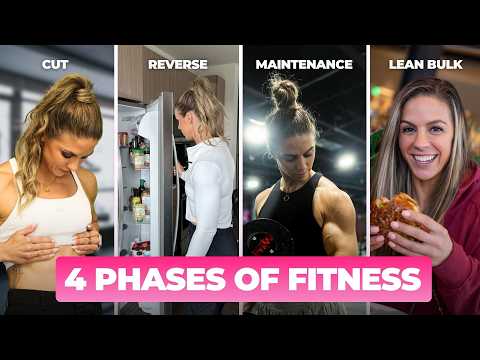
Building Muscle After 40
Why does the scale go up during a muscle-building phase?
The scale goes up during a muscle-building phase because you're eating more food, and food has weight. The extra carbs are stored as glycogen, which holds about three to four grams of water per gram. You're also adding muscle, and Nikkiey says a small amount of fat comes with it. That is normal and expected.
Read the answer →

Building Muscle After 40
Is it normal to gain some fat when building muscle?
Yes. On The WarriorBabe Show, coaches and guests agree that some fat usually comes along when you build muscle. That is the cost of a build. The goal is to maximize muscle and minimize fat. Nikkiey adds that much of the scale increase is muscle, water and glycogen, not just fat.
Read the answer →

Building Muscle After 40
Why is muscle so important for women over 40?
Muscle matters after 40 because it drives your metabolism and protects your long-term health. Nikkiey explains that women lose about 3 to 8 percent of muscle per decade after 30, and less muscle means a slower metabolism. She calls muscle the engine of your metabolism and, borrowing Dr. Gabrielle Lyon's phrase, the organ of longevity.
Read the answer →
Building Muscle After 40
How many calories should I eat to build muscle after 40?
One WarriorBabe coach says most women over 40 who lift weights three to four days a week need somewhere between 1,700 and 2,200 calories a day, not 1,200 or 1,400. Where you land in that range depends on your body. Eating too little doesn't just burn fat. It breaks down the muscle you're trying to build.
Read the answer →

Building Muscle After 40
How do I build muscle after menopause?
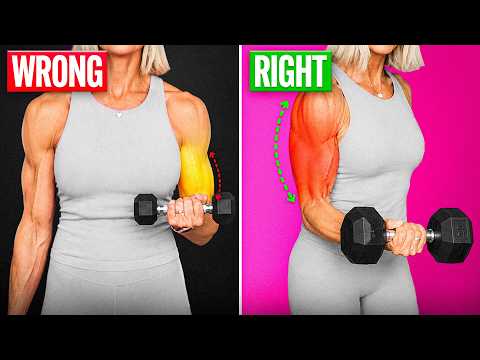
Build muscle after menopause by lifting challenging weights about three days a week and getting progressively stronger over time. Nikkiey recommends six compound dumbbell moves: goblet squat, Romanian deadlift, bent over row, overhead press, chest press and hip thrust. Split them into two short workouts, rest between sessions, and eat enough protein to support growth.
Read the answer →

Building Muscle After 40
Can I build muscle in a calorie deficit?
Yes, you can build some muscle in a calorie deficit, especially if you're newer to strength training or have more fat to lose, but not as much as at maintenance or in a surplus. Nikkiey explains that a modest deficit, enough protein and a real lifting program work. Crash-level calories like 1,200 don't.
Read the answer →
Watch or listen in full
More on this topic →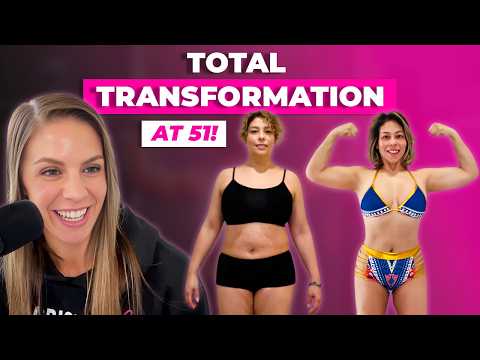 49 min
How a 51-Year-Old Woman Got Strong Without Starving Herself
Episode 261 · May 23, 2025
 38 min
Women's Fitness Q&A: Macros, Soreness and Vegetarian Protein
Video · Jan 18, 2021
 6 min
WarriorBabe's Story: Eating More and Lifting After 40
Video · Apr 22, 2026