

From 4 episodes and 3 videos
Why does the scale go up during a muscle-building phase?
Answered by Nikkiey Stott and her guests · Updated
The short answer
The scale goes up during a muscle-building phase because you're eating more food, and food has weight. The extra carbs are stored as glycogen, which holds about three to four grams of water per gram. You're also adding muscle, and Nikkiey says a small amount of fat comes with it. That is normal and expected.
Hear Nikkiey answer it
Tap play to start right where it's answered. It keeps playing while you browse.
Nikkiey breaks down food weight, glycogen and water during a lean bulk
Plays from 16:28 · Ep. 377: Lean Bulk for Women: Why the Scale Goes Up When You Eat More
A guest on why weight and fat aren't the same thing during a bulk
Plays from 2:36 · Ep. 112: How to Stop Yo-Yo Dieting: Macros, Bulking and Mindset
Nikkiey on weighing 15 pounds more than in 2015 and looking completely different
Plays from 26:37 · Ep. 52: Why Build Muscle After 40: Mistakes Women Should Avoid
Leah's coach on why gaining some weight shows she's fueling muscle
Plays from 29:35 · Ep. 355: Why Eating More Helped Me Lose Fat After 40

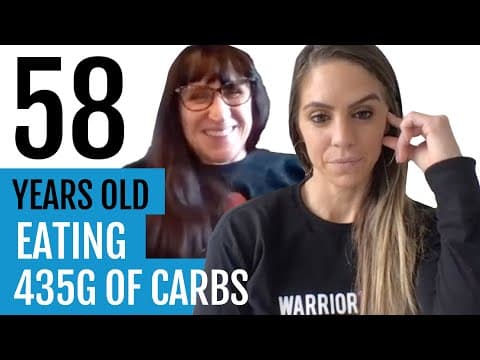
Cheryl, 57, on weighing weekly and not letting 150 scare her
Plays from 10:22 · Video: Building Muscle at 57 Eating 435g of Carbs: Cheryl's Story
The full answer
On Ep. 377, Nikkiey explains that the scale shows you one number but not what that number is made of. A higher reading during a lean bulk is mostly the physical mass of the food you ate plus the water stored with glycogen. That is what people mean by water weight, and it is not fat. She also asks you to stop weighing yourself at the end of the day. On Ep. 52, she points out that muscle is denser than fat and takes up less space. She went from 140 pounds in 2015 to 155 pounds and looks completely different, with a smaller waist and smaller clothes.
In a build, a rising scale is the point. On Ep. 112, a guest explains that most women have collapsed weight and fat into one idea, but you can gain or lose weight without any fat entering or leaving your body. The goal of a bulk is to add muscle. Some fat comes along with it, so you aim to maximize muscle and minimize fat. On Ep. 355, Leah's coach told her that gaining some weight confirms she is eating enough to fuel the muscle she is building. After Leah had gained only one pound, her coach warned that she would slide back to maintenance. In a video on build phases, Nikkiey is upfront that you will gain weight and look a little softer for a while. She says this is temporary, usually three to six months and sometimes a year. She adds that a build isn't the right first step if you still need to lose 30 or more pounds.
To get through it, Nikkiey says the women who do a lean bulk well track more than the scale:
- strength and performance numbers
- measurements
- progress photos and visible definition
Cheryl, a 57-year-old client, stopped weighing every day and now weighs only on Saturdays. She decided in advance that hitting 150 wouldn't scare her. When the scale jumped, she looked at her water intake instead of cutting food, and the next week she was down two pounds.
From Nikkiey Stott and WarriorBabe's coaching. For education, not medical advice: talk to your doctor about your own health.
Women also ask
More questions →
Building Muscle After 40
How do I go from a building phase into a fat loss phase?
Nikkiey says to lower calories slowly rather than all at once, and to keep protein the same or nudge it up so you protect the muscle you just built. Track progress with photos instead of the scale. Expect your strength to dip a little, and expect some hunger. A small protein increase often helps.
Read the answer →

Building Muscle After 40
Why is muscle so important for women over 40?
Muscle matters after 40 because it drives your metabolism and protects your long-term health. Nikkiey explains that women lose about 3 to 8 percent of muscle per decade after 30, and less muscle means a slower metabolism. She calls muscle the engine of your metabolism and, borrowing Dr. Gabrielle Lyon's phrase, the organ of longevity.
Read the answer →

Building Muscle After 40
How long does it take to build muscle after 40?
Think in years, not weeks. Nikkiey says it took her a solid three to four years to build solid muscle, and she suggests women expect their journey to take 18 months or more. Visible changes may show in six months to two years depending on where you start, if training, protein and recovery stay consistent.
Read the answer →
Watch or listen in full
More on this topic → 35 min
Lean Bulk for Women: Why the Scale Goes Up When You Eat More
Episode 377 · Jul 10, 2026
 34 min
Building Muscle at 57 Eating 435g of Carbs: Cheryl's Story
Video · Dec 8, 2020
 46 min
Why Eating More Helped Me Lose Fat After 40
Episode 355 · Apr 24, 2026