

From 4 videos
How many calories should I eat to build muscle after 40?
Answered by Nikkiey Stott and her guests · Updated
The short answer
Nikkiey says most women over 40 who lift weights three to four days a week need somewhere between 1,700 and 2,200 calories a day, not 1,200 or 1,400. Where you land in that range depends on your body. Eating too little doesn't just burn fat. It breaks down the muscle you're trying to build.
Hear Nikkiey answer it
Tap play to start right where it's answered. It keeps playing while you browse.
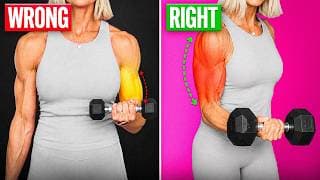
Nikkiey gives the protein and calorie targets for women over 40 who lift
Plays from 9:38 · Video: 7 Lifting Mistakes That Cause Injury in Women Over 40

Why more food, not less, lets your muscles rebuild and metabolism recover
Plays from 2:45 · Video: Why Fitness Content Fails Women Over 40: 5 Lies

How years of 1,200-calorie dieting eats away your muscle and metabolism
Plays from 4:57 · Video: Body Recomposition After 40: The 4 Steps That Work

A 70-year-old client eating 1,930 calories and 130g protein without gaining
Plays from 23:17 · Video: Strength Training at 70 With Knee Replacements and Scoliosis
The full answer
Nikkiey explains that muscle is your metabolism, so when you eat too little your body starts breaking down muscle for energy. After years at 1,200 calories, your metabolism downshifts to match what you eat, holds on to fat, and leaves you nowhere left to cut. She lived this herself: training hard, eating almost nothing, and getting heavier and softer while blaming her own willpower. The problem was the advice, not her. The women WarriorBabe sees struggle most with body recomposition are almost never the ones eating too much. They're the ones who have under-eaten for years.
Calories are only half of it. Nikkiey recommends pairing them with protein:
- 0.7 to 1 gram of protein per pound of your goal body weight. Aiming for 140 pounds means 100 to 140 grams a day.
- In her four-step recomposition checklist she puts it as 100 grams minimum, spread across your meals.
- Lift heavy compound movements three to four days a week, then recover with rest days, sleep and walking.
She also warns against copying someone else's "what I eat in a day." A plan built for a 28-year-old influencer has nothing to do with a 53-year-old woman in perimenopause or postmenopause who just started lifting. That's why the range is a starting point, adjusted to your body.
The fear of eating more is real, and Nikkiey says every woman she's coached through it has had that moment of looking at her plate and expecting to gain. Then, six weeks later, her clothes are looser. One real example: Julie, a 70-year-old WarriorBabe client, eats four meals a day, about 1,930 calories and 130 grams of protein, stacks her carbs around her morning workout, and isn't gaining weight. She says protein helps her most because it keeps her full. Nikkiey frames this as a six to 18 month rebuild, and because you build it rather than starve for it, the results stay.
From Nikkiey Stott and WarriorBabe's coaching. For education, not medical advice: talk to your doctor about your own health.
Women also ask
More questions →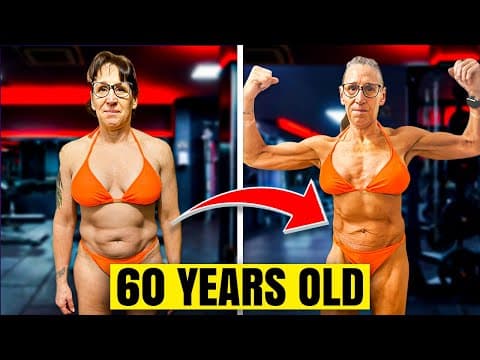
Building Muscle After 40
How long does body recomposition take after 40?
Nikkiey frames body recomposition after 40 as a rebuild of six to 12 to 18 months, not a 30-day challenge. You usually feel changes in weeks one to four, see them in months two to three, and by month six the change is undeniable. Client stories on the show took one and a half to two and a half years.
Read the answer →

Building Muscle After 40
Can you build muscle at 70?
Yes. The WarriorBabe Show features two 70-year-old women doing exactly that. Peggy's scale shows about four pounds more muscle, and she carries her 11-foot paddleboard to the lake alone. Julie, who has two partial knee replacements and scoliosis, gained muscle and strength in four months by lifting weights and eating more food.
Read the answer →
Building Muscle After 40
Why does the scale go up during a muscle-building phase?
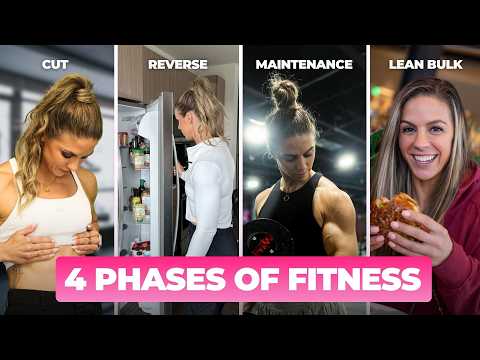
The scale goes up during a muscle-building phase because you're eating more food, and food has weight. The extra carbs are stored as glycogen, which holds about three to four grams of water per gram. You're also adding muscle, and Nikkiey says a small amount of fat comes with it. That is normal and expected.
Read the answer →
Watch or listen in full
More on this topic → 18 min
7 Lifting Mistakes That Cause Injury in Women Over 40
Video · Sep 4, 2026
 19 min
Body Recomposition After 40: The 4 Steps That Work
Video · Oct 7, 2026
 15 min
Why Fitness Content Fails Women Over 40: 5 Lies
Video · Aug 28, 2026