

 1 hr 1 min
Early Perimenopause Signs Women Over 40 Should Know
With Dr. Jolene Brighten
37 episodes
From Nikkiey Stott and the WarriorBabe coaching team · Updated Oct 25, 2026
You told your doctor you're exhausted, sleeping badly, gaining weight for no clear reason and riding a mood roller coaster, and you heard that your labs are normal or that it's just your age. Maybe you've also changed your body and still don't like what you see in the mirror. Or you've assumed your fertility is fine because your period still shows up. This hub gathers the episodes of The WarriorBabe Show where Nikkiey Stott and her guests take on the health side of getting older as a woman: talking to doctors, hormones and testing, fertility, body image and mental health.
1 hr 1 minWith Dr. Jolene Brighten
 43 min
With Dr. Stephen Cabral
 38 min
With Karena Dawn
 32 min
Episode 290 · Sep 1, 2025
The show's core point of view is that normal is not the same as optimal. Nikkiey draws on her nursing background and nine years in healthcare, and she is clear that she isn't anti-doctor. Her view is that standard lab ranges are built on population averages and that most primary care physicians get little training in nutrition, hormones and metabolism. In What Lab Tests Should Women Over 40 Ask Their Doctor For? and Normal Labs but Still Feel Awful? What to Ask Your Doctor, she gives you specific labs to request. She also suggests keeping a weekly symptom log so you walk in with evidence, and she reminds you that you can get a second opinion or change doctors. In Why Do I Feel Off When I'm Doing Everything Right? she shares her own experience of finding her thyroid, testosterone and DHEA low and her cortisol elevated. Janet Smith tells a similar story: a standard panel said she was fine, and a full panel a year later showed her testosterone had tanked.
Perimenopause and fertility get the same honest treatment. Dr. Jolene Brighten explains why she sees progesterone as the first hormone to decline, sometimes from the mid-thirties, and why she doesn't believe perimenopause is something you just have to ride out. Dr. Stephen Cabral reads Nikkiey's at-home hormone lab live and explains what each marker means. Dr. Jaime Knopman's message is that menses does not equal motherhood, and Nikkiey walks through her own experience in What Is the Egg Freezing Process Really Like? Kim Vopni covers the pelvic floor changes many women are told to simply accept.
The show treats body image and mental health as part of your physical health, not an afterthought. Dr. Rady Rahban explains why he sees plastic surgery as an adjunct to exercise, eating well, hydration and rest, never a replacement for them. Melissa Ambrosini shares how to handle the inner critic. Why Changing Your Body Can Feel Like Grief names the emotional weight of letting go of who you used to be. Karena Dawn tells her story of growing up with a mother diagnosed with schizophrenia, surviving her own depression and finding her way back through movement.
Where to start depends on what brought you here. If you feel dismissed by your doctor, begin with Normal Labs but Still Feel Awful? and Early Perimenopause Signs Women Over 40 Should Know. If the struggle is in the mirror, start with Plastic Surgery, Body Image and Self-Worth After 40. If you're carrying something heavier, listen to Karena Dawn's episode. Across all of them, the message is the same: you're not crazy, lazy or broken, and you don't have to break before you deserve support.

Women's Health & Aging
Yes. Nikkiey explains that strength training puts stress on your bones, which triggers them to rebuild stronger and denser, raising bone mineral density and lowering osteoporosis risk as estrogen drops in menopause. On the show, she and guest Sal Di Stefano agree that walking and cardio don't come close to resistance training for bone.
Read the answer →
Women's Health & Aging
Yes, according to several women on The WarriorBabe Show who did it. Johanna lifts three days a week after two total knee replacements and says she has no programming limitations. Peggy started about four to five months after her surgeries with one modified session a week. Follow your surgeon's guidance and modify every movement.
Read the answer →
Women's Health & Aging
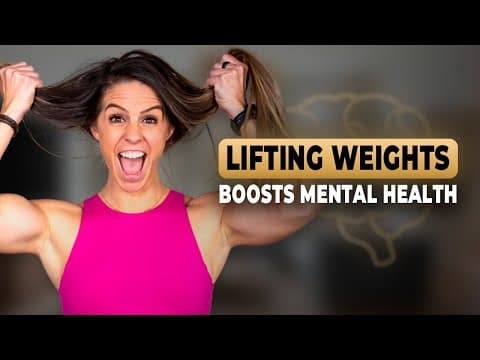
Yes. On The WarriorBabe Show, Nikkiey explains that lifting gives the stress your body carries somewhere to go, triggers endorphins she calls the brain's natural antidepressants, and builds confidence every time you lift heavier. She also cautions that not every way of exercising is good for your mind, especially when your training is driven by guilt.
Read the answer →

Women's Health & Aging
Don't accept "it's just aging" or "it's stress" without data. Nikkiey says to push back politely and firmly, arrive with a weekly symptom log and a list of questions and tests, and remember you can get a second opinion or change doctors if yours won't engage.
Read the answer →
 19 min
Episode 408 · Oct 26, 2026
 57 min
Episode 384 · Aug 3, 2026
 36 min
Episode 375 · Jul 3, 2026
 31 min
Episode 373 · Jun 26, 2026
 37 min
Episode 367 · Jun 5, 2026
 55 min
With Dr. Rady Rahban
 26 min
Episode 345 · Mar 16, 2026
 31 min
With Dr. Jaime Knopman
 45 min
With Scott Chaverri
 29 min
Episode 326 · Jan 9, 2026
 26 min
Episode 297 · Sep 26, 2025
 50 min
With Maggie Topham
Nikkiey Stott explains that standard lab ranges are built on population averages that include people who are already unhealthy, so in range does not mean optimal. She also points out that most primary care physicians get very little training in nutrition, hormones and metabolism.
In What Lab Tests Should Women Over 40 Ask Their Doctor For?, Nikkiey suggests a comprehensive hormonal panel (full thyroid, sex hormones, fasting insulin and HOMA-IR, DHEA-S and cortisol), a baseline DEXA scan well before 65, and metabolic markers like ApoB, high-sensitivity CRP and homocysteine. She also encourages a proactive perimenopause conversation that includes HRT.
Dr. Jolene Brighten explains that progesterone often declines first, which can show up as worse PMS, irritability and waking at 4 or 5 a.m. before your period, sometimes starting in your mid-thirties. Hatty McCafferty adds sleep disruption between 1 and 3 a.m., skin changes, digestive shifts and fatigue, often before your cycle changes.
Dr. Jaime Knopman's core message is that menses does not equal motherhood. She recommends making fertility planning part of your OBGYN visits and asking for an evaluation even when you're told you're young enough to wait.
Dr. Rady Rahban sees surgery as an adjunct to exercise, eating well, hydration and rest, not a replacement. Before booking anything, he suggests asking who you're doing it for and where you are in your journey.
Nikkiey explains that mental health is now the number one reason people work out, and that consistent, moderate exercise helps regulate cortisol. She also warns against the guilt spiral after a missed workout and using exercise to earn food, and Karena Dawn shares resources like the Crisis Text Line and NAMI support groups.