

From 2 videos
What is the best diet for women over 40 to lose weight?
Answered by WarriorBabe's coaches · Updated
The short answer
The approach WarriorBabe coaches rank highest for women over 40 is macro-based nutrition paired with strength training: a protein target of roughly 0.7 to 1 gram per pound of goal body weight, resistance training three to four days a week, no foods eliminated and no eating windows. It scores 27 out of 30 on muscle, hormones and sustainability.
Hear it answered
Tap play to start right where it's answered. It keeps playing while you browse.

Why macro-based eating plus strength training scores highest for women over 40
Plays from 15:45 · Video: Keto, Fasting, OMAD or Macros: Best Diet for Women Over 40

Where the Mediterranean diet falls short on protein after 40
Plays from 16:25 · Video: Best Diet for Women Over 40? Popular Diets Ranked
Why keto works short term, then stalls women over 40
Plays from 10:26 · Video: Best Diet for Women Over 40? Popular Diets Ranked
Why eating one meal a day costs muscle and spikes cortisol after 40
Plays from 1:15 · Video: Keto, Fasting, OMAD or Macros: Best Diet for Women Over 40
The full answer
One WarriorBabe coach ranks six popular weight loss methods on three questions that matter after 40. Does it preserve muscle, which she calls your metabolism? What does it do to cortisol and insulin, which she says decide where fat gets stored? And can you actually sustain it? Macro-based eating wins, she explains, because every meal is built around a protein target and it is paired with progressive resistance training. You are not just preventing muscle loss but building new lean tissue that raises your resting metabolic rate. She is upfront that this is what WarriorBabe does, and asks you to run it through the same criteria yourself.
Here is where the coaches say other approaches fall short:
- Keto works short term, but staying under 30 grams of carbs can stress the thyroid, hurt training and recovery, and cost muscle along with fat, so women often plateau hard. In her words, that is a physiology problem, not a willpower problem.
- OMAD gives you one shot at muscle protein synthesis instead of three or four, and going 20-plus hours without food is a big cortisol trigger. It scores 2 out of 10 for muscle.
- Intermittent fasting limits how you spread protein across the day, and calorie restriction, she says, actively destroys muscle.
- Plant-based scores 17 out of 30. It is good for inflammation, but hitting protein is hard and the gap catches up over years.
The Mediterranean diet gets real credit as a whole-food foundation, but the coach calls it an incomplete blueprint because protein is almost an afterthought. She says women in perimenopause or menopause need roughly 1 gram per pound of body weight, slightly different framing from the 0.7 to 1 gram per pound of goal weight used elsewhere. Intuitive high-protein, whole-food eating also lands in her top tier, and the aim of tracking macros is to learn how to eat so you can eventually stop tracking and maintain. If thyroid or menopause symptoms are part of your picture, work with your doctor alongside any plan.
From WarriorBabe's coaches (how we write our answers). For education, not medical advice: talk to your doctor about your own health.
Women also ask
More on Diets, Fasting & Diet Culture →Diets, Fasting & Diet Culture
Is OMAD a good way for women over 40 to lose weight?
One WarriorBabe coach says no. In her ranking of six popular weight loss methods for women over 40, OMAD came last, scoring 7 out of 30. One meal gives you one shot at muscle protein synthesis instead of three or four, 20-plus hours without food is a big cortisol trigger, and almost no one can sustain it.
Read the answer →
Diets, Fasting & Diet Culture
Is keto good for women in perimenopause?
Not as a long-term plan, in one WarriorBabe coach's view. She says keto can improve insulin sensitivity in the short term, but chronic carb restriction can raise cortisol, which already runs hotter in perimenopause, may slow thyroid conversion, and usually skimps on protein. She scores it 14 out of 30 and prefers a higher-fat, protein-forward macro split.
Read the answer →
Diets, Fasting & Diet Culture
Where did the 1,200-calorie diet come from?
The 1,200-calorie diet traces back to 1918, when physician Lulu Hunt Peters published one of the first popular diet books and told women to eat about 1,200 calories a day. One WarriorBabe coach explains it was a round number, not metabolic research. Medical guidelines later used 1,200 as a supervision floor, and that floor got repackaged as a target.
Read the answer →
Diets, Fasting & Diet Culture
Why does the weight come back after keto?
Most of the fast weight you lose on keto is water, not fat. Nikkiey explains that carbs hold on to water in your body, so cutting them drops the scale quickly. The moment you eat carbs again, that water returns. Because you can't avoid carbs forever, the weight comes back.
Read the answer →
Diets, Fasting & Diet Culture
Can yo-yo dieting cause belly fat after 40?
Nikkiey says it can. On Ep. 179 she explains that years of losing and regaining the same weight push cortisol up, and elevated cortisol leads to more fat storage, especially around the abdomen. Many women in their 40s and 50s blame menopause for that belly fat, when yo-yo dieting can be one factor.
Read the answer →
Diets, Fasting & Diet Culture
Why am I not losing weight on 1,200 calories?
Eating 1,200 calories is often too little, not too much. Dr. Stacy Sims explains it sits around an average resting metabolic rate, so your body treats it as a threat, conserves energy and breaks down lean mass. Long-term dieting also adapts your metabolism down. Before cutting further, check your tracking is accurate.
Read the answer →
Watch or listen in full
More on this topic →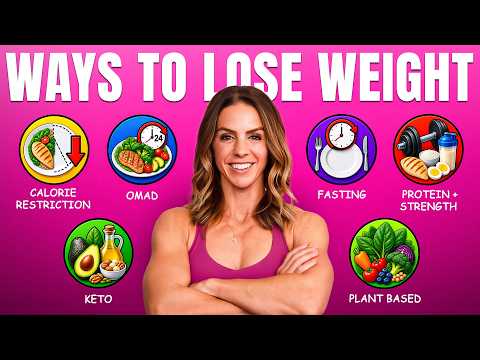 25 min
Keto, Fasting, OMAD or Macros: Best Diet for Women Over 40
Video · Sep 9, 2026
 23 min
Best Diet for Women Over 40? Popular Diets Ranked
Video · May 2, 2026