

From 2 episodes and 4 videos
How do I choose a weight loss program that actually works for women over 40?
Answered by Nikkiey Stott and WarriorBabe's coaches · Updated
The short answer
Run any program through five questions before you pay: Does it have a hard deadline? Does it start with restriction? Does it include real progressive strength training? Does it set a protein target based on your body? Is there a plan for after it ends? A program that fails these is built for a finish line, not your life.
Hear it answered
Tap play to start right where it's answered. It keeps playing while you browse.

A WarriorBabe coach on the five questions to ask before buying any program
Plays from 17:33 · Video: 5 Weight Loss Rules That Backfire on Women Over 40
Why the six-week Instagram shred challenge hits every red flag on the list
Plays from 18:55 · Video: 5 Weight Loss Rules That Backfire on Women Over 40
Nikkiey on why six-week programs lead to yo-yo dieting and regain
Plays from 19:54 · Ep. 133: Goals vs Systems: Why You're Not Reaching Fitness Goals

Raven on her eight-week program working, then leaving her with no next step
Plays from 1:47 · Video: Why Your Results Stop After an 8-Week Program: Raven's Story

Nikkiey on why 30- or 60-day programs aren't long enough to change habits
Plays from 8:59 · Video: How to Break Bad Eating Habits Using the Habit Loop
The full answer
One WarriorBabe coach explains why each question matters. If the first move is eat less, ask how that's different from everything you've already tried. Strength training should mean progressive overload with real weights, not toning, bands or 50-rep bodyweight sets, because muscle is the engine that changes your body. Protein should be an actual number based on your weight and goals; she puts it at 0.7 to 1 gram per pound of goal body weight, and says if they never asked what you weigh, body composition was never part of the plan. Then ask what happens on day 32 of the 30-day challenge. If the answer is buy the next round, you've found the business model. She runs the popular six-week Instagram shred through the list (1,200 calories, HIIT, one meal plan for everyone) and it fails every question. She also says to put WarriorBabe through the same five questions, because a company worth your money will be happy to answer them.
The deadline question matters most. On Ep. 133, Nikkiey explains that when you solve problems at the results level, you only solve them temporarily, which is why people yo-yo from program to program and regain the weight once six weeks are up. In her habit loop video, she adds that 30 or 60 days usually isn't enough time to change a habit. If you want health and muscle for life, she says, there is no finish line, so build the systems now.
The women who've lived it say the same. Raven had an eight-week coach with tailored macros and a meal plan, and it worked, until it ended and she had nothing to turn to. BillieJo found her friend had the exact same plan from the same trainer; what she needed was to learn how to do it herself, including how macros change as goals change. And if coaching isn't in the budget yet, Debbie suggests on Ep. 368 starting with the free programs Nikkiey offers, seeing that the approach works for you, then joining when you can.
From WarriorBabe's coaches (how we write our answers). For education, not medical advice: talk to your doctor about your own health.
Part of
Diets, Fasting & Diet Culture →Women also ask
More questions →
Diets, Fasting & Diet Culture
How do I stop losing and regaining the same 10 pounds?
Stop treating it as a 30-day diet and start building habits, beliefs and skills that outlast the plan. Nikkiey explains that the same 10 pounds keep coming back when old habits return after a diet ends, when you quit before your body responds, and when nobody teaches you how to move from fat loss into maintenance.
Read the answer →
Diets, Fasting & Diet Culture
Where did the 1,200-calorie diet come from?
The 1,200-calorie diet traces back to 1918, when physician Lulu Hunt Peters published one of the first popular diet books and told women to eat about 1,200 calories a day. One WarriorBabe coach explains it was a round number, not metabolic research. Medical guidelines later used 1,200 as a supervision floor, and that floor got repackaged as a target.
Read the answer →
Diets, Fasting & Diet Culture
Why am I not losing weight on 1,200 calories?
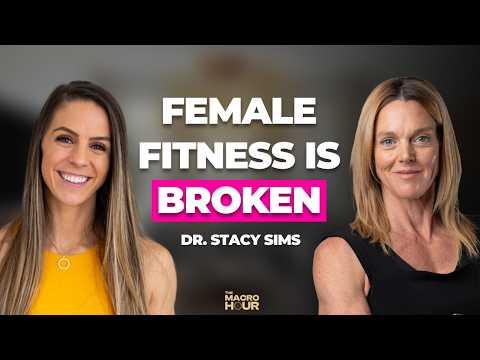
Eating 1,200 calories is often too little, not too much. Dr. Stacy Sims explains it sits around an average resting metabolic rate, so your body treats it as a threat, conserves energy and breaks down lean mass. Long-term dieting also adapts your metabolism down. Before cutting further, check your tracking is accurate.
Read the answer →
Watch or listen in full
More on this topic → 5 min
Why Your Results Stop After an 8-Week Program: Raven's Story
Video · Jul 21, 2020
 16 min
How to Break Bad Eating Habits Using the Habit Loop
Video · Nov 2, 2020
 22 min
5 Weight Loss Rules That Backfire on Women Over 40
Video · Sep 11, 2026