

From 2 videos
Is carb cycling a good idea for women over 40 who want to lose weight?
Answered by Nikkiey Stott · Updated
The short answer
For most women over 40, Nikkiey Stott says carb cycling isn't her go-to. She prefers the same macros every day so your body recognizes what you're doing. She says the constant swings in calories can be too much for many older women, though it does work for a small group.
Hear it answered
Tap play to start right where it's answered. It keeps playing while you browse.

Nikkiey on why she prefers the same macros daily over carb cycling
Plays from 19:11 · Video: Should Women Over 40 Try Carb Cycling? Live Macro Q&A

Nikkiey's straight-line analogy for why jumping between diets slows results
Plays from 10:23 · Video: How to Think Like a Champion to Reach Your Fitness Goals
How long to stay on the same macros and when it's time to adjust
Plays from 13:44 · Video: Should Women Over 40 Try Carb Cycling? Live Macro Q&A
The full answer
Nikkiey is clear that she doesn't use carb cycling herself. With carb cycling, your calories come down, go up, come down and go up again. She compares it to sending Morse code to your body: it's doing too much, and your body doesn't recognize what you're trying to do. Hitting the same consistent numbers every day, then adjusting as your body adapts, is what she firmly believes in.
She also adds some nuance. She says her views have changed over the years and that saying she's totally against it would be wrong. Everybody's body is different, so what works for one woman may not work for another, and some bodies may respond better to another strategy. In her experience, though, only a very small group of the women she's coached has responded to carb cycling.
So what do you do when progress slows? Nikkiey says to check all your data points first: photos, measurements and the scale. Some women change in measurements but not in photos, or the reverse. If any of those is still moving, she's had women stay on the same macros for two months and keep getting results. If nothing has moved for a long time, that's a sign your body has adjusted to that intake and your numbers need to change. After a long stretch on the same macros, she also mentions a diet break, where you raise your calories well above your usual intake for one full week.
The bigger point is focus. Nikkiey describes your goal as a straight line right in front of you. Veering off into keto, carb cycling, cutting calories or copying someone else is what turns it into a years-long winding road. If you haven't gotten results yet, the problem usually isn't you. You need one plan you stick with.
From WarriorBabe's coaches (how we write our answers). For education, not medical advice: talk to your doctor about your own health.
Women also ask
More on Diets, Fasting & Diet Culture →
Diets, Fasting & Diet Culture
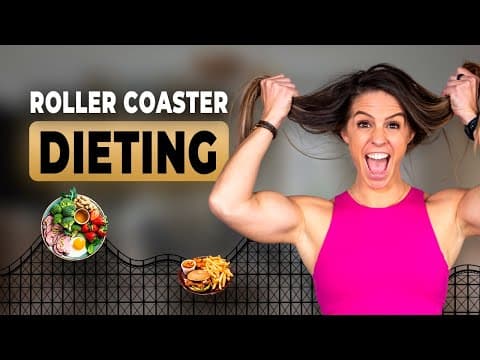
Do I need to eat every 2 to 3 hours to boost my metabolism?
No. On The WarriorBabe Show, Nikkiey and her co-hosts say there's no research showing that eating every two to three hours boosts your metabolism, and it doesn't shut off between meals. Age, muscle mass and activity level matter more. What counts is total calories, macros and food quality, eaten on a schedule you can keep.
Read the answer →
Diets, Fasting & Diet Culture
Can yo-yo dieting cause belly fat after 40?
Nikkiey says it can. On Ep. 179 she explains that years of losing and regaining the same weight push cortisol up, and elevated cortisol leads to more fat storage, especially around the abdomen. Many women in their 40s and 50s blame menopause for that belly fat, when yo-yo dieting can be one factor.
Read the answer →
Diets, Fasting & Diet Culture
Will eating fruit make me gain fat?
No. Nikkiey's position is that you won't get fat from eating fruit. Fat gain comes from eating too much of the food that's clearly bad for you, not from the sugar in fruit. She says sugar is fine before and after workouts, and throughout the day too, as long as your overall choices are good.
Read the answer →

Diets, Fasting & Diet Culture
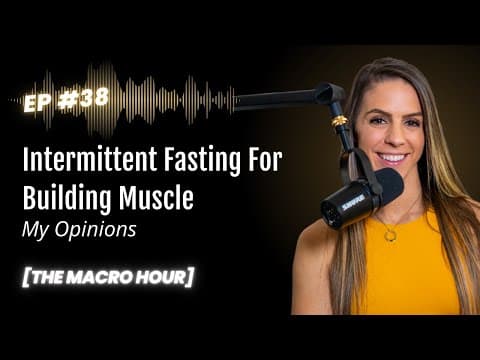
Why is it so hard to stop dieting after years of trying to lose weight?
After years of dieting, it stops being something you do and becomes who you are. Nikkiey explains that the structure felt safe, productive and protective, even though it was built on restriction, so walking away can feel like losing part of your identity. Add the fear of losing control, and letting go feels like jumping off a cliff.
Read the answer →
Diets, Fasting & Diet Culture
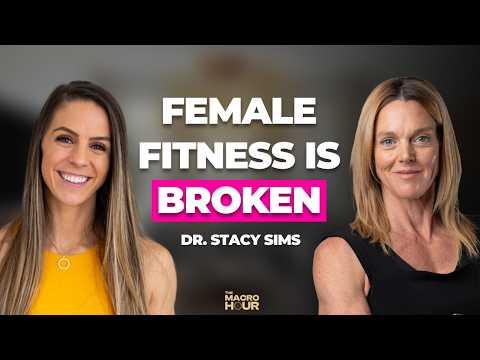
Can you build muscle while intermittent fasting?
Yes, but it's harder, and Nikkiey doesn't think it's the best route. She explains that intermittent fasting can work for muscle if you hit your calories, prioritize protein, keep your fast to roughly the overnight hours, and train inside your eating window. Long fasts without enough protein work against muscle growth.
Read the answer →
Diets, Fasting & Diet Culture
Why am I not losing weight on 1,200 calories?
Eating 1,200 calories is often too little, not too much. Dr. Stacy Sims explains it sits around an average resting metabolic rate, so your body treats it as a threat, conserves energy and breaks down lean mass. Long-term dieting also adapts your metabolism down. Before cutting further, check your tracking is accurate.
Read the answer →
Watch or listen in full
More on this topic → 18 min
How to Think Like a Champion to Reach Your Fitness Goals
Video · Jul 12, 2020
 32 min
Should Women Over 40 Try Carb Cycling? Live Macro Q&A
Video · Oct 29, 2020