

From 2 episodes
Do I have to track macros to build muscle?
Answered by Nikkiey Stott and her guests · Updated
The short answer
No. Nikkiey says you don't have to track macros to build muscle, but you do have to eat more protein, because you cannot build what you cannot fuel. Tracking is the more precise tool: on Ep. 5 she explains it beats calorie counting alone because it shows the balance of protein, carbs and fats.
Hear Nikkiey answer it
Tap play to start right where it's answered. It keeps playing while you browse.
Nikkiey on why tracking is optional but more protein is not
Plays from 18:47 · Ep. 386: Can't Lose Fat Over 40? Why Muscle Is the Missing Piece
Why macro tracking beats calorie counting when building muscle
Plays from 4:25 · Ep. 5: Macros vs Calories: Which Is Better for Building Muscle?
Why your pre- and post-workout meals are the first to plan
Plays from 7:25 · Ep. 5: Macros vs Calories: Which Is Better for Building Muscle?
Nikkiey on fueling muscle protein synthesis with enough protein
Plays from 18:14 · Ep. 386: Can't Lose Fat Over 40? Why Muscle Is the Missing Piece
The full answer
On Ep. 386, Nikkiey describes a familiar pattern for women over 40: aggressive calorie cuts, lots of cardio, and light weights out of fear of getting bulky. She knows it well because it was her. Her fix is lifting heavy and eating enough, and she is clear that tracking is optional. If you don't want to track your macros, you don't have to, but you do have to make yourself get more protein. Without it, the training signal and muscle protein synthesis have nothing to fuel them. She says women who start lifting and adjusting their protein see results in about four to six weeks. You are trying to build, not shrink.
Ep. 5 adds nuance. Nikkiey calls protein king for building muscle and says calories provide the energy for growth, but eating a lot of both doesn't guarantee results. Tracking carbs, protein and fat makes sure you get the right balance. For muscle, she suggests more protein and carbohydrates with moderate fat. Calorie counting alone can hide problems: 2,000 calories could come mostly from fat, which she says can hinder muscle growth, and it ignores what you eat and when.
So the two episodes fit together. Tracking isn't required, but it is the more precise option if you want it. If you're not tracking, Nikkiey's starting points are:
- Prioritize protein every day.
- Plan your meals ahead, even just the day before.
- Start with your pre-workout meal, with protein and carbs to fuel the session, and your post-workout meal to start repair.
If progress has stalled on a less-is-more approach, it's the plan, not you. Fuel the muscle you're training for.
From Nikkiey Stott and WarriorBabe's coaching. For education, not medical advice: talk to your doctor about your own health.
Women also ask
More questions →
Building Muscle After 40
Why is muscle so important for women over 40?
Muscle matters after 40 because it drives your metabolism and protects your long-term health. Nikkiey explains that women lose about 3 to 8 percent of muscle per decade after 30, and less muscle means a slower metabolism. She calls muscle the engine of your metabolism and, borrowing Dr. Gabrielle Lyon's phrase, the organ of longevity.
Read the answer →
Building Muscle After 40
Why does the scale go up during a muscle-building phase?
The scale goes up during a muscle-building phase because you're eating more food, and food has weight. The extra carbs are stored as glycogen, which holds about three to four grams of water per gram. You're also adding muscle, and Nikkiey says a small amount of fat comes with it. That is normal and expected.
Read the answer →

Building Muscle After 40
Can I build muscle in a calorie deficit?
Yes, you can build some muscle in a calorie deficit, especially if you're newer to strength training or have more fat to lose, but not as much as at maintenance or in a surplus. Nikkiey explains that a modest deficit, enough protein and a real lifting program work. Crash-level calories like 1,200 don't.
Read the answer →
Watch or listen in full
More on this topic →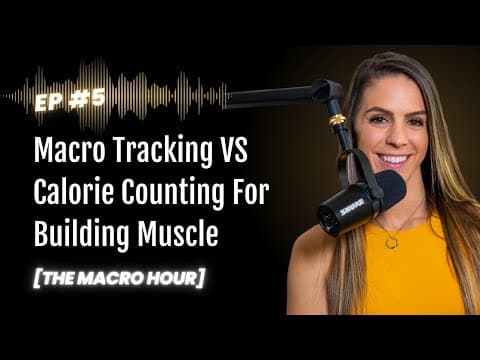 13 min
Macros vs Calories: Which Is Better for Building Muscle?
Episode 5 · Jan 18, 2023
 22 min
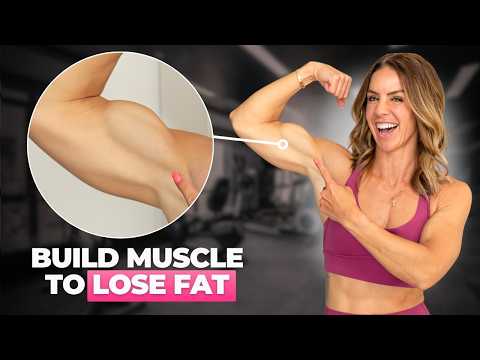
Can't Lose Fat Over 40? Why Muscle Is the Missing Piece
Episode 386 · Aug 10, 2026