

Chapters
In this video
If the scale hasn't moved in months but your jeans fit differently, this video explains why. Nikkiey Stott walks through body recomposition, which means changing your ratio of fat to muscle without necessarily changing your weight. She explains why the scale is the wrong scoreboard for women over 40, and why eating less, doing more cardio and watching the scale now works against you. In her view, three things change after 40: muscle loss, shifting hormones and lower levels of muscle-building hormones.
Then she lays out the four steps. Stop under-eating, because most women lifting three to four days a week need 1,700 to 2,200 calories. Get your protein to at least 100 grams and spread it across your meals. Lift heavy compound movements (squats, deadlifts, rows and overhead presses) three to four days a week using progressive overload. Make recovery part of the plan: rest days, seven to eight hours of sleep and walking on your days off.
You'll also hear about Robin, who at 60 and after surgical menopause was eating about 1,100 calories a day. She started eating more, trained less, and changed her body while the scale moved only four to five pounds. Nikkiey finishes with a realistic timeline from week one to month 12, so you know what to expect and don't quit during the phase when the most important changes can't be seen yet.
Key takeaways
- Stop using the scale as your main measure of progress: a pound of muscle takes up about 20% less space than a pound of fat, so you can drop pant sizes while your weight barely moves.
- If you're lifting three to four days a week, aim for somewhere between 1,700 and 2,200 calories a day, because eating 1,200 calories leads your body to break down muscle and slow your metabolism.
- Aim for 0.7 to 1 gram of protein per pound of your goal body weight, so about 100 to 140 grams a day if your goal weight is 140 pounds.
- Build every meal around a protein source like eggs, chicken, salmon, Greek yogurt or cottage cheese, instead of eating carbs early in the day and cramming protein into dinner.
- Focus your training on compound movements (squats, deadlifts, rows and overhead presses), starting with a goblet squat and dumbbells if you're new.
- Use progressive overload by adding two to five pounds when a weight starts to feel easy, because lifting the same 10-pound dumbbells for six months gives your body no reason to change.
- Lift three to four days a week for 30 to 45 minutes and take three to four rest days, because your muscles grow on rest days, not training days.
- Make seven to eight hours of sleep non-negotiable, and walk 8,000 to 10,000 steps on rest days as active recovery.
Questions answered
Why isn't the scale moving when my clothes fit better?
Nikkiey explains that when you lose fat and gain muscle at the same time, the scale can't tell the difference. A pound of muscle takes up about 20% less space than a pound of fat, so your size changes even when your weight doesn't.
How many calories should a woman over 40 eat to build muscle?
Nikkiey says most women over 40 who are lifting three to four days a week need somewhere between 1,700 and 2,200 calories a day, not 1,200 or 1,400. She explains that eating too little causes the body to break down muscle and slow the metabolism.
How much protein do I need for body recomposition after 40?
The target in the video is 0.7 to 1 gram of protein per pound of your goal body weight, with 100 grams a day as the minimum. Spread it across your meals, because your body can only use so much protein at once for muscle building.
Will lifting heavy weights make me bulky?
No. Nikkiey says women don't have enough testosterone to build bulky muscle, and lifting 25-pound dumbbells three days a week will make you look lean, defined and strong.
How long does body recomposition take after 40?
Nikkiey describes it as a six to 12 to 18 month rebuild. In weeks one to four you feel changes before you see them, in months two to three the mirror catches up, and by month six the change is undeniable.
How many days a week should I lift and rest?
She recommends lifting three to four days a week for 30 to 45 minutes and taking three to four rest days. On rest days, walk 8,000 to 10,000 steps and get seven to eight hours of sleep.
Ask Nikkiey
Questions this video helps answer, with what Nikkiey says across everything WarriorBabe teaches.
Building Muscle After 40
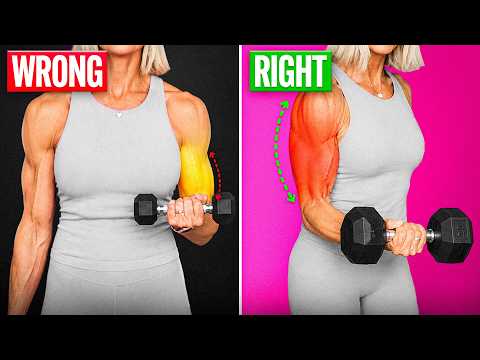
How many calories should I eat to build muscle after 40?
Nikkiey says most women over 40 who lift weights three to four days a week need somewhere between 1,700 and 2,200 calories a day, not 1,200 or 1,400. Where you land in that range depends on your body. Eating too little doesn't just burn fat. It breaks down the muscle you're trying to build.
Read the answer →
Building Muscle After 40
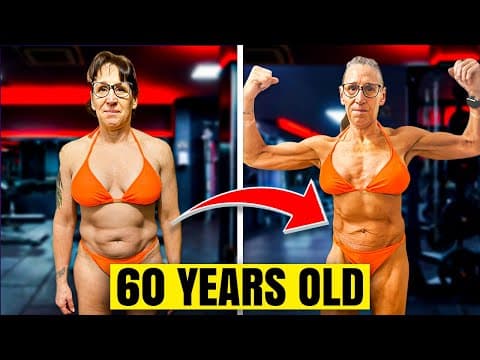
How long does body recomposition take after 40?
Nikkiey frames body recomposition after 40 as a rebuild of six to 12 to 18 months, not a 30-day challenge. You usually feel changes in weeks one to four, see them in months two to three, and by month six the change is undeniable. Client stories on the show took one and a half to two and a half years.
Read the answer →
Protein for Women
How much protein do I need to lose fat and build muscle at the same time?
Nikkiey's range is about 0.8 to 1 gram of protein per pound of body weight per day, so roughly 150 grams if you weigh 150 pounds. If you have a lot to lose, she bases it on your goal weight instead. One video also sets 100 grams a day as your minimum.
Read the answer →
Full transcript
Nikkiey: If you're over 40 and the scale hasn't moved in months, even though you've been doing everything right, I need you to stop weighing yourself for a second and hear me out on this. The scale is the worst measurement of progress for women over 40, and I can prove it. I have coached over 100,000 women through this exact frustration, and the ones who had the most dramatic body transformations almost all have one thing in common. The scale barely moved.
So today, I'm going to show you why the scale is lying to you, what's actually happening inside your body after 40, and the only four steps you need to lose fat and build muscle at the same time. And I'm going to show you a woman whose friends thought she lost 30 pounds, but she only lost five. Let's get into it.
You've probably seen this before, but knowing it and actually believing it when you step on the scale are two completely different things. One pound of muscle takes up about 20% less space than one pound of fat. Same weight on the scale, completely different size in your body. So when you lose fat and gain muscle at the same time, the scale says nothing happened. But your jeans say something completely different. Your arms look different. Your midsection looks different. But the number on the scale didn't even move. And that's when most women quit.
This is body recomposition: changing the ratio of fat to muscle in your body without changing your weight. And it's the single most powerful transformation a woman over 40 can make, because you're not just getting smaller. You're rebuilding your body from the inside out.
When a woman steps on the scale after six weeks of doing everything right and sees the same number, she thinks it's not working. She thinks she failed. But what actually happened is her body traded fat for muscle, and the scale can't tell the difference. The most dramatic physical transformations I've ever coached barely registered on the scale. Women dropping two to three pant sizes while the scale moved three to five pounds. The fitness industry built the entire model around scale weight because it's easy to measure. But easy to measure and meaningful to your body are two completely different things.
Here's the part that nobody talks about. When you lose five pounds of fat and gain five pounds of muscle, you are fundamentally a different person. Your metabolism is higher. Your bones are stronger. Your body burns more calories sitting on the couch. But the scale says nothing changed. And that's why it's the wrong scoreboard.
Before I give you the four steps, you need to understand why body recomposition after 40 is different than it was at 25. Because if you don't understand what's happening inside your body, you're going to keep doing the same things that stopped working a decade ago.
The first one is muscle loss. Without resistance training, you lose three to eight percent of your muscle mass every decade after 30. That's not just an appearance thing. Muscle is what drives your metabolism. Every pound of muscle you lose, your body burns fewer calories at rest. So by the time you're 50, if you haven't been lifting, your metabolism is significantly slower than it was at 30. Not because of your age, because of your muscle. Most women have been losing muscle for 10 to 15 years before they even realize it. They think their metabolism just slowed down with age. It didn't slow down with age. It slowed down because they lost the muscle that was keeping it high.
The second one is hormonal shifts. Estrogen starts declining. Cortisol tends to run higher. And your body starts storing fat differently, specifically around your midsection. This is the belly fat that showed up out of nowhere around 47 or 48 and won't respond to the things that used to work. The reason it feels like everything accelerated in your late 40s is because it did. The hormonal shifts that started gradually in your late 30s hit a tipping point. It's not in your head. Your body chemistry literally changed.
And the third one is the muscle-building hormones. Women have small amounts of testosterone and growth hormone, the two hormones responsible for building muscle and burning fat simultaneously. Both decline after 40. So body recomposition is still absolutely possible after 40. You just can't do it the way the internet tells you to.
So here's what that means practically. The strategy that worked at 30, eat less, do more cardio, watch the scale, is now actively working against you. It's burning the muscle you can't afford to lose. And the less muscle you have, the harder everything else gets. So the deck is stacked against you. But body recomposition after 40 is not only possible, I've seen it happen thousands of times. You just need the right four steps. And most women are doing the opposite of at least two of them.
If you're eating 1,200 calories and wondering why your body won't change, this is why. Your body cannot build muscle without the raw materials. You can't construct a building without the bricks. You can't build muscle without the food. When you eat too little, your body doesn't just burn fat. It starts breaking down muscle for energy. And remember what we just talked about? Muscle is your metabolism. So you're literally eating your metabolism away on a 1,200-calorie diet.
This is metabolic adaptation. Your metabolism is slowing down because you've been eating too little for too long. Your body thinks there's a famine. It drops your metabolic rate. It holds on to fat more aggressively. It burns muscle because muscle is expensive to maintain. And your body is trying to survive on the food you're giving it. After years of 1,200 calories, your body has gotten very efficient at running on almost nothing. That sounds like a good thing, but it's the opposite. It means your metabolism has downshifted to match your intake. So now when you eat 1,200 calories, your body burns 1,200 calories. There's nowhere left to cut.
The women we coach who have the hardest time with body recomposition are almost never the ones eating too much. They're the ones who have been eating too little for years. Their bodies are holding on to everything because they've been in survival mode. The fear of eating more is real. I get it. Every woman we've coached through this has had that moment where she looks at her plate and thinks, this is just going to make me gain weight. And then six weeks later, her clothes are looser and she can't believe it. Most women over 40 who are lifting three to four days a week need somewhere between 1,700 and 2,200 calories a day. Not 1,200, not 1,400. 1,700 to 2,200.
If there's one change that matters more than all of the others combined, it's this. Most women over 40 are eating 40 to 60 grams of protein a day. You need at least double that. Protein does three things that nothing else does.
First, it's a building block of muscle. Without enough protein, your body literally does not have the material to build or maintain muscle tissue, no matter how hard you train.
Second, protein has the highest thermic effect of any food. Your body burns about 25 to 30% of the calories from protein just by digesting it. That means 100 calories of protein costs your body 25 to 30 calories to process. Carbs cost about six to eight. Fat costs about two to three. So protein is accelerating your metabolism every time you eat it.
Third, protein stabilizes your blood sugar. It keeps you full longer, reduces cravings, and prevents the insulin spikes that drive fat storage around your midsection.
Your target is 0.7 to 1 gram of protein per pound of your goal body weight. So if your goal weight is 140 pounds, you should be aiming for 100 to 140 grams of protein every day.
Here's what a high-protein day actually looks like. Your breakfast is three eggs scrambled with spinach and a side of turkey sausage. That's about 35 grams before you leave the house. Then lunch, six ounces of grilled chicken on a salad with avocado and olive oil. That's about another 40 to 45 grams. Then your afternoon snack is a cup of Greek yogurt with berries. That's 20 grams. Then dinner, five ounces of salmon with roasted vegetables and a half cup of rice. That's another 35 grams. That's roughly 130 grams of protein in a day without any shakes or bars. Just real food planned with intention.
The biggest mistake that I see is women front-loading carbs and back-loading protein. Toast and fruit for breakfast, salad with no protein for lunch, and then they try to cram all their protein into dinner. It doesn't work that way. Your body can only use so much protein at one time for muscle building. Spread it across your meals. Eggs, chicken, salmon, Greek yogurt, cottage cheese. These should be the anchor of every single meal. Build from there.
If you want to know exactly where your protein and your calories need to be for your body, the free quiz is in the description below. Take it. It's two minutes.
Forget about the pink dumbbells and arm circles. You've got to focus on real compound movements with real resistance. Compound movements are exercises that work multiple muscle groups at the same time. Doing a squat works your glutes, your hamstrings and your core all in one move. Doing a deadlift works your entire posterior chain: your back, your glutes and your hamstrings. Rows work your back and your biceps. An overhead press works your shoulders, your triceps and your core. These all work better than isolation exercises for body recomposition because they stimulate more muscle fibers in less time. More muscle fibers working means more muscle being built, which means more fat being burned, which means more body recomposition happening with every session.
The squat. Have your feet shoulder-width apart, toes slightly out, and then push your hips back like you're sitting onto a chair. Your chest stays up, your knees track over your toes, and then drive through your heels to a standing position. If you're new to this, just start with a goblet squat with one dumbbell. Hold it to your chest. Once you can do three sets of 12 with good form, then you can add weight.
The deadlift. Stand with the weight in front of you on the bar. Hinge at your hips. Push them back. Keep your back flat. Grab the weight, and drive your hips forward to a standing position. This is the single best exercise for your glutes and your back. You can start with dumbbells first until the movement feels natural.
The row. Hinge forward slightly. Pull the weight towards your rib cage. Squeeze your shoulder blades together at the top. This is how you build the back and the arms to actually show the definition you want.
The overhead press. You can do this standing or seated. Press the weight straight overhead. Full extension at the top. This is what changes the shape of your shoulders and the back of your arms.
Progressive overload means gradually lifting heavier so that your muscles keep growing. Your body adapts to whatever you give it. So if you're lifting the same 10-pound dumbbells that you were lifting six months ago, your body has no reason to change. You have to challenge it. Add two to five pounds when a weight feels easy. That's it. That's the whole concept.
But I don't want to get bulky. You will not get bulky. Women do not have enough testosterone to build bulky muscle. The women that you see who look muscular and large are either training for hours every day with specific protocols or they're using performance-enhancing drugs. You lifting 25-pound dumbbells three days a week will not make you bulky. It will make you look lean, defined and strong. I've coached over 100,000 women. Not one has accidentally gotten bulky.
The first two to four weeks of lifting heavy, you're going to feel sore. You're going to feel like the weight is too heavy. You're going to want to go back to the light weights because they feel safer. But I'm telling you, you've got to push through this window. That soreness is your body building new muscle. By week four to six, the soreness starts to fade and you start seeing changes in the mirror. Three to four days a week, 30 to 45 minutes per session, doing compound movements. You don't need to live in the gym. You need to show up consistently and challenge your muscles enough that they have a reason to grow.
But recovery is where your body actually builds the muscle that you train for. Training tears down the muscle fibers. Recovery is when they build back stronger. If you're training six or seven days a week and you're wondering why your body isn't changing, this is probably why. You're tearing down muscle faster than you're building it back up. And when your body can't recover, it produces more cortisol, the stress hormone that drives fat storage around your midsection.
Rest days are not lazy days. They are literally your building days. Your muscles grow on rest days, not training days. Three to four lifting days means three to four rest days. That's not optional. That has to be part of your plan.
Sleep is the most underrated part of body recomposition. Your body releases its highest level of growth hormone during deep sleep. Growth hormone is what repairs muscle tissue and burns fat while you're sleeping. If you're getting five to six hours, you're cutting your recovery in half. Seven to eight hours has to be a non-negotiable.
On your rest days, get out and walk. Do 8,000 to 10,000 steps. Not for the calorie burn. That should just be your minimum. Walking improves insulin sensitivity, reduces cortisol, and supports the recovery process without taxing your muscles. It's active recovery that actually helps your body recompose.
Chronic overtraining is one of the most common things I see in women over 40. They think more is better. More workouts, more cardio, more hours in the gym. But their cortisol is through the roof. Their sleep is wrecked. And their body is holding on to fat like a life raft. The fix isn't more training. The fix is less training and better recovery. Three to four lifting days. Walking on your days off. Seven to eight hours of sleep. That's the recovery plan. It's not complicated. But most women skip it because rest feels like they're not doing enough.
Now, I want to tell you about Robin, because her story is the best proof that I have that the scale is lying to you. Robin is 60 years old. She went through surgical menopause, had her ovaries and her fallopian tubes removed, and lost all of her hormones overnight. It took a year and a half just to get her hormone replacement therapy figured out. And during that time, a nutritionist had her eating about 1,100 calories a day. She was training five days a week and her body just kept changing in a direction she didn't recognize. She described it as looking in the mirror and not knowing who that person was. She was hiding in baggy clothes. She didn't want to go out. She was at what she called the lowest point in her life. She was 60 years old and she genuinely believed it was over for her, that this is just what her body was going to be now.
When her coach, Kristen, told her to eat more, Robin thought she was crazy. She said that for about the first six months, every time Kristen said, trust the process, Robin pushed back. She had been told her entire life that eating less is how you lose weight. And now someone was telling her the opposite. Within three months of eating more food, Robin could see a difference and she couldn't understand how it was possible. More food, less training, and her body was changing.
Here's a number that matters. 14 months in, the scale moved four to five pounds. That's it. Four to five pounds on the scale. But her friends looked at her before and after photos and said that she must have lost 20 to 30 pounds. Her clothes are completely different. Her aches and pains are gone. Her knee pain is gone. She is now squatting 30 pounds when she couldn't hold any weight at the start. She went out and bought new bathing suits for a trip to Florida. She's buying clothes that show her body instead of hiding it. Four to five pounds on the scale. A completely different body. A completely different life. That is body recomposition. And if Robin can do it at 60 after surgical menopause, you can do it too.
The free quiz in the description below takes two minutes. It tells you exactly where your body needs to start, whether it's nutrition, training or recovery first. The link is right below this video.
I want to set your expectations, because body recomposition is not a 30-day transformation. It's not a six-week challenge. It is a rebuild. And the timeline matters, because if you don't know what to expect, you'll quit during the phase where the most important changes are happening invisibly.
Week one through four, you're going to feel it before you see it. More energy, better sleep, your clothes start to fit slightly differently. Not dramatically, but enough that you'll notice. The scale probably won't move. This is the hardest phase because you're doing the work and you can't see the proof yet. But it's happening. Your muscles are rebuilding. Your metabolism is responding to the food. Just trust this phase.
Then months two through three, the mirror catches up. Your arms start looking different. Your shoulders have more shape. Your midsection starts tightening. You might get a comment from someone that you see regularly that something looks different about you. The scale still may not have moved much. Maybe two to three pounds. But your body is visibly changing.
Month six. This is where the transformation becomes undeniable. You're in different clothes. You feel strong in the gym. Your energy is consistent throughout the day. The compliments are now regular. This is when most women say, I can't believe I almost quit at week three.
And then 12 months of full body recomposition. The results stay because you built them with muscle, not starvation. Your metabolism is higher than when you started. Your body composition is starting to look fundamentally different. And unlike every diet that you tried, you didn't have to give up food to get here. This is a six to 12 to 18 month rebuild. But unlike every diet you've ever tried, the results actually stay, because you didn't starve your way to them. You built them.
Here's your checklist. Step one: stop under-eating. Get your calories to 1,700 to 2,200, depending on your body. Step two: get your protein to 100 grams minimum, spread across your meals. Step three: lift heavy compound movements three to four days a week. And step four: recover. Rest days, sleep, walking.
Start with the food. Fix your calories and your protein first. Your body can't build anything if it's starving. That's the foundation. Everything else works better once the food is right.
Savannah gained 20 pounds since she started. 20 pounds. And about 60% of that is muscle. She told us that she learned to stop caring what the scale says, because her body tells a completely different story.
The strategy that you've been following is broken. The scale is just measuring the wrong thing. So throw it out. If you want to know every piece of bad advice that's been keeping your body stuck after 40, and why none of it is your fault, then watch this next video. Thank you guys for watching, and I'll see you in the next one.
Up next
Everything → 50 min
Cut, Reverse, Maintenance or Build: Which Phase Are You In?
Episode 33 · Mar 24, 2023
 30 min
Why Eating Less Isn't Helping You Lose Fat After 40
Episode 390 · Aug 24, 2026
 7 min
How Cardio, Sleep and Muscle Change Your Metabolism
Video · Mar 22, 2022
Best of Building Muscle After 40
All 184 → 20 min
Why Women Over 40 Are Losing Muscle and How to Stop It
Episode 337 · Feb 16, 2026
 1 hr 1 min
Why Building Muscle Is Key to Aging Well After 40
With JJ Virgin
 21 min
How Long Does It Take Women to Build Visible Muscle?
Episode 229 · Jan 31, 2025