

Chapters
In this video
Michelle is 49, lives in rural Iowa and works as a tool crib supervisor, lifting parts from 20 to 75 pounds every day. After years of yo-yo dieting, including phentermine, she had gastric bypass surgery four years ago and lost 120 pounds. What looked back at her was mostly skin and no muscle. She was told to eat 1,500 calories for life, she was doing 45 to 90 minutes of cardio and almost no strength training, and the weight started creeping back.
When she joined WarriorBabe, her coach Victoria started her in a retrain phase instead of another cut. They used an InBody scan and weekly progress photos rather than just the scale, and Michelle trained at her home gym with a structured strength plan. She has since gained 10 pounds of muscle, doubled her food from her old 1,200-calorie days to about 1,900 to 2,000 calories, and now moves heavy parts at work without asking for help. She is honest that eating more is still hard, that her fear of the scale hasn't vanished, and that retraining her brain doesn't happen overnight.
Her advice to any woman considering bariatric surgery is to try the macros way for at least a year first. She explains that the surgery was not an easy way out: her stomach holds about a cup of food, she eats six to eight times a day to get her protein in, and she deals with blood sugar and digestion issues.
Key takeaways
- Being skinny is not the same as being strong: Michelle lost 120 pounds after surgery but was left weak, with mostly skin and no muscle.
- Cardio alone did not stop her regain; adding structured strength training is what changed her body.
- Use an InBody scan and weekly progress photos so a rising scale doesn't send you into panic about what you're doing wrong.
- When you gain muscle you will put some fat on with it, and both her coach and her doctor said that was fine.
- Her coach's reframe stuck with her: you can either have glutes and quads or you can have the old jeans.
- After years of restriction or surgery, a retrain phase gives your metabolism time to trust you again; Michelle tried a cut after six months and couldn't stay at that low intake after two weeks.
- Online coaching worked for her because she could train at home on her own schedule, rewatch exercise videos and send form videos to her coach.
- Michelle's advice is to give the macros way at least one year before considering gastric bypass, because the surgery is not an easy way out.
Questions answered
Can you build muscle after gastric bypass surgery?
Michelle did. After losing 120 pounds post-surgery with almost no muscle left, she started structured strength training at home with WarriorBabe and gained 10 pounds of muscle in about a year while eating more food.
How much was Michelle told to eat after bariatric surgery?
Her bariatric clinic told her to eat 1,500 calories with about 100 to 120 grams of protein and 50 to 60 grams of carbs a day. She now eats around 1,900 to 2,000 calories, and her coach would like to get her to about 2,200 to 2,400.
Is it normal to gain some fat when you build muscle?
According to her coach Victoria, yes: when you gain muscle you are going to put some fat on with it. Her doctor said the same at her annual checkup and was happy with the change.
Why stay in a retrain phase instead of going straight into a cut?
The video explains that after years of low-protein eating, restriction and surgery, your body and metabolism need to learn to trust you again, and the retrain phase is the time to do that. When Michelle tried a cut, she couldn't stay at the lower food level after two weeks and went back to retrain.
Does online strength coaching work as well as in-person training?
For Michelle it worked better. She could train in her home gym on her own schedule, rewatch exercise videos as often as she needed, and send videos of herself so her coach could correct her form.
Should you try macros before getting gastric bypass?
Michelle's advice is to give the WarriorBabe macros method at least one year first. She says the surgery was hard, not an easy way out, and it makes getting enough protein difficult because her stomach holds only about a cup of food.
Ask Nikkiey
Questions this video helps answer, with what Nikkiey says across everything WarriorBabe teaches.
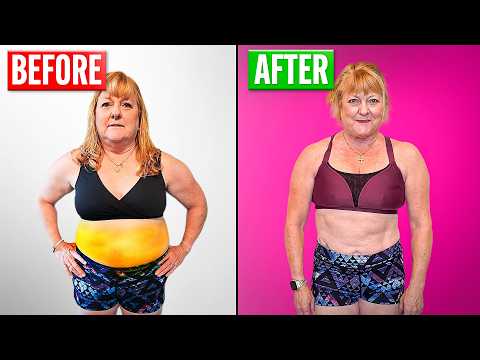
Strength Training for Women
How can I check my lifting form without a trainer?
Record yourself lifting and send the video to a coach who can tell you what to fix. On The WarriorBabe Show, clients Debbie, Michelle and Jodi describe filming their sets, rewatching exercise demo videos as often as they need, and messaging their coach from the gym. A trainer doesn't need to stand beside you.
Read the answer →

Building Muscle After 40
Is it normal to gain some fat when building muscle?
Yes. On The WarriorBabe Show, coaches and guests agree that some fat usually comes along when you build muscle. That is the cost of a build. The goal is to maximize muscle and minimize fat. Nikkiey adds that much of the scale increase is muscle, water and glycogen, not just fat.
Read the answer →

Metabolism, Eating More & Reverse Dieting
Should I fix my metabolism before trying to lose fat?
If you've been dieting for years, usually yes. Nikkiey explains that if you're eating 1,200 to 1,400 calories and not losing, have been in a deficit for years, can't feel hunger, or keep losing and regaining the same weight, cutting more isn't the answer. Retraining your metabolism up to maintenance first makes the fat loss that follows far easier.
Read the answer →
Full transcript
Michelle: They were telling me that I was supposed to eat 1,500 calories, and I think it was stay at about 100 to 120 grams of protein and maybe 50 to 60 grams of carbs a day.
Host: Oh no.
Michelle: I wonder why I'm struggling so hard just to be full. I mean, I'm still not to where I need to be, but I'm at least at 1,900 to 2,000 calories.
Host: Heck yeah.
Hey everyone, what's up? So today we've got another WarriorBabe here with us. Today we're speaking with Michelle. She is a strong, determined woman who completely redefined what health and success looked like for her after bariatric surgery. At a time when she was told to eat less and to expect less from her body, Michelle decided that she should choose a different path. And now she is filling her body with more food, she's lifting heavier than ever, and she's breaking free from these outdated beliefs about being small to feel worthy.
This is a story where you're going to hear that she gained 10 pounds of muscle and she embraced accountability, and all of these amazing things that she's found on the journey of lasting strength. So Michelle, welcome.
Michelle: Thank you.
Host: Excited to have you here. I know we were chatting a little bit before, but can you let the listeners know where you're from, how old you are, and what you do for work?
Michelle: Sure. So I am from a small town in Southwest Iowa. It's called Emerson, Iowa. I was born and raised just about 10 miles away from here. And so we're pretty much in the middle of a cornfield. I'm surrounded by cornfields.
Host: Wow.
Michelle: Yes. Very, very rural area. I am 49 years old and I am what is called a tool crib supervisor. So I work in the parts room at a manufacturing facility here in the local area. And so strength is very important to me, because I have to lift parts that are anywhere from 20 to 75 pounds on a daily basis.
Host: Wow. Very cool. Okay, so let's talk about what your health and fitness looked like before you joined WarriorBabe.
Michelle: Sure. Over the years I had gained and lost, pretty much the same story as everybody. I had even gone on phentermine a couple of times, lost 50 pounds, gained 75 pounds, just that whole terrible effect, just trying to get that body that I wanted. I was on high blood pressure medication. I was obese. I was having trouble sleeping at night. I was snoring a lot, and it was all just due to my weight.
And so I decided four years ago, which is actually kind of neat, it's right at my four-year anniversary since I had gastric bypass, to go with a drastic change of having the bypass. Because I had done everything, at least I thought I had done everything that I could possibly do to lose weight. And I ended up losing 120 pounds. And looking back at me, there was nothing left of me. It was pretty much just all skin. No muscle or anything.
And so I started gaining weight, because I was just doing cardio. And I was like, well, I'm not going to go back to where I was. I refused to go back to being overweight. And so I had started working with a trainer. It wasn't a great fit. And so when that time came to an end, I was like, okay, I think I can do this on my own. I think I know how to do it. And I started gaining weight again, but again, I wasn't doing enough strength training.
And so then last summer I started seeing all these WarriorBabe ads coming up in my face. And I was like, I'm at the end. I'm at my wits' end, and I didn't just pay for the surgery to lose. And so I decided to hop on the bandwagon. And since last summer, I've gained 10 pounds of muscle. I've gained about 10 pounds, maybe a little bit more, on the scale, but when you actually see that it was mainly muscle, then I feel really good about it.
Host: Yeah. I want to dive into all the accomplishments that you've seen with us, but before that I want to rewind back to what you mentioned. You gained 20 pounds post bariatric surgery?
Michelle: Yes. I lost 120, and then after I was maintaining, I started to gain about 20 pounds.
Host: How did that affect you mentally and emotionally? Because you just lost 120. You're like, I don't want to go backwards.
Michelle: Oh yeah. It was scary, and it's still scary. That's something I fight on a daily basis. I even have a fear, like, I don't want to go over 200 pounds. And I keep telling my coach Victoria, I don't want to do that. I don't want to go over 200. And she's like, okay, you need to get rid of that. And it's hard to, because there is always that fear that you're going to go back, that you're not going to be the success story, that you're going to be that failure, the one that gains everything back.
Host: Yeah. That's totally valid. That's your old you being afraid of the changes that are going to occur with your new body as you continue to progress forward. It's totally valid. You were told by your personal trainer, or somebody beforehand, to only eat like 1,500 calories for the rest of your life?
Michelle: Yeah. The nutritionist at the bariatric clinic. They were telling me that I was supposed to eat 1,500 calories, and I think it was stay at about 100 to 120 grams of protein, and maybe 50 to 60 grams of carbs a day.
Host: Oh, no.
Michelle: I wonder why I'm struggling so hard to be full. I mean, I'm still not to where I need to be, but I'm at least at 1,900 to 2,000 calories.
Host: Heck yeah. That's an amazing number to be at for somebody that was only told to be eating 1,500 calories, when a lot of women are eating even less than that. And especially coming off of bariatric surgery, it's hard to even think about eating that much food.
Prior to the surgery, you mentioned that you thought you had tried everything, that you were doing all the right things and you were still not seeing results. How did it feel to be doing all of the right things but not seeing what you wanted to see?
Michelle: Oh, it was very frustrating. It was very devastating. I would look in the mirror and be like, I don't even know who I am. I'm this heavy person. I'm successful at life, but I'm not being successful at weight loss. And I'm like, what is happening here? To take the drastic step and think, okay, I'm going to have my body surgically altered to lose weight, I was at my wits' end.
Host: Yeah, I'm sure. How did it feel to have Coach Victoria help you through the mindset, and call out the stories that were holding you back? Even in terms of gaining weight or gaining muscle, how did you work through that?
Michelle: Well, the one thing that she encouraged me to do was to get that InBody scan, so that we would actually know what was going on, instead of just being like, oh man, the scale is weighing heavier, what am I doing wrong? And we just started working through it, that it's okay to take up space.
And when I looked at my before pictures of when I was at the weight that I thought I wanted to be at, it really resonated with me when Coach Victoria said, hey, you were skinny, yes, but you were weak. And she would look at my progress photos and say, but look, you're getting strong. And so when I started to look at it more that way, that started to change.
And then I remember telling her, man, I have to change size of jeans. I was hoping to not have to get larger jeans. And she's like, well, you can either have glutes and quads or you can have jeans. And I was like, well, you're right.
Host: That's a cool mental reframing.
Michelle: Yeah. It was just a lot of me saying one thing and then she would take a different approach and turn it, so I would quit thinking so negatively about myself. She'd be like, no, that's good. This is what you want to be. This is where you need to be.
And the biggest thing was, she was like, it's okay. You can gain weight. When you gain muscle, you are going to put fat on with it. And then when I went to my annual checkup with my doctor this spring, I was telling her, well, I know that I've gained 10 pounds of muscle. And she goes, oh, yep, and then you gained fat with that too. So I'm all good with that. And I went, oh, okay. Well, if they're all good with it, then I'm good with it.
Host: Wow. What a turn. I've seen too that you didn't want to feel weak or small, from what you said about the conversation with Victoria. What does it mean for you now to feel strong instead of small?
Michelle: It's empowering. Like I said, at work I have to lift things that are heavy. And even this week, I was able to get down almost in a squat position and maneuver some stuff around that I never would have before. I was able to be like, okay, I don't have to ask for help in this situation, because I am strong enough.
And I'm like, okay, I'm going to be strong. I can't be both. My body is not going to allow me to be skinny and strong. If I'm going to get strong, I'm just going to get strong.
Host: That's a cool acceptance. I love that. It's a reframing of awareness with yourself and with your body. So let's go to how you discovered WarriorBabe. You mentioned that you saw a bunch of ads on social media. What initially drew you in from those videos?
Michelle: It was just the talking about the women that are going through menopause, that are in their forties, that this program is built for us. It's not the 20-year-old trainer telling me how to train a 40-year-old body to be a 20-year-old. It's accepting where we're at in life, that we are different, that we're not 20 anymore, that we have to do different things. So that's what drew me in.
And then one Saturday afternoon, I was like, I'm just going to call. And when I put in the application, I got a response immediately. And I was so excited that I actually heard from somebody and it wasn't a scam or anything like that. And when I talked with them, it was like, yeah, we definitely want to get a time set up. And I was super excited to have somebody get back with me and want to move forward and hear the problems that I was struggling with.
Host: Oh, I love to hear that. Everything on the way in felt good for you, and you felt excited to embark on having these conversations with the WarriorBabe team. You were drawn in by, we know your struggles, we hear you and we can help you. So with that, what were your first few weeks like when you joined? Eating more, seeing your body change, working with your coach, what did it all look like for the first couple of months?
Michelle: Right. So within the first week, I started really reining in and logging and watching my macros again. And I was able to visibly see the change, because we took progress photos every single week. And there was definite change. Maybe not so much fat loss, but definitely the muscle tone underneath was getting there.
And it was a challenge, and it still is a challenge, to eat more. It's hard to eat a lot in one sitting. And a side effect, I believe, from the surgery is that my tastes are different. And so I really struggle with getting enough protein, because there are very few things that I like anymore.
Host: And protein is a very bland taste unless you season it really well.
Michelle: Yes. Unless it's Greek yogurt too. But it was great, and it was easy to do. The exercises and the workouts that Victoria created for me were things that I could do at home. Because we had talked about me going to the gym, and I was like, I have to go into town to work out. It's never going to happen. So I have to do it at my own home gym. And it was great, because within weeks I was having to buy more weights. I was having to buy heavier weights. So it was pretty exciting to see the progress.
Host: You mentioned before that you weren't doing much strength training. It was really only cardio. So how did that feel, to start doing strength training the right way, having a structured plan and actually implementing it?
Michelle: It felt good. It was nice to not have to do 90 minutes of cardio. I would do anywhere from 45 to 90 minutes of cardio, different kinds of things. I might go for a walk, but then I would do a high-intensity workout. And it was nice because my body didn't hurt as much. It's a different kind of strain when you're doing all that cardio versus when you're doing weights.
It was hard at first, though, because it was like, oh, this is kind of boring, because I've got to actually find music or something to listen to while I'm doing this. I'm used to somebody telling me what to do or watching a video. So that adjustment was a little bit difficult.
Host: That's actually a really good point to unpack, because a lot of women feel like it's harder to do online coaching than in-person coaching for those exact reasons: being told, being held accountable, being supported, being able to see the movement. How would you compare online coaching to the in-person coaching that you had?
Michelle: Online is actually great for me, because number one, it allows me to do it at home. And I can watch a video over and over and over to make sure that I'm getting it. But I also can take a video of myself and send it to my coach, and they can tell me what I'm doing and what I'm not doing.
And what I like too is that it's on my time schedule, not some appointed time. We know life gets in the way. If I had an appointment at 3:30, I might not be able to make it that day. But because it's at home, if I can get there at 4 or 4:30, then great. I don't have to worry about missing a workout, because I'm working with an online trainer.
Host: I love that. So when you came into WarriorBabe, did you go into a retrain process or did you go into the fat loss process?
Michelle: We went into retrain, and we're pretty much sitting in the retrain.
Host: How long have you been there? I love talking about how long babes have been in a retrain. I hear nine months. I hear a year. I hear five months.
Michelle: We've been there since August. We tried to do a cut back in February, but I was two weeks in and I said, no, we can't. I can't stay at that low level of food. I have got to eat more. So we went back into the maintenance retrain. Victoria would like to get me up to, I think it's 2,200 or 2,400.
Host: How does that make you feel, hearing that amount of food, 2,200, 2,400?
Michelle: Oh, when I was in my twenties, I tried to stay at 1,200 calories. So that's double the amount of food. And I'm like, how did we ever exist?
Host: It's wild to think about, now that you can make that comparison mentally and bring awareness to it. 1,200 calories when I was 20 years old, and now I'm eating, or trying to get to, double the amount when I'm older. It's almost counterintuitive. Women think they should eat less and move more when they're older. Now it's being recognized that we need to eat more food, and less is more when it comes to movement and exercise. It's counterintuitive, a little bit of a what the heck.
Michelle: Yes. And that's the aha moment. Oh, well, that's why I've been struggling all these years.
Host: All right, so you mentioned 10 pounds of muscle. What else have you accomplished with WarriorBabe? Where are you at now on that journey?
Michelle: Well, every week I'm still increasing my weights. I was sick in April and part of May with some strange virus. They could never figure out what it was. But it was nice to get back into working out. Normally I would get weak or have a huge setback when recovering from an illness. And this time I didn't have a problem. It was just the normal recovery process. Now that I'm back in, I'm increasing my weights again.
And I'm still just trying to retrain, and still trying to overcome the whole process of retraining my brain. It does not happen overnight, for sure. I sent Victoria a comment this week. I said, I'm struggling with my macros. I feel like I'm just a newbie again. I'm having trouble getting the right protein and the right amount of carbs. It's just so hard sometimes. So we're just retraining. That's where we're at.
Host: And I love that you mentioned that, because along the way you're not always going to be gung-ho about macros or feel like macros are easy. At some point it's going to be hard to even try and get them in, especially as you start to increase your calories and your macros. Keeping the goal in mind is the only advice I can give. There's a goal in mind, there's a reason, there's a method to the madness of why this all has to happen. But along the way, you're never going to feel motivated all the time. It's more about the discipline aspect of being like, all right, I have this goal, I need to keep showing up that way.
Michelle: Yes. It's crazy.
Host: How do you think your view of yourself has changed from the beginning to now?
Michelle: I feel a lot better about the way I look, even though I weigh more. I know a lot of us are just stuck on what that scale says. But even though I weigh more, when I look at my pictures from when I started last August, I'm a little bit bulkier, but I'm a lot stronger. I still have a layer of fat, because we haven't been able to get into a cut, because my body hasn't retrained itself yet to go high enough. But the way that it looks, everything is tighter. There aren't as many wrinkles or rolls of fat. It's normal. It's tight. Sorry, I got distracted.
Host: No, it's totally okay. You're good. I love hearing that. I think it's really cool to know where you were at the beginning and where you are now, and the changes that you made along the way, to recognize that size doesn't matter. It's more about how you feel, and you feel strong. And there's so much more work to be done. With the retraining process, you may be in it for a while, and I'm going to say this as tough love, because I love you, WarriorBabe: you spent years eating low protein and restricting, and then there was the surgery as well. Your body needs to learn how to trust you a little bit more. Your metabolism needs to trust you a little bit more. So the retraining process is the time to do that. And if you go into that retraining process knowing that if you can spend this much time here, the outcome will be so much easier, that's the goal you're going to work towards. And I love that you said you just feel stronger now. That's huge.
Michelle: Yes. I can even tell walking up and down the stairs. We used to run stairs just to try to get our cardio. Well, when I started lifting heavier, the stairs all of a sudden became easier, and I don't huff and puff at the top of the stairs. I even notice when you try to stand up from almost down on the floor, just how easy it is. You don't have to grab on to anything. And it's just fun to feel the way that your muscles actually support you. I've never felt that before in my life. And to be able to feel that now, I'm like, well, this is awesome.
Host: Oh, I love that painting of the picture, feeling the muscles. When you stand up, you can actually feel how they work. That's what strength training will do. It helps you get in tune with your body and your muscles a little bit more and how they function. And you'll start feeling all the things now, which is really cool.
So, for somebody that's watching this video right now and feels stuck, or feels like they're doing all the right things: if you were to go back to old Michelle and give her advice, or someone listening to this who is in the same boat, what would you tell them about WarriorBabe?
Michelle: It's life-changing. And it encompasses every aspect. It's not only changing the way that you think about working out, but it's changing the way you think about nutrition, and it encompasses the mind as well. We're not here to lose weight to become skinny. We're here to become a person that takes up space and is strong in the process.
Host: Oh, I love that.
Michelle: Those are just some of the things that I've really heard over the last year. It's okay. Take up space. You can do this. You don't have to be that skinny, malnourished person anymore. You need to be strong and fed. And it might take a while, but it's not a quick fix.
Host: Yeah, totally. Is there anything else about your journey that I didn't highlight or ask a question on that you would want to share with anyone that's listening to this right now?
Michelle: I would say if you are overweight and considering gastric bypass, I would try the WarriorBabe method first. Because everybody thinks gastric bypass is so easy, or it's the cheater's way out or whatever. But I've got to tell you, it is hard. It is very hard. It was not an easy way out. And it actually makes it harder now with getting the protein and making sure you eat right, because my stomach can only hold about a cup of food.
So think about trying to get all the protein in that you need. I have to eat six to eight times a day. And there are days when I feel like all I'm doing is eating. And so I would say give it at least one year and see where you come within that. Because gastric bypass is not the easy way out. I struggle with blood sugar issues, and just the way that things digest. So try it one more time. Give it to yourself. You owe it to yourself to try one more time. Do it the macros way.
Host: Wow, Michelle, that's such a powerful statement of advice, and also very vulnerable. You wish you had done it a little bit differently, and now you're encouraging someone: hey, this is the way that I would recommend. Try this first before you consider this other way. I think that's very admirable advice, and I thank you for saying that.
Michelle: Yeah.
Host: Well, to anyone that's listening to this: Michelle, thank you for being here and for sharing your story. What you shared here with us is that transformation goes so much further beyond physical strength. It's a complete identity shift. I feel like a lot of your identity has shifted from how you once viewed yourself to how you're viewing your new self, the new Michelle moving forward.
And I think it's a reminder to everybody listening to this that being strong and being healthy and being empowered doesn't just come from shrinking and being small or seeking out being skinny. It comes from really expanding into the strongest, fullest potential of yourself. So Michelle, thank you for showing us what's possible, and that you can totally rewrite the rules, finally choose yourself and step into your power. I appreciate you sharing that advice, and I appreciate you being here.
Michelle: Yeah.
Up next
Everything → 31 min
Can Women Over 40 Build Muscle and Get Lean? Real Stories
Episode 405 · Oct 16, 2026
 36 min
Can You Build Muscle at 70? One Woman's Transformation
Episode 321 · Dec 22, 2025
 31 min
Can You Get Stronger After 60? Sandra's Story
Episode 292 · Sep 8, 2025
Best of WarriorBabe Transformation Stories
All 113 → 43 min
Eating More and Getting Leaner at 54: Jodi's Story
Episode 256 · May 5, 2025
 29 min
Gained Weight at 40 Despite Working Out? What Worked
Episode 331 · Jan 26, 2026
 17 min
How to Build Muscle and Lose Fat in Your 50s and 60s
Episode 169 · Jul 1, 2024