

From 1 episode and 2 videos
What should I do if the scale keeps going up while I'm reverse dieting?
Answered by Nikkiey Stott and WarriorBabe's coaches · Updated
The short answer
Hold, don't panic. If your weekly average weight climbs faster than expected two weeks in a row, Nikkiey says keep your calories where they are for another week or two instead of cutting food or adding cardio. Check your consistency first, and judge progress by trends, measurements, strength and energy, not one weigh-in.
Hear it answered
Tap play to start right where it's answered. It keeps playing while you browse.
Nikkiey's decision rules for judging a reverse diet by weekly averages and biofeedback
Plays from 15:20 · Ep. 412: How to Eat More Without Gaining Weight After 40
Nikkiey on holding calories when weight climbs two weeks in a row
Plays from 16:11 · Ep. 412: How to Eat More Without Gaining Weight After 40

Nikkiey on why early weight gain from adding carbs is normal
Plays from 6:11 · Video: How Much Should You Add to Your Macros for a Refeed?

A coach on tracking non-scale wins when the scale scared her
Plays from 2:35 · Video: One Year of Reverse Dieting After 1,200 Calories
The full answer
Start by changing what you look at. On Ep. 412, Nikkiey explains that during a reverse you don't react to a single scale reading. You compare this week's average weight to last week's, take measurements every two weeks, track your strength in the gym, and note your biofeedback: hunger, energy, sleep and how training feels. If your average is stable or rising only slightly and you feel good, you add the next small increase, around 50 to 100 calories.
If the average climbs faster than you'd expect for two weeks in a row, her rule is simple: hold. Keep calories where they are for another week or two so your body can adapt. Then be honest about consistency. If you weren't consistent, don't add another 100 calories. Get consistent, wait until the trends look good across all those markers, and only then increase again. Cutting calories or piling on cardio isn't part of the plan.
Some early gain is expected. In a Q&A video, Nikkiey says gaining weight in your first week or two of eating more carbs is completely normal. Your body is adjusting to new macros, and that can take one, two or four weeks depending on the person. It's part of the process of feeding your body what it needs.
The mental side matters as much as the numbers. One WarriorBabe coach shares that during her year of reverse dieting after 1,200 calories, she watched the scale like a hawk and once increased calories too fast, leaving her bloated and sluggish for days. What kept her going was journaling daily and weekly wins: more energy, better sleep, better mood, stronger lifts. She ended up eating 500 more calories a day and hit a deadlift PR. Slow is the point, and the scale is only one piece of the picture.
From WarriorBabe's coaches (how we write our answers). For education, not medical advice: talk to your doctor about your own health.
Women also ask
More on Metabolism, Eating More & Reverse Dieting →
Metabolism, Eating More & Reverse Dieting
How do I know when I've reached maintenance on a reverse diet?
You've reached maintenance when your weekly weight average holds steady while you're eating more calories than when you started, and your energy is good, your hunger is manageable and your training is strong. Nikkiey explains on Ep. 412 that at that point you've built a higher calorie ceiling and a more responsive metabolism.
Read the answer →
Metabolism, Eating More & Reverse Dieting
How do I reverse diet after a cut?
You reverse diet by adding food back slowly. Nikkiey Stott suggests adding about 150 to 200 calories, mostly from carbs and fats, holding for two to three weeks while you track and watch how your body responds, then adding again. Keep strength training, ease back on cardio, and repeat until you reach maintenance.
Read the answer →
Metabolism, Eating More & Reverse Dieting
How many calories should I add each week when reverse dieting?
WarriorBabe's coaches suggest adding roughly 50 to 150 calories per week, after first tracking a full week to find your true starting intake. Bring protein up first, then carbs and fats. Hold each increase for one to two weeks while watching energy, sleep, mood, digestion and your weight trend before adding more.
Read the answer →

Metabolism, Eating More & Reverse Dieting
Can I keep losing fat while reverse dieting?
Sometimes, but it isn't the point. Nikkiey Stott explains that some women lose a little more fat in the early stages of a reverse diet, but not everyone does. The main goal is to hold on to the fat you've lost while slowly raising your calories so your body handles more food without regaining.
Read the answer →

Metabolism, Eating More & Reverse Dieting
What happens if I increase calories too fast when reverse dieting?
Increasing too fast can backfire. Nikkiey explains that a chronically underfed body isn't yet equipped to use a sudden jump in calories efficiently, so the excess tends to get stored as fat. One WarriorBabe coach has felt it herself: one week she raised calories too quickly and was bloated and sluggish for days. Slow, structured increases are the point.
Read the answer →

Metabolism, Eating More & Reverse Dieting
Will I gain weight when I start eating more?
Probably a little, and that's expected. Nikkiey explains that when you start eating more during a retrain or reverse diet, your weight will usually fluctuate about two to five pounds from water, glycogen, food volume and salt, not fat. If the gain keeps climbing or holds around five pounds, the increase was likely too fast.
Read the answer →
Watch or listen in full
More on this topic →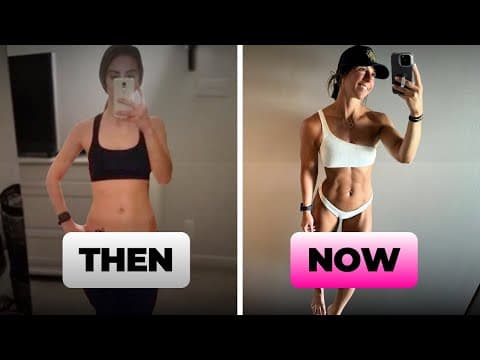 6 min
One Year of Reverse Dieting After 1,200 Calories
Video · Feb 1, 2025
 27 min
How to Eat More Without Gaining Weight After 40
Episode 412 · Nov 9, 2026
 25 min
How Much Should You Add to Your Macros for a Refeed?
Video · Dec 15, 2020