

From 1 episode and 1 video
What are the signs of overtraining in women over 40?
Answered by Nikkiey Stott and her guests · Updated
The short answer
According to Nikkiey, the signs of overtraining include persistent fatigue, feeling tired but wired and unable to sleep, declining strength and performance, higher injury risk, irritability or a flat mood, lost motivation, feeling cold when others are comfortable, and eating less than ever without losing weight. If you're doing more and feeling worse, take that as the signal.
Hear Nikkiey answer it
Tap play to start right where it's answered. It keeps playing while you browse.

Nikkiey lists the day-to-day signs of over-exercising and under-eating
Plays from 2:19 · Video: Is Overtraining Causing Your Menopause Weight Gain?
Nikkiey on overtraining syndrome: fatigue, weaker lifts, injury, poor sleep, irritability
Plays from 7:59 · Ep. 88: Do Women Over 40 Need Rest Days to Build Muscle?
Why training more when the scale stalls backfires, and how cortisol fits in
Plays from 3:25 · Video: Is Overtraining Causing Your Menopause Weight Gain?
Nikkiey on listening to your body and scheduling rest days ahead of time
Plays from 12:15 · Ep. 88: Do Women Over 40 Need Rest Days to Build Muscle?
The full answer
On Ep. 88, Nikkiey explains that training every day without adequate recovery leads toward overtraining syndrome. The signs she lists:
- Persistent fatigue
- A drop in performance, so you don't feel strong and don't get the pump you want
- Increased injury risk
- Sleep disturbances, which she calls a huge part of getting results
- Mood changes, especially irritability
In her video on menopause weight gain, she adds the pattern she sees most in women who come to WarriorBabe, where over-exercising goes together with under-eating. You're exhausted but can't sleep. You're eating less than ever and still not losing weight. Your mood is flat, your motivation is gone, and you feel cold when everyone around you is comfortable. Her point is that a hard lifting session is a healthy stress your body recovers from. The trouble is the cycle: eat less, see no change, train more. She says your body reads that as scarcity and holds on to fat on purpose. She also describes estrogen declining and cortisol running hotter during menopause, which she says can make years of restricting and grinding hit harder. If you suspect hormones are part of the picture, work through that with your doctor.
Her fix isn't more discipline. Nikkiey trains four days a week and schedules her rest days ahead of time, some with a walk or a hike and some fully off. She also says to take an unscheduled rest day when your body really demands it, and to be honest with yourself about whether you're strained or just skipping. In the video she describes lifting three days a week and fueling your workouts instead of punishing yourself with them. If you've been doing everything harder and getting nothing back, the plan needs to change. You're not the one failing.
From Nikkiey Stott and WarriorBabe's coaching. For education, not medical advice: talk to your doctor about your own health.
Women also ask
More questions →
Sleep, Recovery & Lifestyle
How many rest days should I take a week?
Take at least two rest days a week, Nikkiey says, and one of them can be active recovery like a walk, yoga, stretching or mobility work. She trains four days a week herself. One, two or even three rest days won't stall your progress. They help it, because rest is when muscle is built.
Read the answer →

Sleep, Recovery & Lifestyle
Should I skip my workout if I'm exhausted?
Sometimes, yes. Nikkiey says that if you wake up exhausted after poor sleep or a stressful day, you can push that workout to the next day and still be consistent. On heavy days, she gives permission to scale back, take a walk instead of a PR attempt, or rest without guilt.
Read the answer →

Sleep, Recovery & Lifestyle
How can I improve my sleep?
Start with the basics Nikkiey returns to again and again: cut screens and bright light before bed, keep your room cool and pitch black with the phone out, and go to bed and wake at the same times. Then try Dr. Stephen Cabral's 3-2-1 rule: no food three hours before bed, no liquids two hours, no screens one hour.
Read the answer →
Watch or listen in full
More on this topic →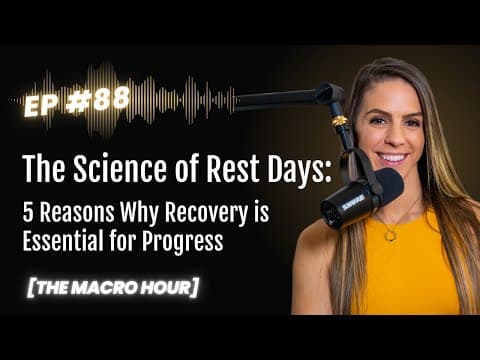 20 min
Do Women Over 40 Need Rest Days to Build Muscle?
Episode 88 · Aug 25, 2023
 12 min
Is Overtraining Causing Your Menopause Weight Gain?
Video · Jul 1, 2026