

From 2 episodes and 3 videos
Should I eat back the calories my Apple Watch says I burned?
Answered by Nikkiey Stott and her guests · Updated
The short answer
No. Nikkiey's advice is to wear your Apple Watch for steps, movement and heart rate, but not to eat back the calories it says you burned. Trackers estimate burn from generic formulas, and studies she cites show they can be off by 20 to 80 percent. Eating that number back can quietly stall the scale.
Hear Nikkiey answer it
Tap play to start right where it's answered. It keeps playing while you browse.
Nikkiey on how trackers guess your burn and why they can be off by 20 to 80 percent
Plays from 4:48 · Ep. 282: Can You Trust Your Fitness Tracker's Calorie Burn?
What WarriorBabe members track on their watch instead of calories burned
Plays from 20:34 · Ep. 282: Can You Trust Your Fitness Tracker's Calorie Burn?
Why calorie burn numbers aren't tied to your metabolism and shouldn't be relied on
Plays from 9:47 · Ep. 36: What Are the Heart Rate Zones and How Do I Find Mine?
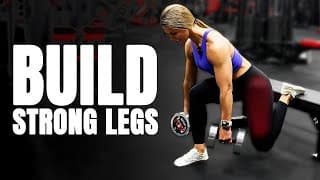
Mid-workout, Nikkiey says to watch your heart rate, not your watch's calorie count
Plays from 29:36 · Video: 30-Minute Gym Leg Workout for Women Over 40 and Menopause

Why the treadmill's calorie number means almost nothing for your metabolism
Plays from 3:54 · Video: Does Too Much Cardio Slow Your Metabolism?
The full answer
On Ep. 282, Nikkiey explains that most trackers estimate burn with a formula called METs, based on your age, weight and heart rate. They don't know how metabolically adapted you are after years of yo-yo dieting. They don't know how much muscle you carry, or whether you're on your period, stressed or short on sleep. Her example: you think a workout burned 600 calories when it was closer to 350, so you eat more because you earned it, and then the scale doesn't move. On Ep. 36 she adds that the number isn't directly tied to your metabolism, and too many factors go into it to rely on.
Here is what WarriorBabe members do instead, according to Nikkiey:
- Wear the watch for steps and movement, and don't eat back calories burned.
- During workouts, look at time, to stay efficient, and heart rate, keeping it up in roughly the 120 to 150 range rather than coasting at 95 to 105.
- Log strength sessions, track the weights lifted and rate each workout from one to ten, so they learn to tune into recovery instead of obsessing over burn.
There is one more reason not to chase the number. In her video on cardio and metabolism, Nikkiey says the calorie readout on machines and watches has virtually nothing to do with anything. Strength workouts often don't show a big burn, but they build the muscle that speeds up your metabolism. A low watch number on lifting day doesn't mean the session failed.
If you've been eating back your burn and stalling, it's not that your body is broken. You've been following an estimate that was never built for you. Set your intake from a plan, and use the watch as a tool for effort and movement, not as permission to eat.
From Nikkiey Stott and WarriorBabe's coaching. For education, not medical advice: talk to your doctor about your own health.
Women also ask
More questions →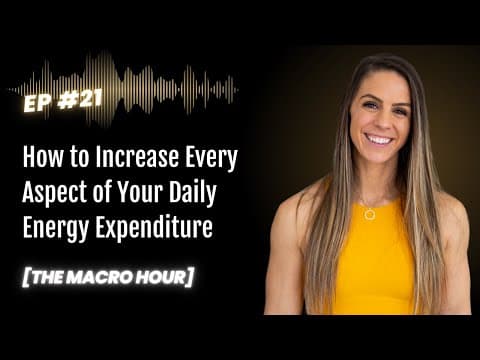
Sleep, Recovery & Lifestyle
Are fitness trackers accurate for calories burned?
Not really. Nikkiey explains that fitness trackers and heart rate monitors estimate calories burned with generalized equations that don't account for your individual metabolism, so the number is a rough estimate at best. She goes further: that calorie figure isn't directly linked to your metabolism, so judge your training by strength, measurements and how you feel instead.
Read the answer →

Sleep, Recovery & Lifestyle
How can I improve my sleep?
Start with the basics Nikkiey returns to again and again: cut screens and bright light before bed, keep your room cool and pitch black with the phone out, and go to bed and wake at the same times. Then try Dr. Stephen Cabral's 3-2-1 rule: no food three hours before bed, no liquids two hours, no screens one hour.
Read the answer →
Sleep, Recovery & Lifestyle
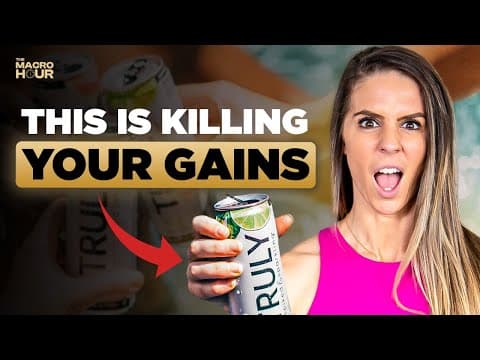
Does alcohol stop you from building muscle?
According to Nikkiey, alcohol works directly against building muscle. It slows muscle protein synthesis, the repair process after strength training, and increases muscle breakdown, so tissue can be broken down faster than it's rebuilt. The result is slower recovery, harder muscle gain and a less toned look, even when you're doing everything else right.
Read the answer →
Watch or listen in full
More on this topic →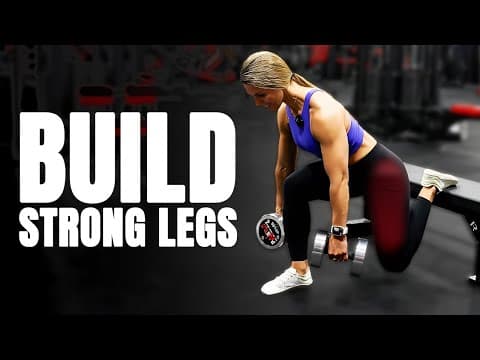 30 min
30-Minute Gym Leg Workout for Women Over 40 and Menopause
Video · Jun 3, 2024
 7 min
Does Too Much Cardio Slow Your Metabolism?
Video · Jan 26, 2023
 27 min
Can You Trust Your Fitness Tracker's Calorie Burn?
Episode 282 · Aug 4, 2025