

The short answer
Poor sleep works against fat loss on several fronts. Nikkiey explains that it raises your hunger hormone ghrelin, lowers your fullness hormone leptin, and raises cortisol, which she says signals your body to hold fat, break down muscle and become more insulin resistant. That means you can be in a calorie deficit and still stall.
Hear it answered
Tap play to start right where it's answered. It keeps playing while you browse.
Nikkiey on how sleep-driven cortisol holds fat, breaks down muscle and stalls a deficit
Plays from 7:03 · Ep. 346: Can Poor Sleep Stop Fat Loss After 40?
Nikkiey on poor sleep as a stress signal that slows metabolism and blocks muscle
Plays from 4:56 · Ep. 25: How Sleep Affects Muscle Gain and Fat Loss After 40
Dr. Peter Martone on sleep, survival mode and the 50% phone charge analogy
Plays from 10:55 · Ep. 222: How to Sleep Better: The Best Sleep Position and Habits
Nikkiey on how sleep loss raises ghrelin, lowers leptin and drives overeating
Plays from 7:59 · Ep. 196: How Does Sleep Affect Fat Loss and Muscle After 40?
Nikkiey on tracking sleep so you don't wrongly blame food or workouts for a plateau
Plays from 12:01 · Ep. 87: How to Break a Fat Loss Plateau After 40
The full answer
On Ep. 25, Nikkiey describes lack of sleep as a loud stress signal. Your body responds by slowing the metabolism to store energy, ramping up appetite, and avoiding building muscle because muscle is energy-expensive. That stress also stacks on top of work stress, home stress and the stress of training, and she says poor sleep is often what tips you over. On Ep. 222, Dr. Peter Martone puts it this way: poor-quality sleep puts your body into survival, a stress state where you gain and retain weight. If you only charge your phone to 50%, you only get 50% performance the next day.
Sleep also changes what you reach for. On Ep. 346, Nikkiey explains that sleep deprivation activates the brain's reward centers and increases cravings for high-calorie, sugary and fatty foods. At the same time it impairs the part of the brain responsible for impulse control. The cravings get stronger while your ability to resist them gets weaker. On Ep. 311, she says that four to five hours a night raises cortisol and throws leptin and ghrelin out of whack, which is why cravings spike the next day. She adds that under-eating during the day can also spike cortisol at night and keep you wired. On Ep. 196, she notes that even short-term sleep loss can reduce insulin sensitivity, making fat loss harder even when your diet and workouts are on point.
The practical takeaway: before you cut food or push harder in the gym, look at your sleep. On Ep. 87, Nikkiey says a week or two of bad sleep can show up in your progress. She tracks her sleep so she doesn't wrongly blame her nutrition or training and end up hurting her recovery even more. She also points out that midsection fat in your 40s, 50s and 60s may be tied to perimenopause, but it could also be your sleep. Talk to your doctor about hormone questions. Either way, this isn't you being broken. It's a variable your plan needs to account for.
From WarriorBabe's coaches (how we write our answers). For education, not medical advice: talk to your doctor about your own health.
Women also ask
More on Sleep, Recovery & Lifestyle →
Sleep, Recovery & Lifestyle
How many hours of sleep do I need to lose fat?
Aim for seven to nine hours a night. Nikkiey explains that most adults need that range to support the hormones that drive hunger, cravings, recovery and fat storage. If you're getting five or six hours now, don't overhaul everything overnight. Add 15 to 30 minutes at a time until you get there.
Read the answer →
Sleep, Recovery & Lifestyle
How can I improve my sleep?
Start with the basics Nikkiey returns to again and again: cut screens and bright light before bed, keep your room cool and pitch black with the phone out, and go to bed and wake at the same times. Then try Dr. Stephen Cabral's 3-2-1 rule: no food three hours before bed, no liquids two hours, no screens one hour.
Read the answer →
Sleep, Recovery & Lifestyle
Does sleep affect building muscle?
Yes. Nikkiey explains that you break muscle down in the gym and rebuild it during recovery, and most of that repair happens in deep sleep, when your body releases growth hormone. If you train hard but sleep poorly, she says, you're only doing half the work. She recommends at least seven hours, ideally seven to eight.
Read the answer →
Sleep, Recovery & Lifestyle
How much deep sleep and REM sleep should I get?
On Ep. 196 of The WarriorBabe Show, Nikkiey passes along Dr. Cabral's recommendation: aim for 70 to 90 minutes of deep sleep and two hours or more of REM sleep each night. She treats sleep as a real pillar of fat loss after 40, not an afterthought, because so much recovery happens while you sleep.
Read the answer →
Sleep, Recovery & Lifestyle
Is it bad to work out in the evening?
Not necessarily. Nikkiey says it depends on you and where your cortisol is. Morning or afternoon training can help regulate sleep, and for some women who feel tired and wired, evening exercise may help. Intense workouts right before bed may have the opposite effect. The best time fits your body and your day.
Read the answer →
Sleep, Recovery & Lifestyle
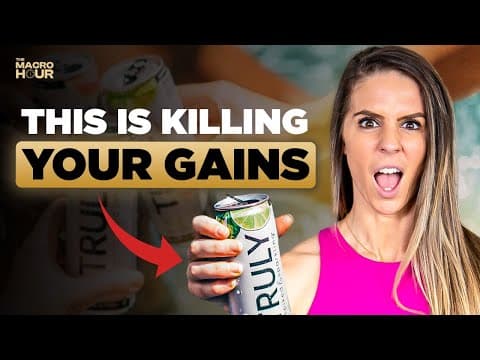
Does alcohol stop you from building muscle?
According to Nikkiey, alcohol works directly against building muscle. It slows muscle protein synthesis, the repair process after strength training, and increases muscle breakdown, so tissue can be broken down faster than it's rebuilt. The result is slower recovery, harder muscle gain and a less toned look, even when you're doing everything else right.
Read the answer →
Watch or listen in full
More on this topic → 51 min
How to Sleep Better: The Best Sleep Position and Habits
With Dr. Peter Martone
 26 min
How to Break a Fat Loss Plateau After 40
Episode 87 · Aug 21, 2023
 36 min
How Does Sleep Affect Fat Loss and Muscle After 40?
Episode 196 · Oct 7, 2024