

From 4 videos
Why does eating less backfire during menopause?
Answered by Maggie Topham and WarriorBabe's coaches · Updated
The short answer
WarriorBabe's coaches explain that eating less during menopause costs you muscle, and with fewer estrogen receptors your body already struggles to hold on to it. Less muscle means a lower metabolic rate. Restriction also leaves you stuck, with nothing left but cutting further, which they say isn't sustainable. Their fix is eating more, especially protein, plus strength training.
Hear it answered
Tap play to start right where it's answered. It keeps playing while you browse.

Maggie on how under-eating strips muscle and lowers your metabolic rate in menopause
Plays from 6:20 · Video: Losing 60 Pounds in Menopause: 5 Habits I Stopped

Why slashing calories and adding cardio spikes cortisol and stalls belly fat loss
Plays from 1:43 · Video: How to Lose Menopause Belly Fat Without Crash Diets

Maggie on why she would never go into calorie restriction again
Plays from 12:16 · Video: Just Started Menopause? The 6-Step Roadmap I'd Follow

Johanna's case: enough calories, but no structure or protein priority
Plays from 5:12 · Video: Swapping Pilates and Spin for Lifting at 62: Johanna's Story
The full answer
On The WarriorBabe Show, one WarriorBabe coach describes a common spiral. As estrogen drops, fat starts storing around the belly, so most women panic, slash calories and pile on cardio. She says that in a body already under hormonal stress, this spikes cortisol, which she calls the ultimate fat storage switch. Your metabolism slows and your body holds on to fat, even when you're barely eating. If you've under-eaten for years, she says your body is in defense mode and doesn't feel safe letting fat go.
She also points to the restriction trap: you lose some weight, get stuck, and the only move left is to cut further. Maggie lived this. At her heaviest she survived on four protein bars a day, eating half a bar every two hours and obsessing over food. Healing her metabolism meant eating substantially more, which felt like failure after 30 years of being told less food equals more weight loss. Her breakfast now, about 600 calories, is what she used to try to live on all day, and she says she is leaner and healthier than ever. A WarriorBabe coach's client Kathy, 54, was eating less and training more while still gaining. With more protein, structured full-body lifting, daily walks and recovery, her midsection started leaning out in under eight weeks.
There's nuance. Eating more isn't automatically the answer for everyone. Johanna, 62, was already eating 1,900 to 2,200 calories a day with no structure and a restrict-then-binge cycle. Her team set her at just over 1,800 calories with specific macros and a protein target. That was barely a change in total food but a complete change in what that food was.
The common thread is that the plan failed, not you. Eat enough, track so you know what your body actually gets, prioritize protein, and lift. If you're managing menopause symptoms or medications, bring your doctor into the conversation.
From WarriorBabe's coaches (how we write our answers). For education, not medical advice: talk to your doctor about your own health.
Women also ask
More on Menopause & Perimenopause Weight Loss →
Menopause & Perimenopause Weight Loss
Do I need to do cardio to lose weight in menopause?
No. WarriorBabe's coaches say cardio isn't what drives fat loss in menopause, and leaning on it can backfire. They explain that too much cardio spikes cortisol and burns muscle, especially in a calorie deficit. What they recommend instead is strength training as the foundation, plus enough protein, daily walking and proper recovery.
Read the answer →

Menopause & Perimenopause Weight Loss
Why is menopause belly fat so hard to lose?
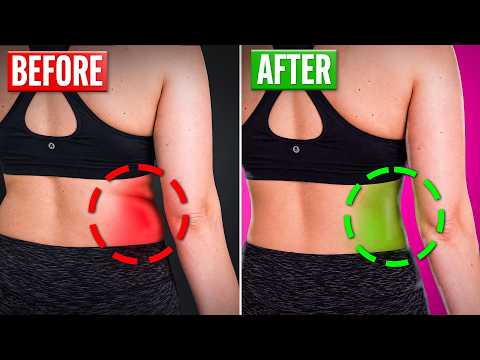
One WarriorBabe coach explains that menopause belly fat is hard to lose because falling estrogen shifts fat storage to your midsection, much of it as visceral fat that drives insulin resistance and more storage. Rising cortisol adds to it, and the usual fix of eating less and doing more cardio raises cortisol further, so the body holds on tighter.
Read the answer →
Menopause & Perimenopause Weight Loss
What is the best exercise for menopause belly fat?
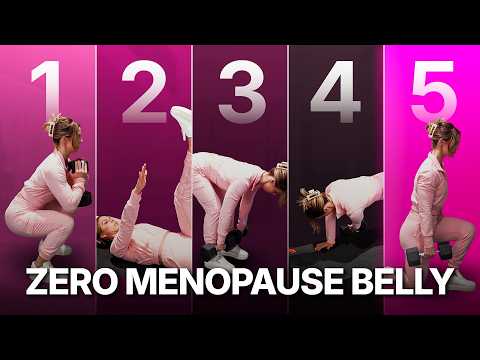
The best exercise for menopause belly fat is progressive strength training, not more cardio or crunches. The show recommends compound moves like squats, deadlifts, presses, hip thrusts and lunges, done two to four times a week and paired with daily walking. You can't spot reduce belly fat. You lose it by building muscle.
Read the answer →
Menopause & Perimenopause Weight Loss
Can eating too little make belly fat worse?
Yes, according to WarriorBabe's coaches. They say chronic under-eating, often 1,100 to 1,300 calories a day, signals famine to your body. That raises cortisol, slows metabolism and makes your body hold on to belly fat. Their fix is eating enough, with protein at every meal, plus strength training and real recovery.
Read the answer →
Menopause & Perimenopause Weight Loss
Is menopause weight gain connected to mental health?
Yes, according to the WarriorBabe video Losing 60 Pounds in Menopause. The speaker links her mood swings, anxiety, panic attacks and night-time rumination to declining hormones and years of restriction. She calls it a mental and biological toll, and says her mental health improved once she started caring for her body instead of punishing it.
Read the answer →

Menopause & Perimenopause Weight Loss
What are the first signs of perimenopause?
According to guests on The WarriorBabe Show, the first signs usually aren't hot flashes or missed periods. Dr. Jolene Brighten says falling progesterone shows up first as worsening PMS, irritability, breast tenderness and waking at night before your period, sometimes from 35. Hatty McCafferty adds sleep disruption, skin changes, digestive shifts and fatigue.
Read the answer →
Watch or listen in full
More on this topic →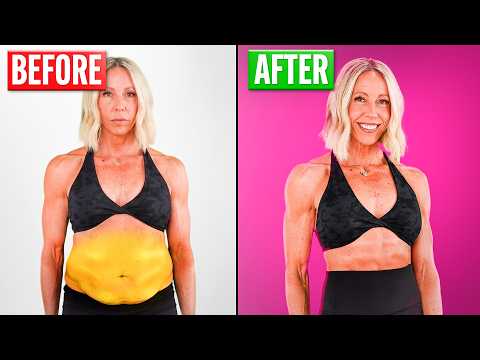 14 min
Losing 60 Pounds in Menopause: 5 Habits I Stopped
Video · May 20, 2026
 9 min
How to Lose Menopause Belly Fat Without Crash Diets
Video · Jul 12, 2025
 20 min
Just Started Menopause? The 6-Step Roadmap I'd Follow
Video · May 13, 2026