

From 5 videos
Why is menopause belly fat so hard to lose?
Answered by WarriorBabe's coaches · Updated
The short answer
One WarriorBabe coach explains that menopause belly fat is hard to lose because falling estrogen shifts fat storage to your midsection, much of it as visceral fat that drives insulin resistance and more storage. Rising cortisol adds to it, and the usual fix of eating less and doing more cardio raises cortisol further, so the body holds on tighter.
Hear it answered
Tap play to start right where it's answered. It keeps playing while you browse.

A WarriorBabe coach on visceral fat and the insulin loop that makes menopause belly fat accelerate
Plays from 1:05 · Video: Foods That Make Menopause Belly Fat Worse and What to Eat

Why dropping estrogen moves fat to the belly and crash dieting spikes cortisol
Plays from 1:30 · Video: How to Lose Menopause Belly Fat Without Crash Diets

How losing muscle and rising cortisol shift fat from hips to belly in menopause
Plays from 0:58 · Video: Best Exercises for Menopause Belly Fat After 50

Why skipping meals and extra miles stop working, and backfire, after 40
Plays from 0:30 · Video: Why Recovery, Not More Exercise, Unlocks Belly Fat After 40
The full answer
One WarriorBabe coach describes it as a hormonal shift. Estrogen, progesterone and testosterone decline, and estrogen is one of your body's key regulators of fat distribution. As it drops, so does your ability to hold onto muscle, and fat moves from your hips and thighs to your belly and around your organs, even if your routine hasn't changed. Much of it is visceral fat, which is why so many women say their belly feels hard and they can't pinch it. She explains that visceral fat behaves almost like its own organ: it sends out inflammatory signals that push you toward insulin resistance, your body makes more insulin, and more insulin means more fat storage. That loop is why the belly can feel like it's speeding up.
Cortisol is the second piece. She says it becomes more dominant around menopause and signals the body to store fat in the midsection. This is where the usual playbook backfires. Slashing calories and piling on cardio in a body already under hormonal stress spikes cortisol further. She explains that your metabolism adapts downward, you lose muscle, energy drops, sleep and cravings get worse, and the belly gets harder to shift. She also points to recovery: if you spend all day in fight-or-flight mode, cortisol stays elevated and belly fat stays put.
What she recommends instead is to eat right, train smart and recover well:
- Fix food first, with protein anchoring every meal and anti-inflammatory foods like fatty fish and leafy greens
- Eat enough, especially protein, if you've been under-eating for years
- Strength train with progressive overload to protect muscle
- Walk daily and use gentle movement like yoga or stretching to calm your nervous system
Her message is that you're not lazy or broken. The strategy that worked at 30 no longer fits your body. If hormone symptoms are a concern, talk them through with your doctor.
From WarriorBabe's coaches (how we write our answers). For education, not medical advice: talk to your doctor about your own health.
Women also ask
More on Menopause & Perimenopause Weight Loss →
Menopause & Perimenopause Weight Loss
Can eating too little make belly fat worse?
Yes, according to WarriorBabe's coaches. They say chronic under-eating, often 1,100 to 1,300 calories a day, signals famine to your body. That raises cortisol, slows metabolism and makes your body hold on to belly fat. Their fix is eating enough, with protein at every meal, plus strength training and real recovery.
Read the answer →

Menopause & Perimenopause Weight Loss
Can walking help me lose belly fat after 50?
Yes, walking can help, but it works best as one part of the plan. On The WarriorBabe Show, one coach explains that walking puts less demand on your body, so it can draw on fat stores. Gentle daily movement also helps lower cortisol. On its own, though, walking won't rebuild the muscle your body needs after menopause.
Read the answer →
Menopause & Perimenopause Weight Loss
Is HIIT bad for women in menopause?
Not necessarily. One WarriorBabe coach explains that what backfires in menopause is long, frequent, exhausting cardio, which keeps cortisol elevated and encourages belly fat storage. Short sprint interval training, with 20 to 30 second all-out efforts and full rest, is one of her core exercises. For everything else, she favors low-impact incline walking.
Read the answer →
Menopause & Perimenopause Weight Loss
What is the best exercise for menopause belly fat?
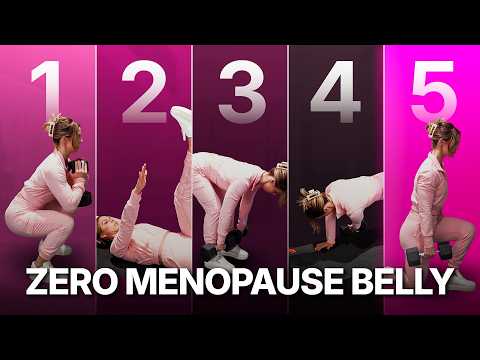
The best exercise for menopause belly fat is progressive strength training, not more cardio or crunches. The show recommends compound moves like squats, deadlifts, presses, hip thrusts and lunges, done two to four times a week and paired with daily walking. You can't spot reduce belly fat. You lose it by building muscle.
Read the answer →
Menopause & Perimenopause Weight Loss
Can exercise alone get rid of menopause belly fat?
No. According to the WarriorBabe Show, exercise alone usually won't shift menopause belly fat. One coach says women who train hard but eat wrong see almost no change at the belly, while fixing food first gets it moving. Strength training still matters: it builds muscle and shapes the body underneath once the fat comes off.
Read the answer →

Menopause & Perimenopause Weight Loss
Do I need to do cardio to lose weight in menopause?
No. WarriorBabe's coaches say cardio isn't what drives fat loss in menopause, and leaning on it can backfire. They explain that too much cardio spikes cortisol and burns muscle, especially in a calorie deficit. What they recommend instead is strength training as the foundation, plus enough protein, daily walking and proper recovery.
Read the answer →
Watch or listen in full
More on this topic → 7 min
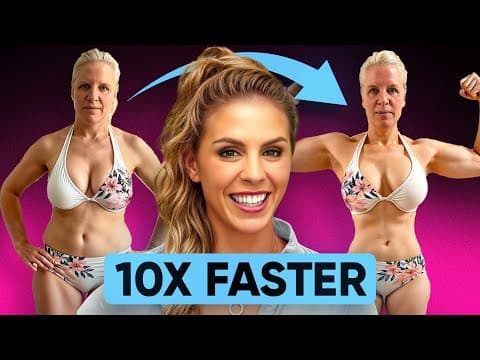
Best Exercises for Menopause Belly Fat After 50
Video · Apr 1, 2026
 9 min
How to Lose Menopause Belly Fat Without Crash Diets
Video · Jul 12, 2025
 21 min
Foods That Make Menopause Belly Fat Worse and What to Eat
Video · Aug 23, 2026