

From 6 videos
Do I need to do cardio to lose weight in menopause?
Answered by Nikkiey Stott and her guests · Updated
The short answer
No. Nikkiey says cardio isn't what drives fat loss in menopause, and leaning on it can backfire. She explains that too much cardio spikes cortisol and burns muscle, especially in a calorie deficit. What she recommends instead is strength training as the foundation, plus enough protein, daily walking and proper recovery.
Hear Nikkiey answer it
Tap play to start right where it's answered. It keeps playing while you browse.

Nikkiey on how chronic cardio raises cortisol and costs you muscle in menopause
Plays from 5:29 · Video: Just Started Menopause? The 6-Step Roadmap I'd Follow

Why relying on cardio to burn fat is a trap, and why daily walking still counts
Plays from 4:42 · Video: How to Lose Menopause Belly Fat Without Crash Diets

How cardio in a calorie deficit burns the muscle that runs your metabolism
Plays from 4:51 · Video: Regained 50 Pounds 5 Times? What Finally Worked in Menopause

Nikkiey quits cardio cold turkey and drops from 20 hours of training a week to five
Plays from 4:21 · Video: Quit Cardio, Ate More, Lost 60 Pounds in Menopause

The former triathlete on stopping cardio and seeing muscle again
Plays from 1:38 · Video: Losing 60 Pounds in Menopause: 5 Habits I Stopped
The full answer
Nikkiey speaks from experience. She taught fitness classes from age 16, ran marathons, did triathlons and 5 a.m. HIIT classes, and trained up to 20 hours a week. At 47, in menopause, the same effort that used to work produced nothing. She was doing more cardio than ever and gaining weight faster than ever. So she quit cardio cold turkey and committed to strength training: progressive overload, four days a week, about five hours of training a week in total. She lost 60 pounds, and the first sign it was working was seeing muscle in the mirror while blow-drying her hair. In her words, less was actually more.
Here is why she believes chronic cardio works against you now:
- It spikes cortisol, which she calls a fat storage switch, especially around the belly.
- In a calorie deficit with lots of cardio, the body burns muscle for fuel, and muscle is what keeps your metabolism running.
- Women are already losing muscle in menopause, so piling on cardio without protecting muscle backfires.
- It wears down recovery, and when recovery drops, results follow.
This isn't a case against moving. Nikkiey says she is all in on daily walking. What she calls a trap is relying on cardio to burn fat. She quit completely, but for her client Kathy, 54, the advice was to cut back on cardio, stop starving, and add more protein, a structured full-body strength plan, daily walks and proper recovery. Kathy's midsection started leaning out in under eight weeks. Eating enough is part of the picture too: Nikkiey now eats about 150 grams of protein and roughly 2,000 to 2,500 calories a day.
If more cardio has stopped working for you, that isn't a discipline problem. As Nikkiey puts it, eat less, move more is dead. What works now is eat right, train smart, recover well.
From Nikkiey Stott and WarriorBabe's coaching. For education, not medical advice: talk to your doctor about your own health.
Women also ask
More questions →
Menopause & Perimenopause Weight Loss
Why does eating less backfire during menopause?
Nikkiey explains that eating less during menopause costs you muscle, and with fewer estrogen receptors your body already struggles to hold on to it. Less muscle means a lower metabolic rate. Restriction also leaves you stuck, with nothing left but cutting further, which she says isn't sustainable. Her fix is eating more, especially protein, plus strength training.
Read the answer →

Menopause & Perimenopause Weight Loss
Can eating too little make belly fat worse?
Yes, according to Nikkiey. She says chronic under-eating, often 1,100 to 1,300 calories a day, signals famine to your body. That raises cortisol, slows metabolism and makes your body hold on to belly fat. Her fix is eating enough, with protein at every meal, plus strength training and real recovery.
Read the answer →
Menopause & Perimenopause Weight Loss
Why is menopause belly fat so hard to lose?
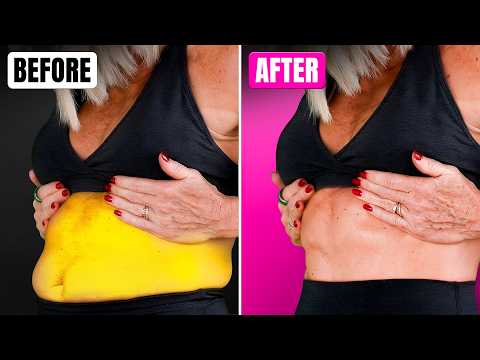
Nikkiey explains that menopause belly fat is hard to lose because falling estrogen shifts fat storage to your midsection, much of it as visceral fat that drives insulin resistance and more storage. Rising cortisol adds to it, and the usual fix of eating less and doing more cardio raises cortisol further, so the body holds on tighter.
Read the answer →
Watch or listen in full
More on this topic →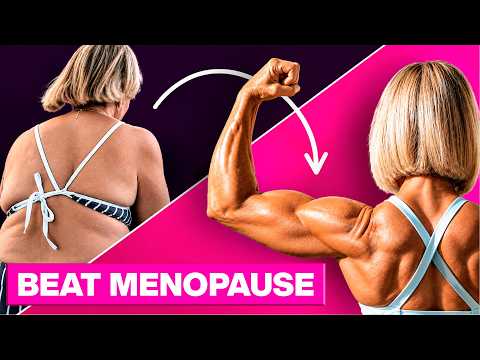 15 min
Quit Cardio, Ate More, Lost 60 Pounds in Menopause
Video · Oct 12, 2026
 14 min
Losing 60 Pounds in Menopause: 5 Habits I Stopped
Video · May 20, 2026
 9 min
How to Lose Menopause Belly Fat Without Crash Diets
Video · Jul 12, 2025