

Chapters
In this video
By 50, Nikkiey Stott had lost and regained over 200 pounds, run marathons and triathlons, and been to six doctors in one year who handed her sleeping pills and antidepressants without once mentioning hormones. In this video she lays out the roadmap she wishes someone had given her on day one of menopause, so you don't have to spend 30 years figuring it out through trial and error.
She starts with getting functional blood work from a doctor who actually looks at your hormones together, then explains why she would quit chronic cardio, start lifting heavy from week one, and never go into calorie restriction again. She talks through progressive overload, why protein changed everything for her, and how her joints, energy and waistline changed once she started working with her body instead of against it. You'll also hear from WarriorBabe members Robin and Gina.
The last two steps are the ones most women skip: treating mental health as part of the same system as metabolic and gut health, and finding a room full of women going through the same thing. If menopause has left you feeling like you're the only one failing, this is a practical, honest place to start.
Key takeaways
- Start with blood work from a doctor who looks at functional labs and how your hormones work together, rather than accepting that everything looks normal for a woman in menopause.
- Nikkiey explains that lab references are based on an average population with declining hormones, so normal results don't mean you have to live with your symptoms.
- Drop chronic cardio: in Nikkiey's view it raises cortisol in menopause, wears your body out and works against muscle you are already losing.
- Lift heavy from week one with progressive strength training, starting lighter to learn form and building toward sets close to failure.
- If you can get 12 to 15 reps, it's probably time to increase your load a little.
- Don't go into calorie restriction; track your food so you know what fueling your body looks like, and eat enough to build muscle and support energy.
- Prioritize protein, which supports muscle, bone, metabolism, hair, skin and nails and has a higher thermic effect.
- Treat mental health as part of the protocol and find a community of women going through menopause so you don't try to do it alone.
Questions answered
Why do my doctors keep saying my labs look normal in menopause?
Nikkiey explains that most doctors compare a menopausal woman to a population whose hormones are all declining, so of course the results look normal. She says that doesn't mean you have to live that way, and recommends finding a doctor who looks at functional labs and your hormones in conjunction with each other.
Is lots of cardio bad during menopause?
In Nikkiey's experience, years of marathons, triathlons and HIIT classes left her softer, with a bigger waist and worse energy. She explains that chronic cardio in menopause spikes cortisol, which tells your body to store fat, and backfires because you're already losing muscle.
How heavy should a woman in her 50s lift?
Nikkiey says heavy means something different to each woman. Start with lighter weights to get your form down, learn what pushing close to failure feels like, and if you're getting 12 to 15 reps it's probably time to increase the load a little.
Will lifting heavy make me bulky in menopause?
No. Nikkiey says it is so hard for women to get bulky that it's hard enough just to see some muscle definition, and heavy strength training is completely different from bodybuilding.
How soon did Nikkiey see changes after she started lifting?
She noticed a change in two to four weeks, first in her legs, then a slightly tighter waist and much less bloating.
Should I cut calories to lose menopause weight?
Nikkiey says she would never go into calorie restriction again. She explains that you lose weight, get stuck and are left restricting further, which isn't sustainable, so she would eat more, track her food and focus on getting enough protein.
Ask Nikkiey
Questions this video helps answer, with what Nikkiey says across everything WarriorBabe teaches.
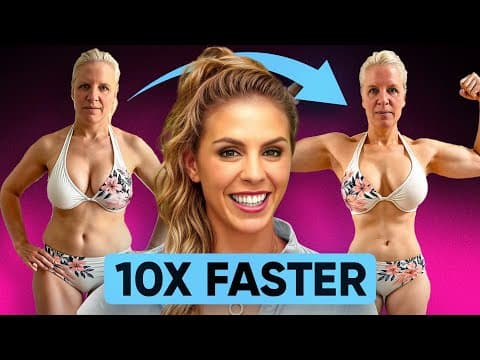
Menopause & Perimenopause Weight Loss
Do I need to do cardio to lose weight in menopause?
No. Nikkiey says cardio isn't what drives fat loss in menopause, and leaning on it can backfire. She explains that too much cardio spikes cortisol and burns muscle, especially in a calorie deficit. What she recommends instead is strength training as the foundation, plus enough protein, daily walking and proper recovery.
Read the answer →
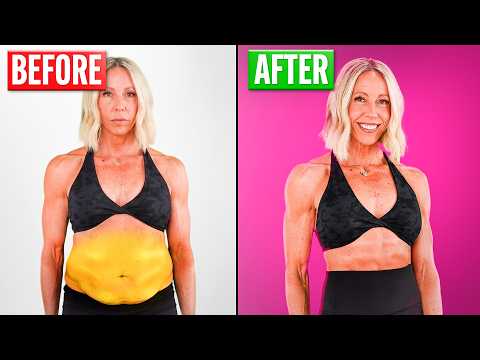
Menopause & Perimenopause Weight Loss
Why does eating less backfire during menopause?
Nikkiey explains that eating less during menopause costs you muscle, and with fewer estrogen receptors your body already struggles to hold on to it. Less muscle means a lower metabolic rate. Restriction also leaves you stuck, with nothing left but cutting further, which she says isn't sustainable. Her fix is eating more, especially protein, plus strength training.
Read the answer →
Full transcript
Nikkiey: By the time I was 50 years old, I had lost and regained over 200 pounds before I ever figured out what works during menopause. I've tried every diet I could name as a fitness professional: running marathons, doing HIIT classes at 5 a.m. every morning, just like every other woman. I only got heavier, more exhausted, and honestly, way more depressed. And if there was one thing that I would change today, if I had to go through menopause all over again, it would be exactly what I'm about to show you in this video. So if you just started menopause and nothing is working, this is the roadmap I wish someone had handed me on day one.
Number one: test your hormones with a doctor who actually looks. The first thing I do on day one isn't diet or training. It's getting the right blood work from the right doctor. Because here's a common experience that most women have when dealing with menopause. I hear time and time again that women go from doctor to doctor to doctor only to be told over and over that everything looks normal. This is exactly what happened to me. I had been to six doctors in one year and constantly kept being put on different antidepressants and different sleeping pills.
I knew innately that none of this was the information I needed. I knew that this wasn't what was really wrong with me. I needed someone to look at my entire body as a woman so that I could tell what was going on, and nothing sat right with me. So that's why I kept looking until I found someone who actually spoke the language I was looking for.
But the thing is, nothing is wrong with your body. The lab just wasn't built to find it. Most doctors are going to look at a menopausal woman and tell her everything looks normal, because it does for a menopausal woman. Everyone's hormones are declining. So when you look at the average based on a population with declining hormones, of course it's going to look normal. It's normal in menopause to have your hormones fall off a cliff. That doesn't mean that's the way you have to live day to day.
So when someone finally takes a moment to look at your functional labs, you as a whole woman, your hormones in conjunction with your other hormones, they look at everything. That's when you can start to take the steps to look upstream, find out what's actually causing the problem, causing your symptoms, and address the situation from way up the stream. Not just giving you a band-aid for the symptoms you're having today.
Many times when women are being told that they need more sleeping pills, they've got to rest more, it's as easy as looking at their progesterone. They might just need a little more progesterone to help them get better sleep, help them feel more relaxed. Also cortisol levels: they're completely tied to your estrogen levels. When your estrogen drops, women feel overwhelmed, more anxiety, more stressed out. So they don't really need more antidepressants, they need their estrogen checked. And then when they lose their drive for life, lose all motivation, anything that they enjoyed before, it's not because their anxiety and depression is taking over. They might need more DHEA, more testosterone.
There are so many symptoms that can be mitigated by looking further upstream, rather than just medication for today to get rid of the symptom today. I literally, within about a year, went to six different doctors and every single time walked out with a different sleeping pill and a different antidepressant. When really, I just needed someone to at least say the word hormone to me. Hormones were never brought up. I was a 47-year-old woman and not one doctor brought up the word hormone.
When I finally started studying and investigating for myself and asked about hormones, I was told my labs would look normal because I was in menopause. And most labs are based off a sick population. With 88% of us metabolically ill, those lab references are based on an average of a sick population. That's not the population I want to belong to. Once I had the real picture of what was happening inside my body, the next decision went against everything I'd built my career on.
Number two: I stopped chronic cardio. I would quit all the cardio. I ran marathons. I did triathlons. I did HIIT classes at 5 a.m. On paper, I had one of the most impressive cardio resumes of any woman my age. And every single year in menopause, my body just got softer. My waist got bigger. And my energy got worse. Cardio wasn't the solution. It was the cause of everything that was happening. The bigger and softer I got, the more cardio I added. I was doing exactly the opposite of what my body actually needed.
I had been taught my whole career that I just needed to restrict more and move more. All I was doing was raising my stress hormones, wearing my body out, causing more fatigue. My body never had a chance to recover because I thought if I stayed up late and got up early, I was a go-getter. I was doing everything I thought I should do. I would wake up in the morning and plan my day around how much I was going to work out. I would go for a run. I would go for a swim. I would go for a long bike ride. I was moving all the time. And if I wasn't moving, I felt guilty about not moving.
I started to realize that my body wasn't responding the way it used to when I was young. When I was young, had I worked out two, three hours a day, my body would have responded a lot differently. I would have been tighter. I wouldn't have had to fight so hard to stay lean. I noticed I was literally swimming upstream. For how much I was moving, I should have looked a lot better. So I knew something had to change.
Still to this day, I watch women my age on the treadmill go and go and go and never once even consider lifting weights. And I would love to beg them to stop wasting so much time, because time can be spent so much better, so much more efficiently, if we just do what our body is actually calling for. And that is to fuel it better and to stimulate more muscle growth.
Chronic cardio in menopause spikes cortisol. And cortisol tells your body to store fat rather than to burn it. This much cardio in menopause backfires because we're already losing muscle. So if we are not intentionally doing movements, doing exercises that help to support our muscle mass, it's going to backfire. Because the more muscle we lose, the slower our metabolism, and the less our body knows what to do with the fuel we're giving it.
If we want to continue to enjoy our food, have metabolic freedom, be able to eat some carbohydrates, some fat, some protein, and have our body know what to do with the fuel we're giving it, we've got to have some muscle. And that takes intentional work.
It's also very common as your hormones decline that your gut microbiome changes. Your body doesn't respond the same as it used to to the foods you're used to eating. So by the end of the day, you feel bloated, you feel exhausted, and your waist continues to grow. And that exhaustion, that feeling, it doesn't go away. Your sleep starts to suffer. So those moments you used to wake up, feel refreshed and ready to start the day, you stop feeling that way. And the cycle just continues to go faster and faster as you spiral downward.
It was strange to me because I didn't weigh that much more than I used to weigh. But my clothes fit much tighter. A lot of them didn't even fit anymore, especially the way they used to. They might be a little baggier on my legs, but I could barely do up the button. My body composition was changing as my muscle was declining. And no matter what I did, I could not get the number on the scale to go down.
So I tried a different tactic. I actually started going to the gym with my kids. We started lifting weights, and I didn't really have time for all that cardio anymore. And within weeks, I noticed I felt different. My body felt stronger. I didn't feel bloated and exhausted, and my recovery was actually a lot better. I started to actually notice muscle in my body. I hadn't seen that for years. And it felt really good to finally see my body responding to something, responding to something different.
This brings me to the single biggest lever, which changes more than diet and cardio combined. I wish I had pulled this lever earlier.
Number three: lift heavy. I would start lifting heavy from week one. And I don't mean the little pink dumbbells in the back corner of the gym. I mean the real heavy weight and progressive strength training. Because once estrogen drops, your body stops protecting your muscle for you. So if you're not actively building it, you're losing it. And with it, you're losing your metabolism, your bone density, and your insulin sensitivity. Basically, everything that makes you feel young is going out the window.
Heavy means something different to each woman. I didn't start off as heavy as I could. I started off getting the movements down, working my body to a place where I was almost going to failure. Now I understand what that feels like. I understand if I'm getting to 12, 13, 14, 15 reps, it's probably time I up my load a little bit. When you're starting this brand new as a woman in your 50s, take your time. Try out some lighter weights. Get your form down. Learn how the movement should look and feel. And then you start to learn what failure, what pushing your body, really feels like. It takes some time, but you get to watch your body change as you're going through this process.
Lifting heavy doesn't mean you have to be a bodybuilder. It means you're putting enough stimulus on the body to actually gain muscle. It is so hard for women to get bulky. It's hard enough just to see some muscle definition. Bodybuilding is completely different than just heavy strength training.
I noticed a change in two to four weeks. I started noticing it in my legs first. Then I started to notice that my waist was just a little tighter, much less bloating. And then there's that day when you're combing your hair and you notice a little bicep, a little round muscle. I hadn't seen that in a good 10, 15 years. So to watch your body respond to this type of stimulus is motivating, energizing, and helps you feel like what you're doing is actually making a difference in your body.
And I'm not going to lie, I was shocked, because what I'd done in the past should have been working. It wasn't. Me being able to leave the gym without feeling totally smashed, sometimes I didn't even sweat, yet I was seeing changes in my body. That shocked me the most. I was so surprised by this.
Because once estrogen drops in menopause, your body stops protecting your muscle for you. And muscle is what drives your metabolism and how young you feel. Strength training isn't the thing that will leave you looking too bulky or will lead you to injury. It's what you need to have youth in your life once again.
As I started to watch my body composition change, I honestly didn't want to look at the scale. I knew that whatever I saw, my brain would get obsessed with. And honestly, I just felt so much better. And that meant more to me than any number I could see on the scale. I was so relieved that my body was finally responding to something. So that menopausal weight gain started to change because my body composition was changing. That muscle was starting to shine through. My waist was starting to tighten up.
There were so many menopause symptoms I thought I just had to live with, like the expanding waist, the sleepless nights, the aching joints. I honestly thought that's just the way I'm going to feel the rest of my life. I couldn't go up or down stairs without having a death grip on the railing. Now I can fly up or down the stairs without even thinking about my knees. Not only has the strength training helped my joints, but also estrogen helps support your connective tissues. So my joints feel better than they did in my 30s. I ended up leaner, stronger, and with more energy than I had in my 30s, working out a fraction of what I used to work out.
Now I want to show you what happens when women get their first three pieces right and they have the right support around them. This is Robin. She came into WarriorBabe at 61 years old. Three surgeries, menopause, and a nutritionist had her eating 1,100 calories a day. And she was still gaining weight and exhausted. She started lifting, started eating more, stopped doing endless cardio. She's now almost buying bikinis and tells us her sex drive came back. She missed eight workouts in all in 2024, at 61. That's what happens when you stop fighting your body and start working with it.
Now here's Gina, who came into WarriorBabe deep in the menopause struggle. Gaining weight, exhausted, tried everything. What was she doing before? The cardio, the restriction, the giving up. What did she change with our help? Now she's finally seeing muscle. She has more food freedom. She's able to eat much more than she ever had before and is not obsessed with the scale or with what she's going to eat next. She feels better mentally and physically than she has in years.
That being said, I want to cover why any diet I followed through my entire journey as a certified fitness professional didn't work.
Number four: eat more. I lost and regained over 200 pounds dieting four separate times. And every single time it came back, it came back faster, heavier, and in places it had never sat before. Because every time I starved myself, I broke my metabolism. I broke it a little bit more.
If I were starting menopause today, I would never, not even once, go into calorie restriction. What happens with calorie restriction is you lose weight, but then you get stuck. And the only thing left to do is restrict even further. This is why calorie restriction doesn't work for most people. It's not sustainable. It's not something you can do for the rest of your life. You need to pick a plan that you can do for the rest of your life and be happy doing it.
I got so tired of thinking about what I was going to eat every single moment. I would go to sleep worried about what I would eat in the morning. I would eat breakfast worried about what I would eat for lunch. Eat lunch worried about what I was going to eat for dinner. Or what would happen if I got hungry and if I would cave before I went to bed. This is what under-eating does. Your body wasn't meant to restrict this much. Food is a happy part of life. You should get your metabolism in a place where you don't have to obsess about food. Simply give it what it needs to grow muscle, have energy, sustain a good hormone balance, and not obsess 24 hours a day.
I remember the first time I went to bed not judging myself. And it was a light bulb moment. I used to go to bed every night rating myself. Was today a good food day or a bad food day? If I went to bed feeling pretty hungry, forcing sleep to come, I knew it was a good food day and I could go to bed without guilt. I remember the first time I went to bed and thought, did I eat enough to keep the muscle I've worked so hard for? And it made me realize I'd gotten to a new point. A point where I had more food freedom and I understood what food was actually for. It was for fueling my body, for supporting my body. And I no longer felt the need to punish myself for eating.
Instead, I would start eating more immediately. I would track my food so I knew what it looked like for my body. And I finally started focusing on getting the right amount of protein. Understanding protein changed everything. I'm not going to lie, one of the things I loved most about it is that protein has a higher thermic effect. So my body, just digesting the protein, is going to burn more calories. That was one of the main draws. Then actually understanding what it did to support my body, to support my muscle, my bone, my metabolism, my hair, my skin, my nails. There was no reason not to up my protein at this point. When I would go to the gym and work so hard, push so hard on every single set, I wanted those to count. And understanding how protein works to support muscle, grow muscle, and actually help change my body composition, I was sold.
Now, something that would have solved all of this for me, made this a lot better, was the Macro Method. Because what I didn't realize at the time was that I could still enjoy eating what I loved and fuel my body properly without actually starving myself. The Macro Method is something that has helped thousands of women start fueling their body efficiently, and it's something I wish I would have had sooner. If you want to check it out, the link is in the description.
But every time I restricted, I didn't just destroy my metabolism, I destroyed my mental health alongside it. And for years, I never thought the two issues were connected.
Number five: treat your mental health as part of the protocol. I was on antidepressants for 27 years. There were mornings I didn't want to wake up. And for most of those years, I thought depression was one problem, and that weight and metabolic health was another. I thought my body was one system and that my mind was a whole different system, but that wasn't the case.
Once I started understanding the direct correlation between metabolic health, gut health, and mental health, I knew how important it was to start fueling my body well. All I wanted to do was feel better. And as I started to feel better, I naturally started to look better. You can't heal a body you hate. You also don't lose weight to get healthy. You get healthy and your body becomes the size it was intended to be.
Once I started understanding those blood sugar spikes and blood sugar dips and how my energy was sustained, it directly correlated to my mental health. Just learning what my body was capable of helped me have more confidence, helped me feel more energy and vigor for life, for what I could accomplish. Just learning what your body is capable of at this stage does something to you mentally.
And as you become more metabolically fit, it directly correlates with your brain health, your cognitive function. Your brain fog goes away. You start to feel a vigor for life. You want to start new projects. You want to go out and talk to people. You're not coming home from work, putting on your sweats and wanting to hide from the world. You become more resilient again. You don't feel as pressured. You don't feel as much anxiety. The world doesn't feel quite as heavy.
I spent 30 years figuring all of this out through trial and error. And even when I thought I'd solved everything, I kept making the same mistake. I was trying to do it completely alone.
Number six: find the room. Stop trying to figure everything out alone. For decades, I thought this was my individual problem to solve. I thought I was the only one going through this. My body, my mistake, so I have to fix it. I'd read a new book. I'd try a new protocol. I'd fail and I'd blame myself for everything. What I really needed was a room full of women who were living it at the same time as me. Women who understood the night sweats, the mood swings, the weight that showed up overnight, and the husband who didn't get it. Women who could tell me, you're not crazy.
At the time I was going through this, none of my friends were talking about this. We all probably felt a sense of shame or disappointment. We were the moms that did everything. We got our kids to practice. We showed up to all their ball games. We could stay up all night doing projects. We were cooking homemade meals. We were exercising. We were working. We were doing everything. And suddenly we couldn't make it happen anymore. And I think a lot of us don't turn to each other because we're ashamed that we can't do it all.
I think this is why menopause gets so isolating. There's a lot of shame and embarrassment about the way you feel. You look around you and feel like everyone else has it figured out. And you feel like you're the only one failing in these everyday tasks. You feel like you're the only one with a struggling marriage, with anxiety, with depression, and you want to hide it. That's not something you want to show everyone around you. But finding out that other women are dealing with exactly what you are changes everything. It gives you support, community. It helps you feel more hopeful for what the future holds.
When I started working with the women in the WarriorBabe program, I learned this right off the bat. We're all going through different versions of the same thing. And what a relief it is to see that you're not alone, that you're not broken, how common this is, and that there are tools to help you get through it. That life can actually be better on the other side, not worse. So understanding that women have been through it and they've made it through and they're happy and they're thriving, that's what changed most when I got into the WarriorBabe community. WarriorBabe was built because that was the support we needed and couldn't find anywhere else. If that's the room you need, the door is always open.
I can't go back and hand this roadmap to the 2005 version of me, but I just handed it to you. You don't have to spend 30 years figuring out what works in menopause. You don't have to lose and regain 200 pounds before you find the answer. You're already ahead of where I was because you have this video. So start with your hormones. From there, the cardio comes out and the weights go in. Eat enough to support the body you're building. Treat your mind as part of the same system. And whatever you do, don't try to do any of this alone. I'll see you in the next video. Good luck.
Up next
Everything → 55 min
Lifting, Under-Eating and Perimenopause: Truths After 40
Episode 300 · Oct 6, 2025
 12 min
Is Overtraining Causing Your Menopause Weight Gain?
Video · Jul 1, 2026
 1 hr 0 min
How Should Women Train and Eat in Perimenopause?
Episode 324 · Jan 2, 2026
Best of Menopause & Perimenopause Weight Loss
All 75 → 1 hr 1 min
Early Perimenopause Signs Women Over 40 Should Know
With Dr. Jolene Brighten
 1 hr 0 min
How Menopause Changes Your Metabolism and Fat Burning
With Michal and Merav
 51 min
How to Lose Body Fat in Menopause by Eating More
Episode 310 · Nov 10, 2025