

Chapters
In this video
If your usual weight loss tricks stopped working once menopause arrived, Nikkiey Stott's point is that it isn't your fault. Your biology changed. She explains that when estrogen drops, fat starts storing around the belly. Then the classic response of slashing calories and piling on cardio spikes cortisol and keeps you stuck.
In this video Nikkiey covers what she would not do: keep cutting calories, rely on cardio, or follow the old eat less, move more model. She shares her own burnout story from nursing school and the story of her client Kathy, 54, who started leaning out in under eight weeks once she ate more protein, cut back on cardio and started full body strength training.
She finishes with her own routine and a simple framework to start with. Track macros with high protein. Lift with full body sessions and progressive overload. Walk 8,000 to 10,000 steps a day and take recovery seriously. The thing she stresses most is consistency, because two to three solid sessions a week beat seven random ones.
Key takeaways
- Stop slashing calories and piling on cardio, because Nikkiey explains this spikes cortisol in a body already under hormonal stress and makes belly fat harder to lose.
- If you have been under-eating for years, increase your calories, especially from protein, so your body stops holding on to fat in defense mode.
- Use daily walking for movement rather than relying on cardio to burn fat, aiming for 8,000 to 10,000 steps a day at minimum.
- Track your macros with high protein, smart carbs and healthy fats, and hit your numbers consistently instead of restricting food.
- Lift with full body sessions built around compound movements like squats, deadlifts, hip thrusts and presses, using progressive overload by lifting heavier or improving form each week.
- Include just one leg movement per session to avoid the soreness that wrecks your whole week, and add accessory work for shoulders, back and arms.
- Take recovery seriously with seven to eight hours of sleep, deep breathing or meditation when needed, and real rest days.
- Prioritize consistency, because two to three solid strength sessions a week beat seven random ones.
Questions answered
Why is belly fat harder to lose in menopause?
Nikkiey explains that when estrogen drops, your body loses a key regulator of fat distribution, so fat starts storing around the belly even if your routine hasn't changed. Cutting calories hard and adding lots of cardio then spikes cortisol, which she says slows metabolism and makes your body hold on to belly fat.
Should I eat less to lose belly fat during menopause?
According to Nikkiey, no. If you've been under-eating for years, your metabolism has slowed and your body is holding on to fat, so she recommends increasing calories, especially from protein, alongside strength training.
Is cardio good for losing menopause belly fat?
Nikkiey is all in on daily walking, but she calls relying on cardio to burn fat in menopause a trap. She says too much cardio spikes cortisol, burns through muscle and tanks recovery.
How often should I lift weights to lose belly fat in menopause?
Nikkiey lifts four times a week using full body sessions. As a starting framework, she suggests full body workouts a few times a week and says two to three solid sessions beat seven random ones.
How many steps a day should I walk in menopause?
Nikkiey walks every day and aims for 8,000 to 10,000 steps minimum.
Ask Nikkiey
Questions this video helps answer, with what Nikkiey says across everything WarriorBabe teaches.

Menopause & Perimenopause Weight Loss
Do I need to do cardio to lose weight in menopause?
No. Nikkiey says cardio isn't what drives fat loss in menopause, and leaning on it can backfire. She explains that too much cardio spikes cortisol and burns muscle, especially in a calorie deficit. What she recommends instead is strength training as the foundation, plus enough protein, daily walking and proper recovery.
Read the answer →

Menopause & Perimenopause Weight Loss
Can eating too little make belly fat worse?
Yes, according to Nikkiey. She says chronic under-eating, often 1,100 to 1,300 calories a day, signals famine to your body. That raises cortisol, slows metabolism and makes your body hold on to belly fat. Her fix is eating enough, with protein at every meal, plus strength training and real recovery.
Read the answer →
Menopause & Perimenopause Weight Loss
Why is menopause belly fat so hard to lose?
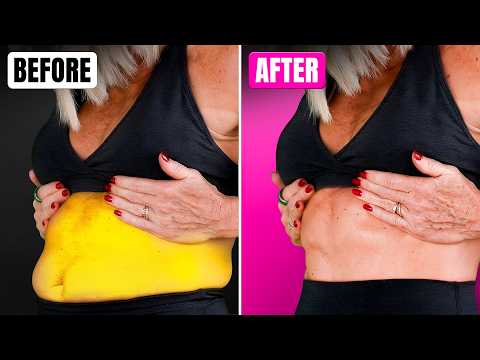
Nikkiey explains that menopause belly fat is hard to lose because falling estrogen shifts fat storage to your midsection, much of it as visceral fat that drives insulin resistance and more storage. Rising cortisol adds to it, and the usual fix of eating less and doing more cardio raises cortisol further, so the body holds on tighter.
Read the answer →
Full transcript
Nikkiey: After transforming my own body and coaching 20,000-plus women through menopause, I've learned one brutal truth. Everything you've been told about belly fat is a lie. If I were in menopause and wanted to lose belly fat, this is the exact playbook on what I'd do, how I'd do it, and just as importantly, the outdated stuff I would not do. This isn't the same old BS advice that you've seen before. Stick around, because if you don't, you risk staying trapped in the same loop of yo-yo diets, endless cardio, crazy diets and seeing no results. Let's dive in.
Why belly fat becomes harder to lose in menopause. First things first: if your usual health or weight loss tricks stopped working after entering menopause, it's not your fault. All your biology did was change. Studies have shown that a significant number of women experience weight gain, with 20% gaining 10 pounds or more and 60% exceeding their ideal BMI during the transition. And the information I'm about to share in this video will feel different than anything you've been told in the past.
But before I get into exposing the outdated stuff that doesn't work, then at the end revealing what does work, I know you're probably asking, why does belly fat become harder to lose in menopause? Well, here's why. Let's break this down in a way that actually makes sense, because once you understand why your body is doing this, you can stop beating yourself up and start working with it.
When estrogen drops during menopause, your body loses one of its key regulators for fat distribution. That means fat starts storing in new places, especially around your belly, even if nothing else in your routine has changed.
Now, here's where the spiral starts. Most women panic. They think, I must be eating too much, or I just need to move more. So they slash their calories and pile on the cardio. But when you do that in a body that's already under hormonal stress, you spike cortisol, your stress hormone, and that sends your body into full-on survival mode. Cortisol is like the ultimate fat storage switch. When it's elevated constantly, your metabolism slows and your body holds on to fat, especially around the belly. And even if you're barely eating, you don't see the scale move. So the more you try to fix it with old-school tactics, the more stuck you feel.
So if you feel like your body is fighting you, it probably is, because the strategies that worked at 30 don't work at 40-plus. Understanding this biological shift is step one to changing your approach.
I had a client named Kathy, 54, one of the most disciplined women that I've ever met. But after menopause hit, she was gaining weight even though she was eating less and training more. She was exhausted, frustrated and ready to throw in the towel. I told her to stop starving herself, to cut back on the cardio, and to start fueling her body like it deserved. We gave her more protein, a structured full body strength training plan, daily walks and proper recovery. In less than eight weeks, her midsection started leaning out, her energy came back, and she messaged me saying, "For the first time in years, I actually feel strong and feminine again." That's what happens when you stop doing what used to work and start doing what your body needs now.
What I wouldn't do, that most women still try. I've discovered a mistake I see 90% of women making, and it's keeping them stuck. Because all 20,000 of the clients we coach are able to eat more but lose weight, while others, like you watching this video right now, fail to understand how to do it the right way.
Menopause is like a second puberty for women, but this time, you're the author. Your body is changing, but instead of feeling like it's falling apart, this can be the moment it comes together.
Here's the biggest mind blow for most women I coach: you need to eat more to lose fat. I know this sounds backward, but if you've been under-eating for years, your metabolism has slowed to a crawl. Your body is in defense mode. It's holding on to fat because it doesn't feel safe. When you reverse that by increasing calories, especially from protein, and give your body the strength training it craves, the fat finally starts to fall off.
Now, let's talk about cutting calories. When you keep slashing your intake, your body adapts, but not in a good way. Your metabolism slows down to match your new lower intake. You start losing muscle, your energy tanks, your stress hormones rise. That's when sleep gets worse, cravings get worse, and ironically, your belly fat becomes harder to lose. It's not because you're lazy. It's because your body is trying to survive.
And cardio: too much of it just makes it worse. It might feel productive in the moment. You're sweating. You're burning calories. But over time, it wears you down. It spikes cortisol even more, it burns through muscle, and it tanks your recovery. And when recovery goes down, your results follow. So while movement is great, and I'm all in for daily walking, relying on cardio to burn fat in menopause is a trap.
The old model of eat less, move more is dead. What works now is eat right, train smart, recover well. I'm not giving you the entire playbook of what we do until part three of this video, but I will say you're not lazy and you're not broken. You've just been following outdated advice.
And I get it. I used to believe all that outdated advice, too. I remember back when I was in nursing school doing 12-hour shifts and thinking that if I just ate cleaner and trained harder, my body would finally show it. I was sleeping four hours a night, living on protein bars and stress, and still hitting the gym. I ended up flatlining physically, mentally and emotionally. I landed in the hospital from adrenal fatigue and burnout. That was my wake-up call. I realized it wasn't a me problem. It was the plan that I was following. And I don't want any woman watching this to have to hit rock bottom just to find out that there's a better way.
This is exactly why we created WarriorBabe: to help women like Lynn, who only dropped one pound on the scale but completely transformed her body at 51 after every diet failed her. Or Melissa, a busy mom who kissed her love handles goodbye while managing a household, without extreme diets or living in the gym. And you could be next. Click the first link below if you want to apply to become the next WarriorBabe.
What I'd actually do to lose belly fat in menopause in 2025. Now it's time for what you actually clicked on this video for. If I had to start menopause tomorrow, this would be my battle-tested formula. This is exactly what we're using with our 20,000 clients who are seeing killer results despite age. I don't want to waste any more of your time, so let's get into it.
Now, even though I'm not in menopause yet, everything I do is built to support a strong metabolism, hormone balance and longevity, because I'm playing the long game. Here's what my routine looks like and what I have every one of my clients do.
I start with macros: high protein, smart carbs and healthy fats. I don't restrict food. I fuel intentionally. I know my numbers and I hit them consistently, because muscle doesn't grow on low calories and stress. It grows on fuel and proper training.
I lift four times per week. Each session is a full body split with a focus on compound lifts: squats, deadlifts, hip thrusts and presses. I train with intention and progressive overload. That means each week I'm either lifting heavier or pushing better form.
I also walk every day, 8,000 to 10,000 steps minimum. And I take my recovery very seriously: seven to eight hours of sleep, deep breathing or meditation when needed, and actual rest days.
Now, there's no one perfect workout for everyone. Your body, your pace. But here's a simple framework to start with. Full body workouts a few times per week: efficient and recovery friendly. Lift heavy with good form. Focus on movements like squats, deadlifts and presses. Add one leg movement per session; that avoids soreness that wrecks your entire week. Include accessory movements, especially for your shoulders, your back and your arms. And most important, stay consistent. Even two to three solid sessions a week beat seven random ones.
Now you know exactly how to lose belly fat in menopause. But what if I told you this is only one part of the process? If you want to lose 20 pounds and get lean, watch this video next. And I'll see you next time. Bye.
Up next
Everything → 8 min
Menopause Belly Workout and Diet Plan for Busy Women
Video · Feb 21, 2026
 39 min
How to Do a Cut: When to Start and When to Stop
Episode 199 · Oct 18, 2024
 7 min
25-Minute Dumbbell Workout for Menopause Belly Fat
Video · Sep 24, 2025
Best of Menopause & Perimenopause Weight Loss
All 75 → 55 min
Lifting, Under-Eating and Perimenopause: Truths After 40
Episode 300 · Oct 6, 2025
 1 hr 1 min
Early Perimenopause Signs Women Over 40 Should Know
With Dr. Jolene Brighten
 1 hr 0 min
How Menopause Changes Your Metabolism and Fat Burning
With Michal and Merav