

Chapters
In this video
For more than five years, Nikkiey Stott did what she thought she was supposed to do: hours on the treadmill, Pinterest workouts, Googled high-protein meals. Nothing changed. In this video she walks through her whole fitness journey, from hiding in baggy clothes in her early 20s to winning three natural bodybuilding competitions, and the five mistakes that kept her stuck: no structure, relying on motivation, avoiding weights, guessing instead of tracking, and living in extremes.
She is honest about the part most people skip. After her first show she gained 25 pounds in a month, and the same restrict-compete-crash cycle repeated after every competition. The turning point came in 2018, when she learned to track macros and build meals around foods she enjoys. She says she hasn't yo-yoed since.
She closes with the five-step roadmap she now teaches inside WarriorBabe: track everything for seven days to find your baseline, set a protein target of around one gram per pound of body weight, reverse diet if you've been under-eating, strength train three to four times a week with compound lifts and progressive overload, and measure progress with more than the scale.
Key takeaways
- Stop guessing with random online workouts and get a structured program or a coach, because structure changes everything.
- Build your routine on a system rather than motivation: put non-negotiable workouts on your calendar and prep meals ahead to remove decision fatigue.
- Make strength training three to four times a week the foundation and let cardio support your routine, since cardio only burns calories while you're doing it and muscle changes your body around the clock.
- Start by logging everything you normally eat for seven full days without trying to eat clean or restrict, so you can see where protein is missing and where calories are sneaking in.
- Aim for a protein target of around one gram per pound of body weight per day to support muscle, fullness, blood sugar and metabolism.
- If you've been chronically under-eating, reverse diet by raising calories about 100 to 150 a week while lifting consistently, and track mood, energy, sleep and strength rather than just the scale.
- Focus your lifting on compound movements like squats, deadlifts, presses and rows, and gradually increase weight or reps over time.
- Track progress weekly with progress photos, how your clothes fit, your strength and your energy, because you can gain muscle and lose fat while the scale barely moves.
Questions answered
Why doesn't relying on motivation work for staying consistent?
Nikkiey explains that motivation is an emotion, so a routine built on how you feel rather than what's planned won't last long enough to change your body. She recommends a system instead: non-negotiable workouts on your calendar and meals prepped ahead so you don't rely on willpower every day.
Why doesn't cardio alone make you look toned?
Cardio only burns calories while you're doing it, and the effect stops when you step off the treadmill. Muscle changes your body 24/7, raises your metabolism and creates the toned, defined look, so cardio might make you smaller but strength training reshapes your body.
How much protein should I eat to change my body composition?
Nikkiey recommends around one gram of protein per pound of body weight per day. She says it supports muscle, keeps you fuller, stabilizes blood sugar and increases metabolism because your body burns more calories digesting it.
How do you reverse diet if you've been under-eating?
Slowly increase calories week by week, typically around 100 to 150 calories at a time, while lifting weights consistently. Track your mood, energy, sleep, strength and focus, because the scale might not drop right away even as things improve.
Why did Nikkiey gain weight back after her bodybuilding competition?
After months on a very restrictive plan, she went straight to eating all the foods she had cut out and gained 25 pounds in one month. She says it taught her that if the process isn't sustainable, the results won't be either.
How should I track progress besides the scale?
Each week, look at your energy, strength in the gym, how your clothes fit, progress photos and your mood. Nikkiey notes you could be gaining muscle and losing fat at the same time, so the scale may not move much while your shape changes.
Ask Nikkiey
Questions this video helps answer, with what Nikkiey says across everything WarriorBabe teaches.
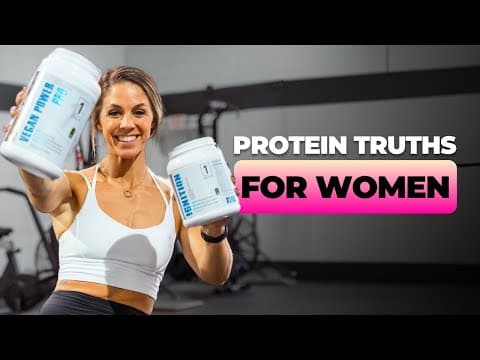
Protein for Women
How much protein do I need to lose fat and build muscle at the same time?
Nikkiey's range is about 0.8 to 1 gram of protein per pound of body weight per day, so roughly 150 grams if you weigh 150 pounds. If you have a lot to lose, she bases it on your goal weight instead. One video also sets 100 grams a day as your minimum.
Read the answer →
Consistency & Mindset
What is the difference between motivation and discipline?
Motivation is a feeling, and discipline is an action. Nikkiey describes motivation as a fleeting emotion that ebbs and flows and runs dry at the worst times. Discipline is showing up to do the work you planned even when you don't feel like it. She credits 99.9 percent of her own success to discipline.
Read the answer →
Full transcript
Nikkiey: For over five years, I did everything I thought I was supposed to do in order to lose weight. I ran on the treadmill for hours, I googled high-protein meals, I followed Pinterest workouts, and yet nothing worked. I went from being the girl who hid in baggy clothes and couldn't stick to a plan to becoming a three-time undefeated natural bodybuilding champion who's helped over 20,000 women transform their bodies through WarriorBabe. And in this video, I'm walking you through my entire fitness journey: every mistake I made, the moment everything changed, and the exact roadmap I've used since 2018 to maintain my physique without extreme dieting, so you can start using it today. Let's get into it.
Back in 2010, in my early 20s, I was desperate to change my body composition because I didn't feel confident in my own skin. I avoided photos, I wore baggy clothes constantly, and I remember feeling like I was watching other girls feel good about themselves while I didn't. It wasn't even just about how I looked, it was how uncomfortable I felt inside my own body. I knew I wanted to change, but I had zero direction on how to do it the right way. There were five mistakes I kept making when I first started that so many women are still making today.
These kept me stuck for years. And if any of them sound familiar to you, you'll know exactly why nothing's working. Between 2010 and 2014, I was doing what I thought was being consistent. I was living on Pinterest workouts, Googling high-protein meals, and spending hours on the treadmill thinking that sweat meant progress. I avoided the weight room completely because I had no idea what to do in there. There was just no structure, no plan, and no real direction. I was just hoping something would work.
Now, if I could go back, I would tell myself: get a structured program or hire a coach. Stop guessing, stop wasting years trying random things, stop Googling and causing more confusion. Structure can change everything.
Mistake number two: relying on motivation instead of a system. A typical week back then was completely driven by emotion. If I woke up Monday feeling motivated, I'd go all in. I'd hit the gym, I'd eat perfect, and feel like I was finally getting my life together. But if Wednesday came around and I was tired, stressed, or just not feeling it, I'd skip.
Then if I ate something I considered bad on Friday, I'd totally mentally check out and find myself starting all over again on Monday. Everything depended on how I felt that day. The problem with that is motivation doesn't work long term because it's an emotion. And if your fitness routine is built around how you feel instead of what's planned, you'll never stay consistent long enough to see real, lasting change with your body. So what I eventually learned is you don't need more motivation. You need a system. You need a non-negotiable workout on your calendar.
Meals prepped ahead of time, structure that removes your decision fatigue. When things are planned and prepared, you don't have to rely on willpower every single day. You just go on autopilot and you follow the routine. And that's when consistency finally became automatic for me.
Mistake number three: avoiding weights and doing endless cardio. I was honestly so intimidated by the weight room. I didn't know what to do. I was worried about people watching me. I didn't understand the machines, and I felt like everyone else knew exactly what they were doing except for me.
So I stayed where I felt most comfortable, on the treadmill. I truly believed that cardio was the key to losing body fat. And I had this fear that if I started lifting weights, I'd get bulky. What I didn't understand is that cardio only burns calories while you are doing it. The moment you step off the treadmill, that effect stops. Muscle, on the other hand, I learned, changes your body 24/7. The more muscle you have, the higher your metabolism is. Muscle gives your body shape. It's what creates that toned, defined look most women are actually going for.
Cardio alone might make you smaller, but it won't give you the definition or the structure you're looking for. So looking back now, the foundation should always have been strength training three to four times per week, because that's what actually builds muscle on the body. Cardio is great for your health, your heart, your endurance and your overall wellness, but it shouldn't be the main factor of your routine. It should support your routine.
Mistake number four: trying to be good instead of tracking. You can't manage what you don't measure. Guessing feels productive because you're trying, but it keeps you in the dark. You might be eating too little. You might be eating too much.
You might think you're eating high protein when you're actually not even close to it. Without data, there's no way to adjust or improve. That shift for me was simple, but so powerful. I started tracking. I used MyFitnessPal. I weighed my food. I set actual targets. I knew what my body needed, and it wasn't obsessive. It was strategic. Even just tracking consistently for two to four weeks teaches you so much about your habits, your portion sizes, and where your nutrition actually stands. That awareness alone can completely change the direction of your results.
Now, this next part of my story is the reason why I'm sitting here today. I'm at the gym doing what I always did, just grinding away on the treadmill with no real direction. And the manager of the gym I went to walked over to me, and what came out of his mouth completely changed the path of my life: "Are you training for a bikini competition?" When that gym manager asked me that, I literally laughed out loud. I thought he was joking. I remember looking at him like, there's no way you're serious. Because in my mind, I was still the girl who hated her legs, who avoided mirrors, who never wore shorts unless I absolutely had to.
I didn't see anything special when I looked at myself. I just saw someone trying, but not getting very far. The idea felt so far removed from how I saw myself that it almost felt insane and ridiculous. But what stuck with me wasn't the question itself. It was the fact that someone saw something in me that I couldn't see yet in myself. He saw potential. He saw strength and possibility before I ever believed it was there. And that moment planted a big seed. It made me pause. It made me think, what if I'm capable of more than I think I am? And that was the moment everything started to shift.
Up until then, I was guessing. I was piecing things together. I was hoping something would actually work. But that one comment pushed me to take it seriously and invest in a coach, to finally have structure, guidance, and a real plan in place. Looking back, it wasn't just about competing. It was about having someone believe in me before I fully believed in myself. Sometimes that is all it takes: someone to show you what's possible, to hold up a different version of your future right in front of you, and then give you the roadmap to get there.
And then once I had a coach and I had the plan, something shifted even more. I went from trying random things to actually executing. And what happened next was the hardest eight months of my life, but also the most transformative. Going all in for me meant full commitment in a way that I had never experienced before. I made the decision that if I was going to do this, if I was going to go into competition mode, I wasn't going to do it halfway. I remember very clearly making the decision, hiring the coach, and then ordering my last meal, which was a milkshake and candy.
And then telling myself, this is it. This is the last time I'm going to eat this way. The next day, I cut everything cold turkey. There was no easing into it. There was no, oh, I'm just going to give it a little bit. I knew for me, I had to draw a hard line and commit. From that point on, everything became structured. I prepped every single meal ahead of time, so there was no guessing. There was no grabbing something random. No milkshakes and candy. No falling back into old habits. I wasn't just going through the motions anymore. I trained like my life depended on it. I followed a very strict bodybuilding plan for the first time ever.
And I stuck to it, even on days I didn't feel like it. And the truth is, life didn't slow down during that time to make it all easier. When I decided I was going into competition mode, I was also in nursing school, which meant very long days, studying, stress, and very little free time. I was also caregiving for my grandmother, which came with its own emotional and physical demands. I was exhausted the majority of the days. I had moments where I questioned if I could really keep this up, if I could really follow through, if I could really do it.
I remember bringing prepped meals to family gatherings, to school, to work, everywhere. With friends, with family. Family would tease me, not in a mean way, but enough that it made me feel different. I'd be sitting there eating out of containers while everybody else was having their normal dinner. And inside, in those moments, I was fighting cravings constantly. I was fighting sugar cravings. I was also fighting self-doubt. There were moments where I wondered if this was way too extreme, or if this would even pay off in the long run.
There were nights that I went to bed thinking, can I actually do this again tomorrow? But I kept showing up. I stayed locked in because for the first time I had a vision of what I wanted and a plan to actually get there. And that commitment, that discipline, that willingness to keep going even when it felt hard, that's what changed everything. Then eight months later, I stepped on the stage. I beat the professionals and I won my very first competition. I was in the best shape of my life and I thought I had finally figured it out.
But within 30 days, everything fell apart. And what happened next taught me the most valuable, important lesson of my entire fitness journey. This is the part of my story that most people wouldn't share, but I think it's the part that matters the most. After my very first competition, I gained 25 pounds back in one month. It happened so quickly. I went from following a very restrictive plan for months to suddenly eating all the foods that I had been cutting out and saying no to.
At first, it felt like I was just enjoying the freedom, but it didn't take long before I felt like I had completely lost control. Physically, I felt terrible. I was constantly bloated, exhausted, inflamed. I remember being on a 12-hour nursing clinical in school, on my feet all day long, and my shins felt like they were going to split open from the swelling. My body felt heavy and so uncomfortable. The complete opposite of how strong and confident I had felt just weeks before.
Emotionally, it was the hardest thing I was going through. I went from one of the proudest moments of my life, stepping on stage and winning after spending months grinding, to feeling like everything had just fallen apart so fast. I kept thinking, how did I lose this all so quickly? It was a crash in every way, but that experience taught me something that I've carried with me ever since. Progress isn't linear, and transformation isn't about reaching a goal and then going back to old habits. If the process isn't sustainable, the results won't be either.
But after that crash, I didn't quit the sport like most would. I went back and competed again in 2016, and I won. I became a pro in the OCB, which is a natural federation. Then I competed a third time in 2018, and I won again. But between every single competition, the same thing kept happening. Mistake number five: living in these extremes. The cycle looked the same every time. Restricted prep, the show, then it ended, then the crash, then the weight gain, then right back into restriction again.
Over and over and over. I knew exactly how to get the results when there was a deadline and a strict plan, but outside of that structure, I didn't know how to maintain anything. The truth was, I knew how to push. I knew how to be disciplined, but I didn't know how to live with the results once I got them. I kept hearing people talk about tracking macros and flexible nutrition, but I didn't really understand what any of that meant or how to apply it in a sustainable way, because I was just following a bodybuilding meal plan.
So after my third competition in 2018, I finally had a moment where I stopped and asked myself a very hard question: do I keep living in this constant cycle of extremes, or do I figure out how to make fitness work with my life instead of against it? That question changed everything. The biggest breakthrough for me was learning how to track macronutrients instead of living off of these restrictive meal plans. For the first time, I understood how to fuel my body in a way that made total sense.
I learned how to eat foods I actually enjoy, build meals around these macro numbers, and still maintain my physique without feeling like I was constantly on or off a plan. I was eating foods that I loved and didn't feel like I was restricting them from my plan. And once that clicked, everything changed. I haven't yo-yoed since. I've been able to maintain my strong, lean physique year-round without any of these extremes, without food anxiety, and without feeling like I have to miss out on dinners with family or events or life in general.
It stopped being about restriction and started being about structure. And what that means for the woman maybe watching this is simple. You don't have to choose between having a body you love and living your life. You don't have to live in cycles of starting over. You just need the right systems that support both. So now you know my full story: every mistake, every failure, and every lesson. But I don't want you to spend five years learning what I learned the hard way.
So let me give you the exact roadmap I built from all of this. It's the same system that I've given to every woman inside of WarriorBabe to transform them from being in the exact same position that I was to feeling confident. Take, for example, Johanna, who worked directly with us at WarriorBabe to go from being overweight at 62 after two total knee replacements to getting all of her energy back and feeling stronger and more confident than ever. If you're interested in following a system that already works for thousands of women, click the link in the description to work directly with us and get our free training, where I break down everything you need to change.
But for now, let's go through the entire roadmap that you need today. Everything that I went through led me to build a system that actually works long term, and I've broken it down into five phases. So if you're serious about transforming your body, make sure to write these down.
Step one: assess where you actually are. In your first week, your only job is awareness. I want you tracking everything you eat for seven full days. Not trying to be perfect. Not trying to eat clean. Not trying to restrict. Just log what you normally eat.
This step isn't about changing your behavior yet. It's just about learning your own patterns. When do you overeat? When do you undereat? Where is your protein missing? Where are calories sneaking in that you didn't realize? You can't fix what you can't see. This step is so critical because most women are completely disconnected from what they're actually consuming. I can't tell you how many women tell me that they're eating 1,200 calories, and then when we track honestly, they're closer to 1,900 or 2,100 calories.
And then there are women on the opposite end who think they're eating enough, but they're severely under-fueling themselves. Your baseline here is everything. Because once we know where you actually are, we can make more strategic adjustments. Without that data, you're just guessing. And guessing is what keeps women stuck for years.
Step number two: set your protein target. Your protein target should be around one gram per pound of body weight per day.
And I know that number probably sounds very high to a lot of women at first, but there's a reason for it. Protein is the single most important macronutrient when it comes to changing your body composition. It supports muscle preservation. It helps build new lean tissue. It keeps you fuller for longer. It stabilizes your blood sugar. And it increases your metabolism, because your body burns more calories while you're digesting it. If that doesn't sell protein, I don't know what does. If you're trying to lose fat and keep your shape or build your shape, protein is a non-negotiable.
When I started consistently hitting my protein target, my body changed in a way it never had before. I stopped feeling constantly hungry. I recovered faster. I stopped snacking. My strength improved. And for the first time, I started seeing actual muscle definition instead of just feeling smaller or softer. It wasn't about eating less anymore. It was about fueling my body properly. And that shift alone changed everything.
Step number three: reverse diet. If you've been under-eating, this one's going to blow many of your minds.
Women who have been chronically under-eating for months or years need a reverse diet. If you're tired all the time, you're constantly hungry, your workouts feel weak, your metabolism feels slow, you don't have any hunger cues, and the scale isn't moving despite eating very, very little, that is a huge red flag, my friends. Your body has adapted to survival mode. And when this happens, fat loss becomes so much harder, not easier. You reverse diet by slowly increasing your calories week by week, typically maybe 100 or 150 calories at a time,
while lifting weights consistently. You're teaching your metabolism it's safe to eat more again. And I know that probably feels so scary for many of you listening, but this is how you repair your metabolism, how you restore your energy, and how you set the foundation for sustainable fat loss later. During a reverse diet, I want women tracking more than just what you see on the scale. Track your mood, track your energy, track your sleep, track your strength inside the gym and your focus throughout the day. Because what usually happens is your energy improves, your strength improves, your mood improves,
and over time, your body actually starts to respond so much better. The scale might not drop immediately, but internally, everything is healing and getting stronger.
Step number four: strength train three to four times per week. Women should prioritize compound movements like squats, deadlifts, presses, and rows. These movements use multiple muscle groups at once, which makes them incredibly effective for building strength and changing your body composition.
You don't need fancy workouts. You just need foundational movements done consistently with progressive overload, meaning gradually increasing your weight or reps over time. Strength training is a non-negotiable because muscle is what creates the toned, defined look that every woman wants. Muscle also increases your resting metabolism, meaning you burn more calories all day long, even when you're not working out. I'm burning calories just sitting here talking to this camera. Cardio can make you smaller, but strength training reshapes your body.
I wasted years on the treadmill thinking that was the answer. Hours of cardio, sweat, effort, and my body barely changed. It wasn't until I picked up weights that I saw real definition, real strength, real tone to my body, and also real confidence. That's where the magic happens. And I don't want women to waste the years that I did being afraid of the weight room.
Step number five: track your progress with data, not just the scale. Each week, I want you measuring more than just your body weight.
Pay attention to your energy levels, your strength inside the gym, how your clothes fit. Take progress photos. Notice your mood. Are you lifting heavier than last month, or even last week? Are your jeans fitting differently? Are your arms looking more defined? These are real markers of progress. You can't rely on the scale alone because the scale doesn't tell you the full story. You could be gaining muscle and losing fat at the same time. The scale might not move much, but your body shape will be changing.
Your strength is going to increase. Your confidence is going to grow. And those are the exact five steps you need to follow if you actually want to transform your body in 2026. And don't just take my word for it. Take a look at Tina, who decided to work directly with us inside of WarriorBabe. She didn't cut her carbs. She didn't spend hours inside the gym. She just followed a simple, balanced system that fit into her daily life. She was able to lose 35 pounds, going from 175 to 140 pounds.
And she went from needing a cane to craving hikes and nature trails. She got all of her energy back and learned to stay ahead of her arthritis through proper nutrition. That's the power of giving your body what it actually needs: not starving it, not punishing it, not following restrictive plans, but fueling it the right way. So if you're ready to stop guessing and finally follow a system that actually works, click the link in the description right now. Thousands of women have already gone through our free training, where I break down everything that you need to know.
Thanks for watching, and I hope to see you in the next video.
Up next
Everything → 26 min
Why Does the Weight Keep Coming Back After a Diet?
Episode 278 · Jul 21, 2025
 1 hr 2 min
Life After Bodybuilding: How to Eat and Train Sustainably
With Ida Bergfoth
 15 min
Why Fitness Content Fails Women Over 40: 5 Lies
Video · Aug 28, 2026
Best of Consistency & Mindset
All 322 → 29 min
How to Build a Fit Identity and Stop Self-Sabotaging
Episode 246 · Mar 31, 2025
 25 min
Why Women Over 40 Fall Off Track and How to Stay Consistent
Episode 319 · Dec 15, 2025
 35 min
How to Stay Disciplined With Fitness When Motivation Fades
Episode 151 · Apr 29, 2024