

 1 hr 1 min
How to Track Macros Without Obsessing Over Every Number
With Paula Ciarniello
Guest on the show
1 hr 1 minWith Paula Ciarniello
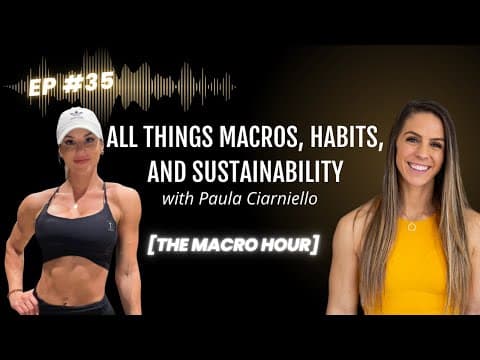
If you've tried keto, paleo, carb cycling and strict meal plans and still can't figure out how to get lean, this conversation is for you. Nikkiey Stott sits down with Paula Ciarniello, online fitness and lifestyle coach with Take Control Coaching, who spent her twenties yo-yoing between 20 pounds underweight and 30 pounds overweight. She jumped from Nutri-Grain bars straight into a contest prep diet and got stuck in a restrict-binge-restart cycle. Nothing clicked until a coach told her to track calories and protein and let carbs and fats fluctuate.
Paula lays out the simple daily habits she gives clients: hit your calories and protein, get 90% of your food from real food, move for at least 30 minutes doing something you enjoy, walk every day and drink plenty of water. She and Nikkiey explain why the scale can jump several pounds after one indulgent day, and why that's water, not fat. They cover why weighing daily can take the emotion out of it, and how bites, licks and tastes quietly erase a deficit. They also explain why dropping to 1200 calories is rarely the answer.
They also get honest about the all-or-nothing mindset. Paula talks about her past with binging and purging and the value of therapy, how modern life and working from home make healthy living harder, and the morning routine and cornerstone habits that keep her consistent. Macros, as Paula puts it, are not a diet. They set you free.
Macros & Macro Tracking
Yes. Across The WarriorBabe Show, Nikkiey's position is that treats work when they fit your numbers and stay the minority of what you eat, roughly 80% quality food and 20% fun food. She has two to four pieces of dark chocolate most nights, and members fit in cookies, pizza and ice cream swaps while losing fat.
Read the answer →

Diets, Fasting & Diet Culture
Eating 1,200 calories is often too little, not too much. Dr. Stacy Sims explains it sits around an average resting metabolic rate, so your body treats it as a threat, conserves energy and breaks down lean mass. Long-term dieting also adapts your metabolism down. Before cutting further, check your tracking is accurate.
Read the answer →

The Scale & Tracking Progress
Daily, if you can stay neutral about the number. Nikkiey suggests weighing every morning and comparing weekly averages, or weighing two to three times a week if daily weigh-ins trigger you. Guests Susan Niebergall and Paula Ciarniello also favor daily weighing, because a single weekly weigh-in can land on a water-retention day and mislead you.
Read the answer →

The Scale & Tracking Progress
Daily weight swings are mostly water and food, not fat. Nikkiey explains that the scale reacts to carbs, sodium, sugar, hydration, your menstrual cycle, undigested food, bowel movements, stress, travel and sore muscles after a hard workout. A two to three pound swing is completely normal, and it usually balances out in a day or two.
Read the answer →
Paula says no. What finally worked for her was tracking calories and protein, letting carbs and fats fluctuate, and eating healthy food about 90% of the time.
Paula explains it is almost always water. Eating at or above maintenance refills glycogen in the muscle, which pulls water in, and inflammatory or salty foods can cause water to be held under the skin. Gaining a pound of fat would take about 3,500 calories above maintenance.
Paula encourages daily weigh-ins at some point, under the same conditions each morning, to learn your normal fluctuations and desensitize yourself to the number. Nikkiey adds that weighing only once a week can catch a spike day and hide a lower weekly average.
Paula says first ask whether you are logging everything, including condiments and drinks, and weighing your food rather than eyeballing it. Often small extras like peanut butter licks or an extra handful of nuts are the issue, and the fix is accuracy, not fewer calories.
Yes, once you have a consistent baseline. Paula saves most of her carbs and fats for dinner out or swaps in something like Cheez-Its, and Nikkiey has dark chocolate every night, but both stress that quality food should make up the large majority of your intake.
Paula says a contest prep diet is not a lifestyle. Stage lean is a dehydrated, under-fed state most competitors don't enjoy, and jumping from no structure to contest prep gave her a poor relationship with food.