

 51 min
How to Shift Your Identity So Fitness Habits Finally Stick
With Mike Millner
Guest on the show
51 minWith Mike Millner
 57 min
With Mike Millner
You know what to do. You've laid out the gym clothes, set the alarm and downloaded the app. So why does it keep falling apart? In this episode, Nikkiey Stott brings nutrition coach Mike Milner back to continue their conversation on the psychology of lasting change. Mike's view is that most plans fail because they start with behaviors instead of identity. Skipping the gym has no immediate consequence, so unless working out is part of who you are, it is easy to say you don't feel like it.
Mike lays out a practical path. Spend five to ten minutes of quiet time taking inventory of who you are and who you want to become. Use emotions like jealousy and anger as clues to the beliefs underneath them. Then get curious, like a kid who keeps asking why, about where those beliefs came from, because many turn out to be someone else's story you internalized. From there you can rewrite the narrative.
He also talks about what happens six weeks in, when old patterns come back. Setbacks are tests of whether you want what you say you want. If you feel stuck because the scale isn't moving, ask whether you're only doing this on the condition that it moves. Mike explains why doing more often isn't the answer, which questions coaches can ask to help clients find their own solutions, and why the bridge to your future self is to be it until you see it.
If you have done the 1,200-calorie plans, the hours of cardio and the eating windows, then blamed yourself when the weight came back, this conversation is for you. Nikkiey Stott sits down with nutrition coach Mike Millner, host of the Mind Over Macros podcast. Mike gained about 80 pounds after college, spent the better part of a decade crash dieting, and hit a rock-bottom moment on the couch with a plate of chicken and broccoli. He was lonely, he was missing the people he loved, and he still didn't like how he looked.
Mike walks through the mindset work he now uses with clients. Stop assuming it's your fault and question the method instead. Recognize that not every thought is fact and that emotions don't have to be acted on right away. Ask the uncomfortable questions you keep avoiding. From there, close the gap between what you do now and what the person you want to become would do, using small commitments that build self-trust one rep at a time.
Nikkiey and Mike also cover why macros are simply awareness, the way a budget is, and how the learning curve compares to starting a new job. They get into what Mike calls a lifestyle level of leanness built on foundational habits, the extremes of fitness messaging, why cardio falls short for body composition, and Mike's one piece of advice: get rid of the timeline and treat fitness as a game you keep playing for life.
Fat Loss After 40
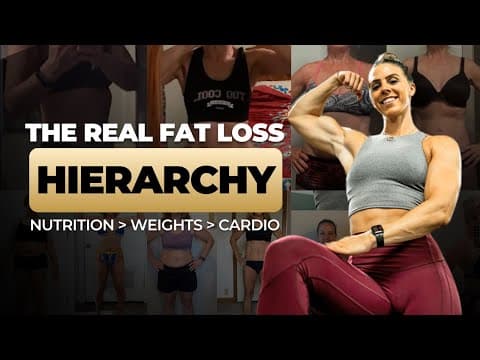
Weight training wins. Nikkiey explains that cardio burns calories only while you're doing it and doesn't create long-term changes in your metabolism, while muscle keeps burning calories at rest. Her priority order for fat loss is nutrition first, then weights, then cardio, because you can't out-train a diet that isn't dialed in.
Read the answer →

Diets, Fasting & Diet Culture
No. On The WarriorBabe Show, Nikkiey's position is that you don't need to cut carbs to lose fat. She calls carbs fuel, not the enemy, and says very low carb mostly drops water weight at first. Over time, under-eating carbs can drain your energy, hurt your workouts and make building muscle nearly impossible.
Read the answer →

Consistency & Mindset
Stop trying to become someone who works out and start acting as someone who already is. Nikkiey explains that the most consistent women in the WarriorBabe community see themselves this way. They back that identity with structure: workouts blocked in the calendar, a minimum version for hard days, and small daily wins that build evidence.
Read the answer →
Mike explains that habits are reinforced over years, often starting as a survival mechanism, and the brain wires them in as the default. He compares it to riding a bike over the same dirt path thousands of times until a deep groove forms.
Mike says those behavioral tips are helpful, but skipping the gym has no immediate consequence, so it's easy to say you don't feel like it. They work best when they come after and alongside an identity shift, so going to the gym becomes simply who you are.
Mike recommends regular quiet time with yourself, even five or ten minutes of journaling, voice notes or a walk without distractions. Use it to identify who you want to become, what that person values, and where your current actions do and don't line up.
Mike says to expect setbacks before you even start, because they test whether you want what you say you want. Use the tools again: recognize the old pattern, get curious about where it's coming from, realign, and keep moving forward.
Mike explains that feeling stuck often comes from doing this conditionally, only so the scale goes down, which means your words and actions no longer align. You can change your words to match your actions or change your actions to match your words and actually make it a lifestyle.
Mike says doing more doesn't always equal more results, and putting too much stress on the system is often what breaks it. If you push through hunger and fatigue just to lose 20 pounds, he warns you may get there but won't maintain it.