

From 2 episodes and 3 videos
Why am I not hungry even though I barely eat all day?
Answered by Nikkiey Stott and WarriorBabe's coaches · Updated
The short answer
On The WarriorBabe Show, the explanation is metabolic adaptation: after a long stretch of eating very little, your body adapts to that low intake and stops expecting food, so hunger fades. The coaches see low hunger as a sign of an unhealthy metabolism, not discipline, and say appetite returns as food is increased gradually.
Hear it answered
Tap play to start right where it's answered. It keeps playing while you browse.
Nikkiey on why so many women say they're not hungry all day
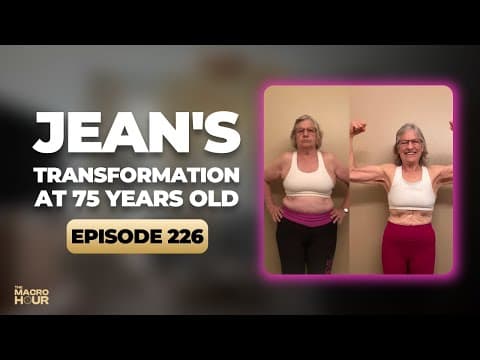
Plays from 12:48 · Ep. 226: Can You Lose Weight in Your 70s? Jean's 55-Pound Story

A coach on why no hunger signals an unhealthy metabolism
Plays from 0:24 · Video: Not Hungry Anymore? What It Says About Your Metabolism

Why under-eating mutes hunger, and why you can't lose fat on 900 calories
Plays from 11:54 · Video: Eating More After 50 Through Long COVID and Knee Surgery
Shannon on getting her appetite and energy back as food increased
Plays from 12:35 · Ep. 323: Why Eating Less Isn't Working for Women Over 40
The full answer
On Ep. 226, Jean describes eating breakfast and often nothing else until late at night, with no hunger at all. In her words, her body figured it wasn't going to get fed. Nikkiey explains that her body had adapted to her low caloric intake, and says a lot of women eat this way right now and think they just aren't hungry. The pattern also backfired for Jean. By 9 p.m. she was grabbing a hamburger because she had to eat something. Planning her food ahead of time made a big difference.
In another episode, one WarriorBabe coach puts it bluntly: if you're not hungry, that's a sign of an unhealthy metabolism. She says to fix it before any cut or muscle-building push. She explains that your metabolism can become more efficient with calories, which means it conserves more and holds on to more. In a separate interview, a coach tells a client recovering from long COVID and knee surgery that her body was simply used to her not eating much. The coach adds that you can't drop body fat on 900 calories. At that point the body is adapted and holding on, so eating more is how they wake the metabolism up.
On Ep. 323, Shannon shares what that change felt like. After months of barely eating she lost her appetite completely. Her coach raised her food gradually rather than all at once. Her appetite came back, and with it more energy, heavier lifts, easier steps and a better gut. She admits she was scared of hunger and of gaining weight. Nikkiey calls that fear completely valid for women raised to believe they should always eat less.
So the missing hunger isn't proof you need less food. It's often a sign the plan has been too little for too long. If you have a medical condition, sort out any changes with your doctor.
From WarriorBabe's coaches (how we write our answers). For education, not medical advice: talk to your doctor about your own health.
Part of
Metabolism, Eating More & Reverse Dieting →Women also ask
More questions →
Metabolism, Eating More & Reverse Dieting
Will I gain weight when I start eating more?
Probably a little, and that's expected. Nikkiey explains that when you start eating more during a retrain or reverse diet, your weight will usually fluctuate about two to five pounds from water, glycogen, food volume and salt, not fat. If the gain keeps climbing or holds around five pounds, the increase was likely too fast.
Read the answer →

Metabolism, Eating More & Reverse Dieting
Can you lose weight by eating more?
Yes, according to The WarriorBabe Show. Nikkiey says almost every WarriorBabe success story involves eating more food, and members like Amy, Debbie, Lisa and Erin lost weight after raising their calories from chronic lows. The key, she explains, is eating enough to fuel strength training and build muscle, which is active tissue that burns calories even at rest.
Read the answer →

Metabolism, Eating More & Reverse Dieting
How long does it take to repair your metabolism?
It depends on how adapted your metabolism is. Nikkiey's ranges: about six to 12 weeks for mild adaptation after a few months of moderate dieting, closer to three months after a year or more of restriction, and six months to a year after many years of chronic dieting. Your body's response sets the timeline, not a calendar.
Read the answer →
Watch or listen in full
More on this topic → 21 min
Why Eating Less Isn't Working for Women Over 40
Episode 323 · Dec 29, 2025
 45 min
Can You Lose Weight in Your 70s? Jean's 55-Pound Story
Episode 226 · Jan 20, 2025
 6 min
Not Hungry Anymore? What It Says About Your Metabolism
Video · Jan 19, 2024