

From 5 videos
Does strength training increase your metabolism after menopause?
Answered by Nikkiey Stott and WarriorBabe's coaches · Updated
The short answer
According to The WarriorBabe Show, yes. Building muscle is the number one way to raise your metabolism, because muscle is active tissue that burns more calories even at rest. The episodes speak to women over 40 rather than to menopause specifically. They pair lifting three to four times a week with enough food, protein and sleep.
Hear it answered
Tap play to start right where it's answered. It keeps playing while you browse.
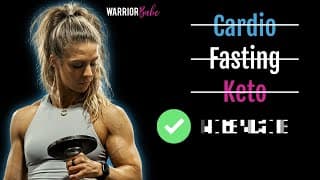
Nikkiey on why building muscle is the number one way to speed up your metabolism
Plays from 0:38 · Video: How Cardio, Sleep and Muscle Change Your Metabolism
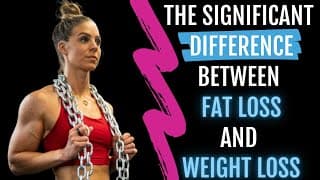
Nikkiey explains how intense lifting builds mitochondria that metabolize fat
Plays from 4:57 · Video: Why Chasing Weight Loss Can Cause Fat Gain Later

A coach on why lifting three to four times a week burns more calories at rest
Plays from 0:57 · Video: 5 Ways to Speed Up a Slow Metabolism After 40

A coach shares how eight years of strength training raised her BMR
Plays from 3:07 · Video: Not Hungry Anymore? What It Says About Your Metabolism

Why progressive strength training beats excessive cardio for your metabolism
Plays from 5:00 · Video: Does Too Much Cardio Slow Your Metabolism?
The full answer
Nikkiey Stott explains that muscle and the mitochondria inside it are active tissue that needs constant energy to maintain itself. Fat is metabolized in the mitochondria. When you train with real intensity and challenging weights, you create a demand for energy beyond what your body can already produce. Your body responds by building more of them. Her bottom line is that the more muscle you carry, the easier it is to burn body fat and the more you can eat while staying lean.
How you train matters. One WarriorBabe coach describes progressive strength training, which means steadily increasing your weights and reps so your muscles stay challenged. Another recommends lifting at least three to four times a week. The episodes also warn that hours of steady cardio can teach your body to conserve calories. Strength work pushes it to build muscle instead. One coach shares that after eight years of consistent lifting, she has added significant muscle and her BMR has gone up.
The lifting only works if the rest of the plan supports it:
- Eat enough. Nikkiey says 1,200-calorie diets backfire, because chasing a smaller number on the scale can cost you muscle and slow your metabolism.
- Prioritize protein. One coach suggests aiming for about one gram per pound of body weight.
- Sleep seven to nine hours. Nikkiey explains that chronic poor sleep puts your body under stress, and it may shed muscle to conserve energy.
- Expect the scale to lag. Muscle is dense, so you can lose inches while your weight holds steady.
These episodes speak to women over 40 in general and don't specifically address the hormonal changes of menopause. If you have questions about how menopause affects your body, work with your doctor alongside your training. The message across the episodes is the same: if your metabolism feels stuck, it's the plan, not you.
From WarriorBabe's coaches (how we write our answers). For education, not medical advice: talk to your doctor about your own health.
Women also ask
More on Metabolism, Eating More & Reverse Dieting →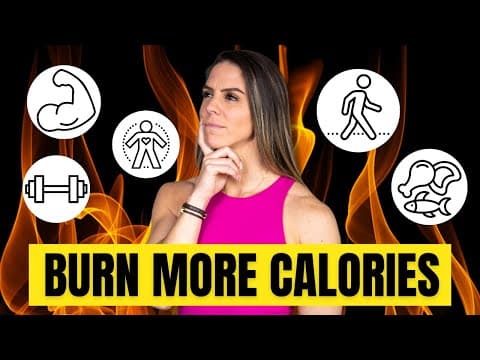
Metabolism, Eating More & Reverse Dieting
What is NEAT and why does it matter for fat loss?
NEAT, non-exercise activity thermogenesis, is the energy you burn through everyday movement outside planned workouts: walking, standing, cleaning, even fidgeting. One WarriorBabe coach explains it matters because it varies hugely from person to person, and small habits like taking the stairs or parking further away add up to a meaningful increase in your total daily calorie burn.
Read the answer →
Metabolism, Eating More & Reverse Dieting
Why am I not hungry even though I barely eat all day?
On The WarriorBabe Show, the explanation is metabolic adaptation: after a long stretch of eating very little, your body adapts to that low intake and stops expecting food, so hunger fades. The coaches see low hunger as a sign of an unhealthy metabolism, not discipline, and say appetite returns as food is increased gradually.
Read the answer →

Metabolism, Eating More & Reverse Dieting
Can I lose weight by eating more after 60?
Yes, it can happen when you have been under-eating. On The WarriorBabe Show, four women in their 60s raised their calories with a coach and still lost weight. Michelle went from about 800-900 to 1,800 calories, Ya'el from 1,100 to 1,950, and Linda and Beth also gained food and lost fat.
Read the answer →

Metabolism, Eating More & Reverse Dieting
How do I know if I'm not eating enough?
Nikkiey points to five signs: constant fatigue, irritability or anxiety, bloating and constipation, poor sleep and recovery, and stalled fat loss or weight gain while eating less. Not feeling hungry on very little food is another red flag. The only way to know for sure is to weigh and track what you eat for a week.
Read the answer →

Metabolism, Eating More & Reverse Dieting
Can you lose weight by eating more?
Yes, according to The WarriorBabe Show. Nikkiey says almost every WarriorBabe success story involves eating more food, and members like Amy, Debbie, Lisa and Erin lost weight after raising their calories from chronic lows. The key, she explains, is eating enough to fuel strength training and build muscle, which is active tissue that burns calories even at rest.
Read the answer →
Metabolism, Eating More & Reverse Dieting
Will I gain weight when I start eating more?
Probably a little, and that's expected. Nikkiey explains that when you start eating more during a retrain or reverse diet, your weight will usually fluctuate about two to five pounds from water, glycogen, food volume and salt, not fat. If the gain keeps climbing or holds around five pounds, the increase was likely too fast.
Read the answer →
Watch or listen in full
More on this topic → 7 min
How Cardio, Sleep and Muscle Change Your Metabolism
Video · Mar 22, 2022
 12 min
Why Chasing Weight Loss Can Cause Fat Gain Later
Video · Aug 17, 2021
 7 min
Does Too Much Cardio Slow Your Metabolism?
Video · Jan 26, 2023