

Chapters
In this video
For over 30 years she did what the fitness industry teaches: more cardio, less food, more discipline. It worked until menopause. Then the weight kept coming, and four rounds of losing and regaining more than 200 pounds left her heavier, prediabetic and in the worst mental place of her life. So she stopped doing the five things she had done for decades, and she lost 60 pounds of menopausal fat.
She walks through each one. She stopped doing cardio, which had been up to 20 hours a week, and started lifting weights. She stopped chasing a smaller body and made health the goal, tracking only protein and using measurements instead of the scale. She stopped under-eating and started eating substantially more to heal her metabolism. She also explains how she stopped using exercise to mask her mental health, and how she became a student of her own body again.
If you have done everything right and nothing is moving, her message is that it is not you. It is the rules you were given. This is her own experience, told honestly, including the parts that were hardest to say.
Key takeaways
- Endless cardio did not help her body composition or mental health; she stopped it completely and started lifting weights, and saw muscle she had not seen in years.
- Training less was more for her: 45 minutes of lifting in the gym replaced eight-mile runs and up to 20 hours of workouts a week.
- She changed her goal from getting smaller to gaining health, because chasing a lower scale number kept pulling her back to starvation, overtraining and restriction.
- Instead of weighing herself, she tracked only protein and used body measurements, especially waist-to-height ratio, to focus on body composition.
- She explains that when a menopausal woman under-eats she loses muscle, and losing muscle lowers her metabolic rate.
- Healing her metabolism meant eating substantially more, and her breakfast now is about 600 calories, roughly what she used to live on in a whole day.
- Watch for non-scale wins like clothes fitting more comfortably, steadier energy without the afternoon crash, and better sleep.
- She came to see her body as connected as a whole, so she could not fix her mental health without also looking at her gut health and physical health.
Questions answered
Do you need to do cardio to lose weight in menopause?
In this video she shares that she stopped cardio completely after years of training up to 20 hours a week and switched to lifting weights. Her body started responding and she saw muscle she had not seen in years, which is when she realized less was actually more.
Why does eating less backfire during menopause?
She explains that when a menopausal woman under-eats she starts losing muscle, and she is already losing estrogen receptors so her body has a harder time holding on to muscle. The more muscle you lose, the lower your metabolic rate.
Can eating more help you lose weight in menopause?
For her it did. To heal her metabolism she had to eat substantially more, which felt counterintuitive, but her energy came back and the weight started slowly dropping. She says she is now leaner and healthier than ever while eating more than she did when dieting.
How can I track progress in menopause without the scale?
She stopped watching the scale, tracked only protein and took measurements, focusing on waist-to-height ratio. She also paid attention to changes like clothes fitting more comfortably and being able to bend over and tie her shoes without holding her breath.
Is menopause weight gain connected to mental health?
She describes mood swings, anxiety, panic attacks and night-time rumination that she came to see as connected to her physical health, declining hormones and restriction. Learning that gut health is tied to mental health led her to take care of her body instead of punishing it, and she says her mental health improved along with her physical health.
Ask Nikkiey
Questions this video helps answer, with what Nikkiey says across everything WarriorBabe teaches.
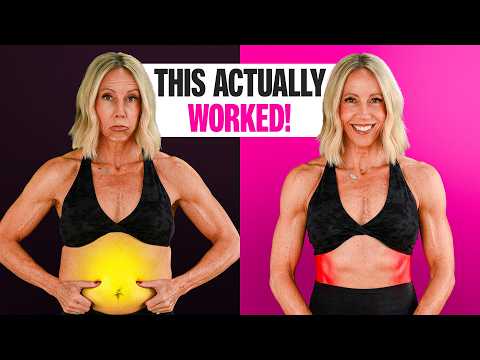
Menopause & Perimenopause Weight Loss
Do I need to do cardio to lose weight in menopause?
No. Nikkiey says cardio isn't what drives fat loss in menopause, and leaning on it can backfire. She explains that too much cardio spikes cortisol and burns muscle, especially in a calorie deficit. What she recommends instead is strength training as the foundation, plus enough protein, daily walking and proper recovery.
Read the answer →
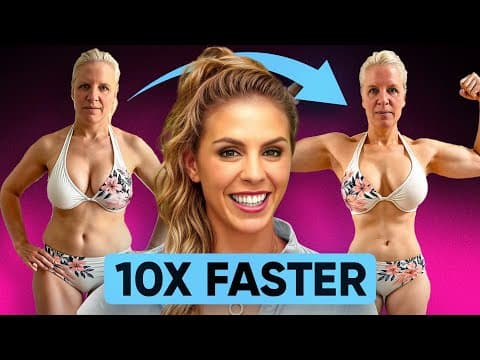
Menopause & Perimenopause Weight Loss
Why does eating less backfire during menopause?
Nikkiey explains that eating less during menopause costs you muscle, and with fewer estrogen receptors your body already struggles to hold on to it. Less muscle means a lower metabolic rate. Restriction also leaves you stuck, with nothing left but cutting further, which she says isn't sustainable. Her fix is eating more, especially protein, plus strength training.
Read the answer →
Menopause & Perimenopause Weight Loss
Is menopause weight gain connected to mental health?
Yes, according to the WarriorBabe video Losing 60 Pounds in Menopause. The speaker links her mood swings, anxiety, panic attacks and night-time rumination to declining hormones and years of restriction. She calls it a mental and biological toll, and says her mental health improved once she started caring for her body instead of punishing it.
Read the answer →
Full transcript
Guest: I did everything the fitness industry tells you to do to lose weight for over 30 years. More cardio, less food and more discipline. And it all worked until I hit menopause and kept gaining weight. It wouldn't move no matter what I tried. So I stopped doing the five things I'd been doing for decades and lost 60 pounds of menopausal fat.
I want to be really clear about who I am before I get into this. I'm not someone who just decided to get healthy at 50 and stumbled on some health tips online. I've been certified in fitness for 30 years and I've coached thousands of women. So when I tell you that menopause completely dismantled everything I thought I knew about my own body, I need you to understand how serious this is.
I had lost and regained over 200 pounds across four separate attempts. Every single time the weight came back, and it came back faster, heavier and in completely different places than it had before. By the fourth time, I was in the worst place mentally I had ever been. I was heavier, fluffier. I didn't want to be seen in public. For someone who was supposed to be healthy and fit, being the opposite of that was really hard on my self-esteem. I actually felt pretty lost and not like myself at all.
So when I was at my rock bottom, I knew that this time I had to do something differently. I couldn't go through that again. So I stopped. I stopped doing the five things I had been doing for decades, things the fitness industry had drilled into my head. And that decision changed my life.
I stopped doing cardio. The first thing I stopped was the thing that defined my entire identity as a fitness professional: cardio. I didn't cut back on it gradually. I just stopped doing it. And before you click off, hear me out, because I know how that sounds coming from someone who ran multiple marathons. I was a triathlete for years. I was literally working out about two hours a day, sometimes up to 20 hours a week. No one needs to work out 20 hours a week. That wasn't doing anything for my body composition or my mental health. It was actually doing the opposite. But I kept pushing.
Once I started lifting weights and understanding my body needed to change the way it was going after exercise and movement, it was almost a freeing experience. Being able to see that my body was adapting, changing to a different kind of movement, was such a relief. To see it didn't need all that. I could actually back off a little bit and see the changes I had been craving to see for so long.
The first physical change: I remember blow-drying my hair in the mirror and seeing I had muscle I hadn't seen for years. To actually see muscle as I was doing my hair in the mirror made me realize my body was responding to this new tactic. My body was responding to lifting weights and adapting to the new stressor I was putting on it. That's when I stopped feeling guilty about not doing cardio and started really diving into this new way of thinking. Less was actually more.
But stopping the cardio only worked because I had changed why I was working out in the first place. Because my goal, the one that had been driving me for 30 years, was the wrong goal entirely.
I stopped trying to get smaller, skinny. Every single one of my four attempts failed because they had one thing in common. The goal was to get the scale lower, lose the weight, fit into the jeans, get back to the number I was at 35. I would always start motivated, and every time I would tell myself, I'm going to get skinnier than I ever have before. I said that to myself so many times.
So I would start with a strong, big cut, usually cutting my calories about in half. I remember going camping with my kids, and everyone was roasting marshmallows. And I thought, I'll let myself have one half of a marshmallow. And that's what I ate for dinner. A half a marshmallow. I remember feeling proud of myself going to bed that night, thinking, you did it. Even while camping, you had a good day.
And of course, that wasn't sustainable. I could do that for a little bit. I'd usually crash on the weekends and start over again on Monday. If I lost three to four pounds a week, I was doing great. Little did I know the muscle I was losing along the way. Had I understood that, I would have taken a different tactic.
The issue was that getting smaller as a goal always pulls you back toward the same tools: starvation, overtraining, restriction. Because those are the tools that feel like they're working in the short term. They help you feel like you have control. But for menopausal women, those tools are a metabolic prison.
So when I was finally at my wits' end, my goal actually changed. My goal wasn't about getting skinny anymore. My goal was to actually gain health, because I could tell I was unhealthy. My labs had come back and I was prediabetic. I knew something had to change.
I started really focusing on nutrition. The only metric I really tracked was protein. And I didn't want to get obsessed with the scale, so I stopped watching the scale. I took some measurements. I understood that the waist-to-height ratio was an important one. That made me focus on body composition instead of actual weight.
Progress started to feel a lot different. Without focusing on the scale, I just started to notice my clothes fit more comfortably. I just felt more comfortable. I could bend over and tie my shoes without holding my breath. Things like that started to change, and I started to notice health instead of size.
I think of Amy. She came to WarriorBabe after years of doing everything right: restriction, hard training, stepping on the scale every single morning. And still watching her body fall apart. The joint pain, the menopause symptoms, medications piling up. Once she stopped trying to get smaller and started focusing on what her metabolism actually needed, she dropped from a size 10 to 12 to a size 4 to 6. She got back to her high school weight and had doctors start pulling her off medications she thought she was going to be on forever. Without cutting her food or adding more workouts. That's what's waiting for you in the free Menopause Results Masterclass in the link below. And that shift from chasing a smaller body to healing your metabolism is the foundation of everything I teach inside the Stop Overtraining Workshop and Menopause Results Masterclass.
But for now, I want to talk about how one of the first things my new goal made obvious was that I had been eating in a way that was destroying the metabolism I was actually trying to heal. I'm leaner and healthier right now than I've been in my entire life, and I'm eating more than I ever did when I was dieting.
What happens to a menopausal woman when she starts under-eating is she starts losing muscle. She's already losing those estrogen receptors, so her body's having a hard time holding on to muscle anyway. The more muscle you lose, the lower your metabolic rate.
When I was restricting at my very heaviest, I would live on four protein bars a day. I would cut them in half and every two hours eat half a protein bar. I would spend the next two hours just looking forward to that moment where I could put half a protein bar in my mouth, slowly chew it and chase it down with a Diet Coke. That's not living. That's restriction and obsessing.
Now I'm in a place where I don't obsess about food. I have freedom around food. I didn't realize people could actually live that way, without obsessing constantly about what they were going to put in their body next.
I realized this restriction was making things worse when I couldn't do it any longer. At the time I was running triathlons. I could barely make it through a race. Sometimes I would cheat and let myself have a few grapes after a race just so I could rehydrate. Now when I look back at how I could have destroyed my body, which I probably did at the time, I want to give my old self a hug. Because the happiness and freedom I feel now, when I can actually eat and know I'm supporting my body, is such a better feeling. It's sustainable. I can eat the way I eat right now for the rest of my life. I never had that before.
When I started healing my metabolism, I had to eat more. Not a little more, substantially more. It felt completely counterintuitive. After 30 years of being told less food equals more weight loss, eating more felt like a failure. But my body finally had fuel. My energy came back and the weight started slowly dropping. I was in shock.
Now I have to laugh, because what I eat for breakfast, about 600 calories, is what I used to try to live on in a full day. I honestly don't know how my body made it through that. I don't have that two o'clock crash anymore. I can make it through the day and feel great and have a ton of energy. And when it's time to go to bed, I'm tired like I should be and can sleep much better than I had in years. Now when I go to bed, I wonder if I ate enough to help support the muscle I've worked so hard for. This was such a big mind shift, and it's such a relief to understand I can eat like a normal person.
Those first three things, stopping the cardio, changing the goal and eating enough, changed my body. But the fourth thing I stopped doing changed my life completely. I stopped ignoring my mental health and masking it with more exercise.
I've been on antidepressants for 27 years, and during those years I was gaining menopausal weight. When nothing was working, when every attempt failed, when I was doing more cardio than ever and getting heavier and heavier, there were mornings when I thought of not waking up. And the thought of not waking up felt like a relief.
All of the physical problems that came with declining hormones and restriction, like mood swings, high anxiety, panic attacks, rumination during the night, nightmares, and the type of anxiety or heavy feeling that you just can't explain, those were all connected to my physical health. It took me a while to understand that connection. And then there was the cycle of not being able to sustain it and feeling so disappointed in myself, watching my confidence shrink time and time again after gaining the weight back so many times. So there was the mental impact of dealing with that, and then the actual biological impact of the mood swings, the panic attacks, not giving my brain what it needed.
When I started studying gut health and learning that gut health is directly tied to your mental health, it didn't take me long to make some changes, because I was at my wits' end and something needed to change drastically.
One of the key moments was realizing that I had a grandbaby on the way and knowing that I should feel ecstatic, yet fighting that feeling of always feeling flat. Being on antidepressants for so long made me feel like that was a normal feeling. I knew this should be one of the happiest moments in my life, and that feeling a little flat through this circumstance wasn't right. Something had to change, and it had to change quick.
My husband saw this all the time, but it became our normal. I think we both thought that was my personality. Someone who used to really enjoy life, look forward to things, be excited about a new grandbaby. So this was something we talked about a lot, yet thought it was normal.
I've been off antidepressants for over five years now, and I almost missed the best chapter of my life because I just thought exercising harder was the answer to everything. But what actually helped was stopping the exercise that was masking the problem and dealing with what was underneath it.
After being on antidepressants for 27 years, I was pretty nervous to get off of them. I had been to doctor after doctor. They just kept changing my antidepressants. So when it was time to get off of them, I realized that's not the case for everyone. It's just where I was in my journey, and I knew I probably needed a different approach than the medication.
So what it looked like for me is I started doing things that made me feel good. I started eating foods that made me feel good. I started moving in a way that made me feel good. Going to the gym for 45 minutes and lifting some weights, rather than going on an eight-mile run and killing myself, made me feel good. These are the things that helped me get off the antidepressants. I started taking care of my body instead of punishing it, and automatically my mental health increased with my physical health.
My mental health looks a lot different now. My highs are higher. My lows might be a little lower, but overall I feel a happiness and vigor for life that I haven't felt in so long. I actually look forward to things. I have a normal reaction to happy things and a normal reaction to sad or stressful things. Being able to feel something, rather than just feeling flat and like a robot going through life, has taken some getting used to. But the happiness and joy and the vigor I feel for life, the excitement I feel to be around the people I love, nothing compares to that.
For any woman watching this who may recognize yourself in me, just know that there is hope. This can be your best stage of life. This is the grand finale. This is where the big fireworks go off. The grandkids, the adult children, having more time to spend with your spouse, being able to do the hobbies, the job, the career, anything you want to do. You've been through enough life that you realize you can let go of some of the guilt, some of the burden. This should be your happiest stage of life, where you get to collectively see everything you've built in the first half.
What I want you to know is there is hope for you. Living in a body that functions well, with a mind that reacts the way it's supposed to, being able to feel the joys of life, that's what you've worked so hard for. And I want that for you.
All of this, everything I stopped doing, led me to one final realization. After 30 years in the fitness industry, I didn't actually know what I thought I knew, and the only way forward was to become a student again. I stopped trusting what the fitness industry told me and became a student again.
I'm certified in fitness. I've coached thousands of women. And I still had to go back to school to understand what was happening in my own body. After I'd been to doctor after doctor after doctor and no one could help me, I knew I had to figure it out on my own.
One day I was listening to a podcast, and the woman was actually speaking my language, talking about everything I wanted answers to. She said she'd gotten certified as an integrative health coach. I knew immediately that's what I had to do. I knew that we couldn't just take one part of our body and fix that. I knew that everything was connected, and I learned that a functional approach looks at a woman's body as a whole, because it all has to do with each other. I couldn't fix my mental health without looking at my gut health and my physical health. That contradicted everything I learned before.
If you're doing everything right and nothing is moving, it's not you. It's what you were told. You're just trying to keep the rules. And if you're ready to stop fighting against your own body and actually start working with it, everything I wish I had when I first started my journey is inside the Stop Overtraining Workshop and the Menopause Results Masterclass. The link is in the description. That's where to start. I'll see you in the next one.
Up next
Everything → 55 min
Lifting, Under-Eating and Perimenopause: Truths After 40
Episode 300 · Oct 6, 2025
 15 min
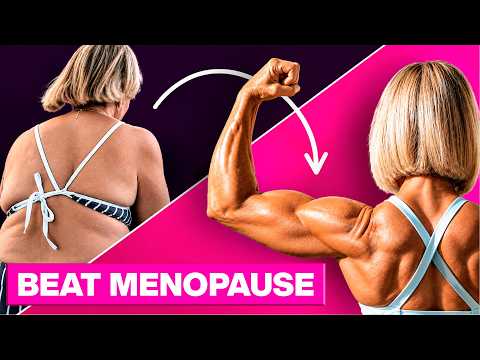
Quit Cardio, Ate More, Lost 60 Pounds in Menopause
Video · Oct 12, 2026
 56 min
How to Reverse Insulin Resistance After 40
With Dr. Morgan Nolte
Best of Menopause & Perimenopause Weight Loss
All 75 → 1 hr 1 min
Early Perimenopause Signs Women Over 40 Should Know
With Dr. Jolene Brighten
 1 hr 0 min
How Menopause Changes Your Metabolism and Fat Burning
With Michal and Merav
 51 min
How to Lose Body Fat in Menopause by Eating More
Episode 310 · Nov 10, 2025