

From 6 videos
Does menopause weight gain go away on its own?
Answered by Nikkiey Stott and WarriorBabe's coaches · Updated
The short answer
Not according to The WarriorBabe Show. Nikkiey Stott explains that the natural decline in estrogen during menopause shifts fat storage to the belly, and waiting doesn't change that. What does is strength training and proper nutrition, eating enough rather than less, and adapting your training as your body changes. Women in and after menopause still get results.
Hear it answered
Tap play to start right where it's answered. It keeps playing while you browse.

Nikkiey on how falling estrogen shifts fat to your belly
Plays from 6:17 · Video: Lifting After Menopause: Rest, Reps and Fewer Training Days
Nikkiey's number one way to keep menopause symptoms from worsening
Plays from 8:27 · Video: Lifting After Menopause: Rest, Reps and Fewer Training Days

Nikkiey and Valerie on adapting instead of fighting menopause
Plays from 12:46 · Video: Getting Toned During Menopause at 49: Valerie's Story

A coach on why eating less and more cardio backfire after 40
Plays from 1:02 · Video: 7 Small Daily Habits to Lose Menopause Belly Fat
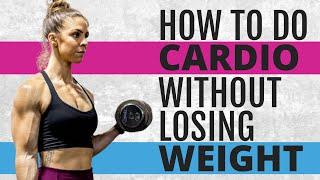
Nikkiey says losing menopause belly is 100% possible
Plays from 23:01 · Video: Pre-Workout Carbs, Collagen and Cardio: A Live Q&A
The full answer
Nikkiey calls menopause a phase of life, not something to dread. She explains that the natural decline in estrogen increases visceral fat mass, which is why so many post-menopausal women feel the weight has flooded to their belly in just a couple of years. She adds that muscle mass, strength and bone density also start to decline. One WarriorBabe coach puts it this way: before menopause your body stored fat more evenly, and afterward declining estrogen redirects it to the midsection. You didn't do anything wrong. The episodes never describe this reversing by itself. They focus on what you do next.
Nikkiey's answer is four words: strength training and proper nutrition. For women with years of lifting behind them, she recommends longer rest periods, lower reps and a challenging weight to hold on to muscle and bone. One coach suggests short, joint-friendly sessions of 20 to 30 minutes, three to four times a week, and warns that eating too little and doing endless cardio raise cortisol, which in her view tells your body to hold on to belly fat.
The nuance is that your plan has to change as your body does. Valerie's results stalled for a couple of months after her doctor confirmed she was in menopause. She changed how she trained, listened to her body and made room for rest and recovery, and her results picked back up. Nikkiey's take: fighting menopause with 1,200 calories and harder workouts just makes the whole thing harder. In a live Q&A she also notes that when you start eating more, you may not see outside changes right away while your metabolism recovers.
So is it possible to lose it? Nikkiey says 100%, and she sees women in and after menopause getting great results. It's the plan, not you. For symptoms or hormone questions, work with your doctor.
From WarriorBabe's coaches (how we write our answers). For education, not medical advice: talk to your doctor about your own health.
Women also ask
More on Menopause & Perimenopause Weight Loss →
Menopause & Perimenopause Weight Loss
How do I lose weight during perimenopause?
Lose weight during perimenopause by fueling your body and building muscle, not by eating less and adding cardio. WarriorBabe coaches recommend short full-body strength sessions three to four times a week, about 30 grams of protein per meal, balanced meals that keep carbs, and lifting heavier over time so your body keeps adapting.
Read the answer →
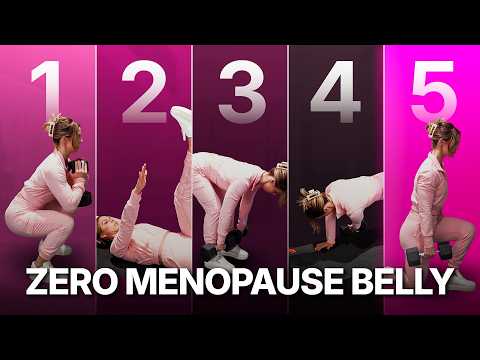
Menopause & Perimenopause Weight Loss
What is the best exercise for menopause belly fat?
The best exercise for menopause belly fat is progressive strength training, not more cardio or crunches. The show recommends compound moves like squats, deadlifts, presses, hip thrusts and lunges, done two to four times a week and paired with daily walking. You can't spot reduce belly fat. You lose it by building muscle.
Read the answer →

Menopause & Perimenopause Weight Loss
Can working out too much stop fat loss after menopause?
It can, according to Nikkiey Stott. She explains that piling on workouts adds stress that raises cortisol, a hormone she says is already naturally higher after menopause and linked to storing visceral belly fat. Her motto for women 50 and up is less is more: fewer training days, real rest, and enough food.
Read the answer →

Menopause & Perimenopause Weight Loss
How can I lower cortisol during menopause?
On The WarriorBabe Show, Nikkiey Stott's answer is to remove the stress signals keeping cortisol high: prioritize deep sleep, build in real recovery days, eat enough consistently, skip fasted lifting, and favor steady-state cardio over HIIT when you're stressed or under-fueled. Talk with your doctor about hormone questions.
Read the answer →

Menopause & Perimenopause Weight Loss
Can eating too little make belly fat worse?
Yes, according to WarriorBabe's coaches. They say chronic under-eating, often 1,100 to 1,300 calories a day, signals famine to your body. That raises cortisol, slows metabolism and makes your body hold on to belly fat. Their fix is eating enough, with protein at every meal, plus strength training and real recovery.
Read the answer →

Menopause & Perimenopause Weight Loss
How do I lose weight after menopause?
Stop eating less and doing more cardio, and start building muscle while eating enough. Nikkiey Stott explains that after menopause you lose roughly 1% of your muscle a year, so strength training, fueled by enough protein, carbs and fats, is what changes your body. Kelly stalled on 1,200 calories, while Annette and Maggie lost weight eating more.
Read the answer →
Watch or listen in full
More on this topic → 19 min
Lifting After Menopause: Rest, Reps and Fewer Training Days
Video · Aug 16, 2020
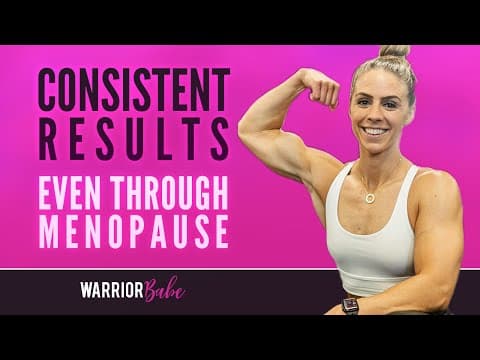 32 min
Getting Toned During Menopause at 49: Valerie's Story
Video · May 3, 2022
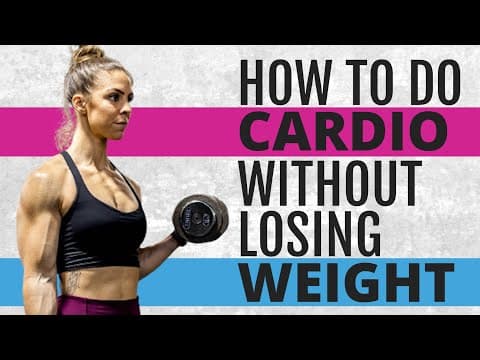 38 min
Pre-Workout Carbs, Collagen and Cardio: A Live Q&A
Video · Mar 22, 2021