

From 4 videos
Can working out too much stop fat loss after menopause?
Answered by Nikkiey Stott · Updated
The short answer
It can, according to Nikkiey Stott. She explains that piling on workouts adds stress that raises cortisol, a hormone she says is already naturally higher after menopause and linked to storing visceral belly fat. Her motto for women 50 and up is less is more: fewer training days, real rest, and enough food.
Hear it answered
Tap play to start right where it's answered. It keeps playing while you browse.

Nikkiey on why less is more after menopause and how extra training raises cortisol
Plays from 12:23 · Video: Lifting After Menopause: Rest, Reps and Fewer Training Days

Nikkiey on why heavy workouts affect some menopausal women differently than others
Plays from 8:43 · Video: Light Dumbbells, Slow Tempo and Fasted Cardio: A Q&A

Why Nikkiey calls any extra workout or cardio outside the program overtraining
Plays from 6:38 · Video: Overtraining, Belly Fat and Bloating: Q&A for Women Over 40

A member who lost muscle doing CrossFit, WarriorBabe workouts and daily cardio
Plays from 1:08 · Video: 4 Recovery Tips to Build Muscle and Get Toned After 40
The full answer
Nikkiey is blunt about this one: too much working out could be the reason you aren't seeing results. After menopause, she says, cortisol is already naturally higher, and adding more training stress pushes it up further. Elevated cortisol is the hormone she ties to storing fat, especially visceral abdominal fat. Her answer is that lowering stress by cutting back on training days will create more results, not fewer. The same logic is why she doesn't recommend lifting fasted and wants you eating enough throughout the day, because under-fueling is another stressor.
There is nuance. Answering a member named Cheryl, Nikkiey says it depends on your hormones. In her view it isn't true for women whose hormones are functioning normally, but it can be true for women with hormone fluctuations or naturally high cortisol. She is clear that this is outside her scope to prescribe, so work with your doctor to find out where you stand.
Overtraining also looks different than you might think. Nikkiey says anything outside your program is overtraining, because the workouts and cardio are built around a specific goal with progressive overload. If a day feels easy, the weights go up next week. Adding more can hurt your results, energy, recovery and sleep, and extra cardio while you're building muscle trains your body for endurance instead of strength. She shares the story of a member whose InBody scan showed her muscle mass dropping while she did six days of CrossFit, five days of WarriorBabe workouts and cardio every day. Nikkiey put that loss down to overtraining and skipping recovery.
Her recovery basics:
- Two to three full rest days a week
- Seven to eight hours of sleep
- Keep your nutrition on point, even on rest days
- Stretch
If you've been doing more and getting less, it's the plan, not you.
From WarriorBabe's coaches (how we write our answers). For education, not medical advice: talk to your doctor about your own health.
Women also ask
More on Menopause & Perimenopause Weight Loss →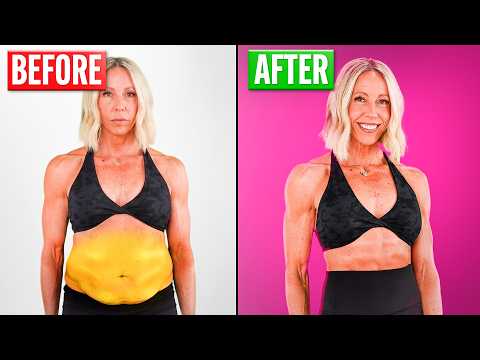
Menopause & Perimenopause Weight Loss
Is menopause weight gain connected to mental health?
Yes, according to the WarriorBabe video Losing 60 Pounds in Menopause. The speaker links her mood swings, anxiety, panic attacks and night-time rumination to declining hormones and years of restriction. She calls it a mental and biological toll, and says her mental health improved once she started caring for her body instead of punishing it.
Read the answer →

Menopause & Perimenopause Weight Loss
Should I change my workouts as I go through menopause?
Yes. Nikkiey says that during menopause, less is more. One WarriorBabe coach recommends three to four strength sessions a week, intentional walking, and one or two short conditioning sessions if recovery supports it. Nikkiey also recommends fewer supersets and more straight sets with rest. What worked at 20 or 30 isn't the plan for your body now.
Read the answer →
Menopause & Perimenopause Weight Loss
Can changing my diet help with hot flashes?
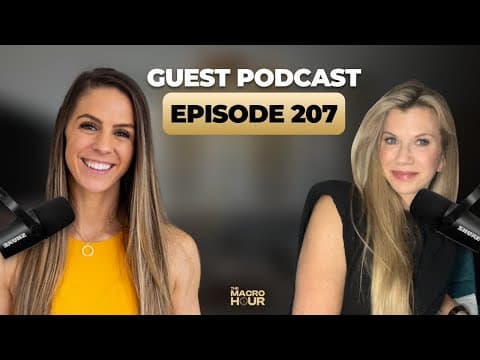
It can help, according to the show. On Ep. 207, menopause consultant Hatty McCafferty explains that big blood sugar spikes and drops make hot flashes and night sweats more likely. Eating protein from breakfast on and dropping the sugary-snack pattern keeps blood sugar steadier. Cutting carbs isn't the fix. Which carbs you eat, and when, matters more.
Read the answer →
Menopause & Perimenopause Weight Loss
How much protein do women in menopause need?
Nikkiey's recommendation is about one gram of protein per pound of body weight, so a 150-pound woman aims for roughly 150 grams a day, and that target stays the same through menopause. Guests on The WarriorBabe Show land in a similar range, and several say most women are eating far too little.
Read the answer →

Menopause & Perimenopause Weight Loss
Can eating too little make belly fat worse?
Yes, according to WarriorBabe's coaches. They say chronic under-eating, often 1,100 to 1,300 calories a day, signals famine to your body. That raises cortisol, slows metabolism and makes your body hold on to belly fat. Their fix is eating enough, with protein at every meal, plus strength training and real recovery.
Read the answer →

Menopause & Perimenopause Weight Loss
Do I need to do cardio to lose weight in menopause?
No. WarriorBabe's coaches say cardio isn't what drives fat loss in menopause, and leaning on it can backfire. They explain that too much cardio spikes cortisol and burns muscle, especially in a calorie deficit. What they recommend instead is strength training as the foundation, plus enough protein, daily walking and proper recovery.
Read the answer →
Watch or listen in full
More on this topic → 19 min
Lifting After Menopause: Rest, Reps and Fewer Training Days
Video · Aug 16, 2020
 3 min
4 Recovery Tips to Build Muscle and Get Toned After 40
Video · Nov 23, 2020
 35 min
Overtraining, Belly Fat and Bloating: Q&A for Women Over 40
Video · Jan 31, 2021