

From 2 episodes and 1 video
Can creatine help with brain fog in perimenopause?
Answered by Nikkiey Stott and her guests · Updated
The short answer
Nikkiey says it can. Your brain uses creatine for energy the same way your muscles do, and she points to studies showing better memory, processing speed and executive function. She noticed more clarity and energy herself during a stretch of brain fog and fatigue, and calls it directly relevant to perimenopause brain fog.
Hear Nikkiey answer it
Tap play to start right where it's answered. It keeps playing while you browse.
Nikkiey on how creatine cleared her own brain fog and fatigue
Plays from 8:40 · Ep. 408: Should Women Over 40 Take Creatine?
Why the brain runs on creatine and how this ties to perimenopause brain fog
Plays from 9:21 · Ep. 408: Should Women Over 40 Take Creatine?
How creatine boosts phosphocreatine in the brain to support memory and learning
Plays from 9:40 · Ep. 192: Should Women Over 40 Take Creatine? Pros and Cons

A quick rundown of what research says about creatine and cognitive function
Plays from 4:22 · Video: Is Creatine Safe? Benefits, Side Effects and Kidney Health
The full answer
The mechanism is the same one that makes creatine useful in the gym. On Ep. 192, Nikkiey explains that creatine raises phosphocreatine in the brain. Phosphocreatine helps generate ATP, the energy your brain needs to work. More phosphocreatine means more energy available, which research links to better cognitive function, especially in tasks that demand a lot of mental energy, such as memory tests. She notes studies finding improvements in memory, learning and overall cognitive function in healthy adults and in people with cognitive impairment.
On Ep. 408 she gets personal. About a year and a half before that episode she was dealing with health struggles that brought brain fog and extreme fatigue. When she started taking creatine daily, she noticed more clarity, more energy and more brain power. She says this is the benefit she stands behind most. She also points out that the strongest findings are in older adults and in people under sleep deprivation or mental fatigue, and that brain fog often comes with perimenopause.
A bit of nuance. The research Nikkiey describes is about older adults, sleep-deprived people and people with cognitive impairment. She does not describe studies run on perimenopausal women. Her link to perimenopause comes from her own experience and from how common brain fog is at this stage. If she tries it, Nikkiey suggests giving it 14 to 21 days of consistent use before judging. Brain fog can have many causes, so if it's new or getting worse, talk it through with your doctor.
The bigger reason she takes creatine is that it does more than one job for women over 40. It supports strength and muscle, and on Ep. 408 she adds that, combined with resistance training, it has a positive effect on bone mineral density. That matters once bone loss speeds up after menopause.
From Nikkiey Stott and WarriorBabe's coaching. For education, not medical advice: talk to your doctor about your own health.
Women also ask
More questions →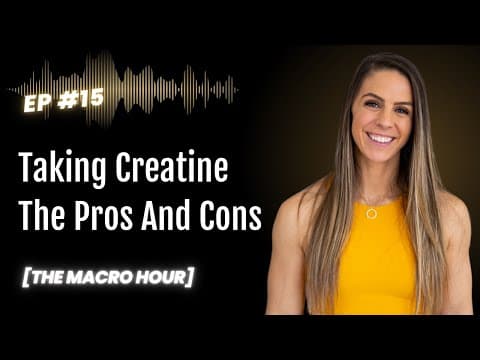
Supplements & Creatine
How do I avoid stomach problems when taking creatine?
Take a low dose and take it with food. Nikkiey explains that creatine's stomach cramps, nausea, diarrhea and bloating tend to show up with large doses or on an empty stomach. Start around five grams a day, increase gradually only if you want to, and mix it into a protein shake or a meal with carbohydrates.
Read the answer →
Supplements & Creatine
Is creatine bad for your kidneys?
Not for healthy people, according to Nikkiey. She explains that some studies have suggested long-term creatine use may affect the kidneys, but most have found it safe for healthy individuals, generally for up to five years. If you have existing kidney problems, she would not recommend it, and she says to check with your doctor first.
Read the answer →

Supplements & Creatine
Should women in menopause take creatine?
Nikkiey says creatine can be a smart addition for many women in menopause who want to keep or build muscle and strength. As estrogen drops, the risk of osteoporosis and fractures rises, and she notes creatine is commonly used by older adults for muscle support. She advises checking with your doctor first and staying well hydrated.
Read the answer →
Watch or listen in full
More on this topic → 21 min
Should Women Over 40 Take Creatine? Pros and Cons
Episode 192 · Sep 23, 2024
 10 min
Is Creatine Safe? Benefits, Side Effects and Kidney Health
Video · Feb 16, 2023
 19 min
Should Women Over 40 Take Creatine?
Episode 408 · Oct 26, 2026