

The short answer
Creatine can make the scale go up, but it doesn't make you fat. Nikkiey explains that creatine pulls water into your muscles, making them look larger and fuller. That extra weight is mostly water, usually temporary, and sometimes new muscle. Track your progress with photos instead of the scale so the number doesn't throw you.
Hear it answered
Tap play to start right where it's answered. It keeps playing while you browse.
Nikkiey on why creatine pushes the scale up and why it isn't fat
Plays from 10:46 · Ep. 15: Does Creatine Cause Weight Gain? Creatine Pros and Cons
Why creatine makes muscles look fuller and why to take photos, not weigh-ins
Plays from 12:19 · Ep. 192: Should Women Over 40 Take Creatine? Pros and Cons
How to track progress on creatine if the scale makes you anxious
Plays from 12:23 · Ep. 15: Does Creatine Cause Weight Gain? Creatine Pros and Cons
Why staying hydrated matters when creatine pulls water into muscle
Plays from 18:17 · Ep. 192: Should Women Over 40 Take Creatine? Pros and Cons
The full answer
On Ep. 15 and Ep. 192, Nikkiey tells you to expect it so it doesn't rattle you: you will likely see the scale climb a little after starting creatine. The reason is that creatine draws water into the muscle. That water helps muscle growth and performance, and it's why your muscles look fuller in the gym. It is not fat. She adds that the weight gain is more noticeable if you take creatine without working out regularly.
This is exactly why she dislikes the scale. Her suggestion: take photos on day one, then again around day seven and day 30. She says you'll be surprised at how much fuller your muscles look. If you're sensitive to seeing the number move, track your body composition and photos rather than relying on the scale, and remind yourself that the extra pounds are usually water and temporary.
Because creatine pulls water into your muscles, Nikkiey stresses hydration on Ep. 192. If you don't drink enough water, dehydration can happen. She also recommends taking creatine with a meal or a carbohydrate-based drink. She notes that creatine is processed through the kidneys, so staying hydrated matters, and she says to check with your doctor before starting it.
The bottom line: a small jump on the scale after starting creatine isn't a sign you're failing or getting fat. It's the supplement doing what it does. Judge your progress by how you look, how you perform and how your clothes fit.
From WarriorBabe's coaches (how we write our answers). For education, not medical advice: talk to your doctor about your own health.
Women also ask
More on Supplements & Creatine →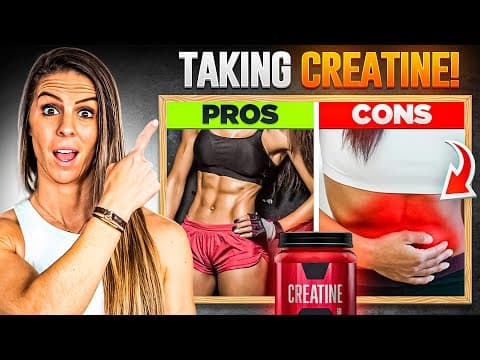
Supplements & Creatine
Is creatine bad for your kidneys?
Not for healthy people, according to WarriorBabe's coaches. She explains that some studies have suggested long-term creatine use may affect the kidneys, but most have found it safe for healthy individuals, generally for up to five years. If you have existing kidney problems, she would not recommend it, and she says to check with your doctor first.
Read the answer →

Supplements & Creatine
Should women in menopause take creatine?
Nikkiey says creatine can be a smart addition for many women in menopause who want to keep or build muscle and strength. As estrogen drops, the risk of osteoporosis and fractures rises, and she notes creatine is commonly used by older adults for muscle support. She advises checking with your doctor first and staying well hydrated.
Read the answer →
Supplements & Creatine
How do I avoid stomach problems when taking creatine?
Take a low dose and take it with food. WarriorBabe's coaches explain that creatine's stomach cramps, nausea, diarrhea and bloating tend to show up with large doses or on an empty stomach. Start around five grams a day, increase gradually only if you want to, and mix it into a protein shake or a meal with carbohydrates.
Read the answer →
Supplements & Creatine
Do I need a creatine supplement if I eat meat?
Not necessarily. Nikkiey explains that animal-sourced foods like chicken and eggs naturally contain creatine, so if you eat meat you're already getting some, and supplementing can sometimes be a waste of money. She sees the biggest benefit for women who are plant-based or vegan and aren't getting creatine from food at all.
Read the answer →

Supplements & Creatine
Can creatine help with brain fog in perimenopause?
Nikkiey says it can. Your brain uses creatine for energy the same way your muscles do, and she points to studies showing better memory, processing speed and executive function. She noticed more clarity and energy herself during a stretch of brain fog and fatigue, and calls it directly relevant to perimenopause brain fog.
Read the answer →
Supplements & Creatine
Do I need a pre-workout supplement?
No. Nikkiey doesn't take a pre-workout supplement herself; one WarriorBabe coach fuels with a pre-workout meal of protein and carbs instead. Nikkiey won't tell you not to use one, but if you do, read the label for beta alanine, which causes an itchy feeling, and for caffeine, which in some products runs 300 to 400 milligrams per scoop.
Read the answer →
Watch or listen in full
More on this topic → 21 min
Should Women Over 40 Take Creatine? Pros and Cons
Episode 192 · Sep 23, 2024
 19 min
Does Creatine Cause Weight Gain? Creatine Pros and Cons
Episode 15 · Feb 10, 2023