

The short answer
Nikkiey says creatine can be a smart addition for many women in menopause who want to keep or build muscle and strength. As estrogen drops, the risk of osteoporosis and fractures rises, and she notes creatine is commonly used by older adults for muscle support. She advises checking with your doctor first and staying well hydrated.
Hear it answered
Tap play to start right where it's answered. It keeps playing while you browse.
Nikkiey on why creatine can help women going through menopause
Plays from 4:47 · Ep. 192: Should Women Over 40 Take Creatine? Pros and Cons
Nikkiey on changing her mind about creatine and when to consult your doctor
Plays from 31:47 · Ep. 161: How to Stop Extreme Dieting and Find Balance With Macros
How creatine boosts strength and why older women use it
Plays from 3:46 · Ep. 15: Does Creatine Cause Weight Gain? Creatine Pros and Cons
Why staying hydrated matters when you take creatine
Plays from 7:14 · Ep. 192: Should Women Over 40 Take Creatine? Pros and Cons
The full answer
Nikkiey ties the case for creatine to what happens in midlife. On Ep. 15 and Ep. 192 she explains that estrogen decreases through menopause, which makes osteoporosis and fractures more likely if you don't have good muscle supporting your bones. That's why creatine, long used by bodybuilders, sprinters and powerlifters, is also common among older adults looking to improve muscle mass and strength. On Ep. 161 she adds that after 30, women lose muscle mass by roughly 3 to 8% per decade, and that adequate protein and strength training are what preserve muscle and help keep bones strong. Creatine supports that work. It doesn't replace it.
Here is what she says creatine does:
- Helps muscles produce more ATP, for more strength and power during hard, short efforts
- Supports muscle growth by promoting muscle cell hydration and protein synthesis
- Can improve recovery, which lets you train harder and more often over time
- May improve brain function by increasing phosphocreatine in the brain
One thing to know up front: creatine makes muscles hold more water, so they can look larger and fuller. On Ep. 192 Nikkiey stresses that because your muscles are pulling in that water, you have to stay hydrated for your whole body to function well.
She hasn't always been a fan. On Ep. 161 she says she was against creatine early in her career, assuming whole foods covered it. She changed her mind as the research piled up, and now calls it properly rated and great for women 45 and older going through menopause. Her caveat is clear: consult your doctor, especially if you aren't drinking enough water. The show doesn't give dosing advice, so work out with your doctor whether creatine fits your health picture.
From WarriorBabe's coaches (how we write our answers). For education, not medical advice: talk to your doctor about your own health.
Women also ask
More on Supplements & Creatine →Supplements & Creatine
Do I need a creatine supplement if I eat meat?
Not necessarily. Nikkiey explains that animal-sourced foods like chicken and eggs naturally contain creatine, so if you eat meat you're already getting some, and supplementing can sometimes be a waste of money. She sees the biggest benefit for women who are plant-based or vegan and aren't getting creatine from food at all.
Read the answer →
Supplements & Creatine
Is creatine bad for your kidneys?
Not for healthy people, according to WarriorBabe's coaches. She explains that some studies have suggested long-term creatine use may affect the kidneys, but most have found it safe for healthy individuals, generally for up to five years. If you have existing kidney problems, she would not recommend it, and she says to check with your doctor first.
Read the answer →
Supplements & Creatine
Does creatine make you gain weight?
Creatine can make the scale go up, but it doesn't make you fat. Nikkiey explains that creatine pulls water into your muscles, making them look larger and fuller. That extra weight is mostly water, usually temporary, and sometimes new muscle. Track your progress with photos instead of the scale so the number doesn't throw you.
Read the answer →
Supplements & Creatine
How do I avoid stomach problems when taking creatine?
Take a low dose and take it with food. WarriorBabe's coaches explain that creatine's stomach cramps, nausea, diarrhea and bloating tend to show up with large doses or on an empty stomach. Start around five grams a day, increase gradually only if you want to, and mix it into a protein shake or a meal with carbohydrates.
Read the answer →
Supplements & Creatine
Does creatine cause dehydration?
Creatine can lead to dehydration, but only if you aren't drinking enough water. Nikkiey explains that creatine pulls water into your muscles, so your body needs more fluid to stay balanced. Drink plenty of water every day, take creatine with a carbohydrate-rich drink or meal, and check with your doctor before starting.
Read the answer →

Supplements & Creatine
What does creatine do for women?
Creatine tops up an energy compound your muscles already make, so they can do more work with more immediate energy. On The WarriorBabe Show, it's linked to strength, power, muscle mass, recovery and brain function. It pulls water into muscle cells, which can add a few scale pounds, but it won't make you bulky.
Read the answer →
Watch or listen in full
More on this topic → 21 min
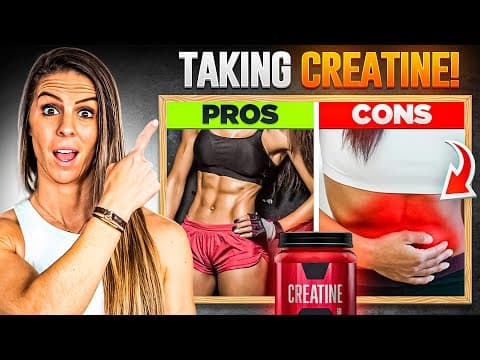
Should Women Over 40 Take Creatine? Pros and Cons
Episode 192 · Sep 23, 2024
 19 min
Does Creatine Cause Weight Gain? Creatine Pros and Cons
Episode 15 · Feb 10, 2023
 39 min
How to Stop Extreme Dieting and Find Balance With Macros
With Lindsey Matthews