

Chapters
In this video
If you've been told cardio and HIIT are the answer after 40, and you're tired, sore and not seeing change, this video lays out a different plan. Nikkiey Stott explains that most online fitness advice is built for young men or influencers in their 20s, not for women going through real changes in hormones, energy and joint health. What your body needs is lean muscle, built with a structured, science-based program.
Nikkiey keeps the science simple: muscle comes down to mechanical tension and progressive overload. You don't need to train six days a week or lift extremely heavy. She then walks through the full body workout she uses with her clients, organized by lower body, back and core, and chest and arms. It leans on machines, cables and supported movements that are easier on your knees, shoulders, spine and elbows and easy to progress over time.
She also clears up two common beliefs: using machines is not cheating, and soreness is not a sign of success. Consistency and gradual progression drive results. Finally, she points out that workouts are only half the equation. Most women aren't eating enough protein, and the Macro Method gives you a structured way to eat for fat loss and muscle without starving or cutting carbs.
Key takeaways
- Build muscle by focusing on two things: mechanical tension, meaning properly loading your muscles, and progressive overload, meaning gradually increasing resistance over time.
- For quads and glutes, use Smith machine squats or pendulum squats, which allow deep knee flexion while giving your joints more support and stability.
- Add barbell or machine hip thrusts to load the glutes at their strongest position, and Romanian deadlifts to work the glutes and hamstrings in the lengthened range.
- Choose seated leg curls over lying leg curls for hamstrings, which Nikkiey calls a joint-safe and more effective option.
- For your back and core, do cable rows or chest-supported rows, assisted pull-ups or lat pulldowns, and cable or machine crunches.
- For chest and arms, use incline machine or dumbbell presses, cable lateral raises, overhead tricep extensions, and cable or preacher bicep curls.
- Using machines is not cheating, and soreness is not a sign of success; consistency and gradual progression are what drive progress.
- Workouts are only 50% of the equation, and most women aren't eating enough protein to build muscle or burn fat.
Questions answered
Do women over 40 need to train six days a week to build muscle?
No. Nikkiey says you don't need to train six days a week or lift extremely heavy weights. What matters is mechanical tension and progressive overload.
Is using weight machines cheating?
Nikkiey says using machines is not cheating. It's one of the smartest things you can do, especially if you care about protecting your joints and getting real results.
What exercises should a full body workout for women over 40 include?
Nikkiey's plan includes Smith machine or pendulum squats, hip thrusts, Romanian deadlifts, seated leg curls, cable or chest-supported rows, assisted pull-ups or lat pulldowns, and cable or machine crunches. It also includes incline presses, cable lateral raises, overhead tricep extensions, and cable or preacher curls.
Why isn't HIIT or cardio helping me lose fat after 40?
Nikkiey explains that most trendy HIIT and endless cardio routines are designed for young men or influencers in their 20s. They can lead to frustration, fatigue and even injury, when what your body needs is to build lean muscle with a structured program.
Is the best leg curl for women over 40 seated or lying?
Nikkiey recommends seated leg curls as a joint-safe alternative that she says is more effective than lying leg curls for hamstring development.
Ask Nikkiey
Questions this video helps answer, with what Nikkiey says across everything WarriorBabe teaches.
Strength Training for Women
What exercises should a full body workout for women over 40 include?
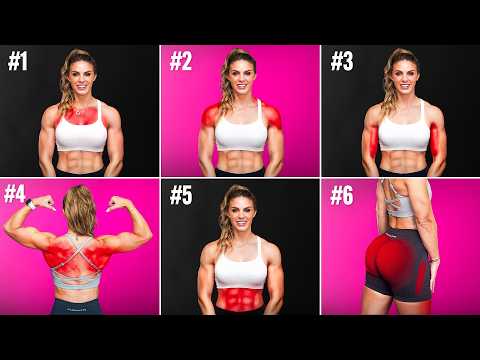
Nikkiey's full body workouts draw from joint-friendly staples: Smith machine or pendulum squats, hip thrusts, Romanian deadlifts, seated leg curls, rows, lat pulldowns or assisted pull-ups, incline presses, cable lateral raises, overhead tricep extensions and curls. Each session you pick one per muscle group, usually six or seven exercises, and push each one hard.
Read the answer →
Strength Training for Women
Are weight machines as good as free weights for building muscle?
For building muscle, yes. Nikkiey says machines are not cheating and are one of the best tools for feeling your muscles work. She built most of her muscle in her first two years barely touching barbells. She still recommends a blend, because free weights build coordination, balance and core control that machines don't.
Read the answer →
Fat Loss After 40
Is walking better than HIIT for fat loss after 40?
For most women over 40, yes. Nikkiey says walking 8,000 to 10,000 steps a day is more effective for long-term fat loss than daily HIIT. Walking adds less stress and doesn't leave you hungrier or less active afterward. HIIT can still have a small place, one or two short sessions a week, alongside strength training.
Read the answer →
Full transcript
Nikkiey: If you're a woman over 40, you have probably been told that cardio is the best way to lose weight at your age. But the truth is, I have helped thousands of women over 40 lose weight, build muscle and feel confident in their bodies again, without doing a single burpee or wasting time on workouts that do not work for this stage of life.
So in this video, I'm going to walk you through the only workout you need. No fluff, no hype, just a science-backed routine that delivers real results. If you're tired of feeling stuck, drained, or like nothing is working for your body anymore, this is the workout to follow. It is designed specifically for you.
Now, let's start by understanding why the workouts you have been doing may actually be holding you back. Not every workout is created with your body in mind, especially after you turn 40. Most of the fitness advice online is designed for young men or influencers in their 20s, not for women experiencing real changes in hormones, energy or joint health. When you follow those trendy HIIT workouts or endless cardio routines, you are not just wasting time. You are putting yourself at risk for frustration, fatigue and even injury.
So what does your body actually need? You need to build lean muscle. That is the foundation of energy, balance, strong bones and long-term independence. You need a program based on science and structure, not what is popular on social media.
If cardio is not the answer, then what is? Let's take a closer look at the real science behind building muscle after 40 and how to do it the right way.
Here's what actually builds muscle, and the good news is that it's much simpler than you think. You do not need to train six days a week. You do not need to lift extremely heavy weights. What you really need to focus on comes down to just two things. Mechanical tension: this means properly loading your muscles so they are challenged and stimulated to grow. And progressive overload: this means gradually increasing resistance over time so your body continues to get stronger and build more muscle.
As we get older, throwing weights around without intention is not the answer. It becomes even more important to protect your joint health and train in a smart, sustainable way. That is why we need to choose exercises that are joint-friendly, easy to progress, and target the right muscles effectively.
So with all of this in mind, what does the best workout actually look like for you? This is the exact workout that I use to help my clients build lean muscle, support their joints and naturally boost their metabolism after 40.
Lower body, focusing on quads and glutes. So doing Smith machine squats or pendulum squats. These exercises allow for deep knee flexion, which is essential for building the quads, and they provide more support and stability for your joints.
Hip thrusts, using a barbell or a machine. This movement activates the glutes at their strongest position and is one of the most effective ways to build muscle in that area, while allowing for easy progression.
Romanian deadlifts, or RDLs. These target the glutes and hamstrings in the lengthened range, creating mechanical tension that stimulates real growth.
Seated leg curls. This is a joint-safe alternative that is proven to be more effective than lying leg curls for hamstring development, especially for women over 40.
Next is your back and your core. Cable rows or chest-supported rows. Both are excellent for building the upper back while supporting posture and protecting the spine.
Assisted pull-ups or lat pulldowns. These movements help develop the lats and improve your shoulder function, while being fully adjustable for strength level.
Cable crunches or machine crunches. These focus on spinal flexion, which is exactly what your abs are designed for, making them both effective and safe.
Then chest and arms. So an incline press with a machine or dumbbells. These target the upper chest more efficiently than a flat press would and are easier on the shoulders.
Cable lateral raises, which provide a smooth resistance curve that helps build round shoulders while minimizing joint strain.
Overhead tricep extensions. This isolates the long head of the tricep for better arm development and uses a stable range of motion that protects the elbows.
Cable bicep curls or preacher curls. These keep the biceps under tension for longer, which research shows leads to more effective muscle growth.
If you are still doing full-body HIIT every day and wondering why the fat is not coming off, it is time to rethink your approach. Using machines is not cheating. It is actually one of the smartest things you can do, especially if you care about protecting your joints and getting real results.
And soreness is not a sign of success. What truly drives progress is consistency and gradual progression over time. Chasing soreness only leaves you tired, frustrated and more likely to burn out faster.
But even with the right workouts in place, we are still missing one major piece of the muscle-building puzzle. Workouts are only 50% of the equation. The other half is everything that happens in the kitchen. You've probably heard the saying that muscle isn't only built in the gym. It also depends on how you fuel your body. That is especially true after 40 and is the real secret to supporting muscle as you age.
Most women are not eating enough protein. You cannot build muscle or burn fat without the right fuel. That is where the Macro Method comes in. The Macro Method gives you a simple and structured way to eat for fat loss and to build muscle. It does not require starving, cutting carbs, or trying to figure everything out on your own.
That is what changed everything for Cheryl B., who said, "I have lost weight, gained strength, and feel amazing in my body for the first time in years." And she did it all after turning 50.
If you are interested in getting the full guide to nutrition for women over 40, I will leave a link in the description below so that you can get started right now. You will learn how to build muscle without skipping meals or eating bland food. It has already helped more than 20,000 women lose weight and feel stronger and more confident than ever before.
If you also want the best at-home workouts to pair with it, make sure to watch the next video. This at-home workout has helped over 20,000 women lose menopause belly fat. Thanks for watching, and I'll see you in the next video.
Up next
Everything → 18 min
How Much Protein Do Women Over 45 Need for Fat Loss?
Episode 78 · Jul 17, 2023
 20 min
Why Women Over 40 Are Losing Muscle and How to Stop It
Episode 337 · Feb 16, 2026
 30 min
Why Am I Lifting Weights But Not Seeing Muscle?
Episode 281 · Aug 1, 2025
Best of Strength Training for Women
All 266 → 1 hr 1 min
Why Building Muscle Is Key to Aging Well After 40
With JJ Virgin
 31 min
Full Body Workouts vs Bro Splits: Which Is Better After 40?
Episode 64 · Jun 5, 2023
 39 min
CrossFit, F45 or Lifting: What Builds Muscle After 40?
Episode 141 · Mar 25, 2024