

 51 min
How to Sleep Better: The Best Sleep Position and Habits
With Dr. Peter Martone
Guest on the show
51 minWith Dr. Peter Martone
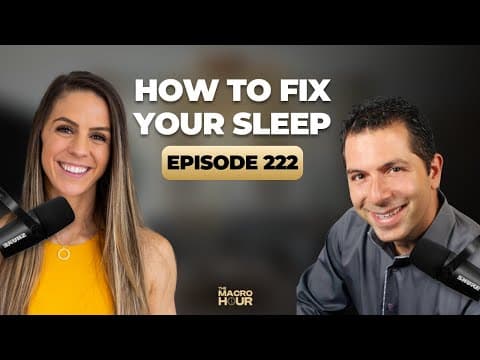
If you have tried everything to sleep better and still lie awake, this conversation offers a different angle. Nikkiey Stott sits down with Dr. Peter Martone, a chiropractor and educator who has spent more than 25 years working on biomechanics, to talk about why he sees sleep as a nervous system imbalance rather than a willpower problem. In his view, poor sleep puts your body into survival mode, and a stressed body tends to gain and retain weight.
Dr. Martone walks through his WAY method and the triune of sleep: the body wants alignment and no pain, the subconscious brain wants safety, and the conscious brain needs to get out of its own way. He explains why he recommends falling asleep on your back with your neck supported rather than your head, how to mimic the pressure of your favorite sleeping position with pillows or a weighted blanket, and how his free animal sleep avatar test (gorilla, armadillo or ostrich) can show how much safety you need.
You will also hear his practical tools: letting go into the pause at the end of each exhale, remembering yourself to sleep instead of thinking, and pairing relaxation practices with a scent. He shares his view on cortisol, the curve of the neck and the vagus nerve, and how he thinks about HRV and sleep hours. His closing point is simple: your health day starts when you plug in at night, and good sleep is a byproduct of good habits.
Sleep, Recovery & Lifestyle
Poor sleep works against fat loss on several fronts. Nikkiey explains that it raises your hunger hormone ghrelin, lowers your fullness hormone leptin, and raises cortisol, which she says signals your body to hold fat, break down muscle and become more insulin resistant. That means you can be in a calorie deficit and still stall.
Read the answer →

Sleep, Recovery & Lifestyle
Aim for seven to nine hours a night. Nikkiey explains that most adults need that range to support the hormones that drive hunger, cravings, recovery and fat storage. If you're getting five or six hours now, don't overhaul everything overnight. Add 15 to 30 minutes at a time until you get there.
Read the answer →
Dr. Martone says the body is most in alignment on your back, where body weight is spread over the greatest surface area, with the neck supported rather than the head. He says you only need to fall asleep that way, because once you are asleep your subconscious brain is in control.
Dr. Martone explains that poor quality sleep puts your body into survival, which is a stress state, so you are going to gain and retain weight. He compares sleep to charging a phone: if you only charge to 50%, you only get 50% performance the next day.
He says it varies from person to person, but on average it is somewhere around eight to nine hours. He suggests tracking HRV, noting it on your best days, and backing into how much sleep you need from there.
In Dr. Martone's view, sleep is a nervous system imbalance: you have to hand off from the sympathetic, survival nervous system to the parasympathetic, thrive nervous system. He says that parasympathetic system is like a weak muscle for most people, and emotions like anger, envy, fear and uncertainty keep the sympathetic side switched on.
He says cortisol greatly affects sleep, but most people only work on lowering it through meditation and exercise. His view is that loss of the neck's curve from stomach or side sleeping suppresses the vagus nerve and parasympathetic tone, which he links to overall higher cortisol.
It is a free test on drsleepright.com that tells you whether you are a gorilla, armadillo or ostrich and how much safety you need to create to fall asleep. Dr. Martone says the armadillo is the most common and needs pressure to feel safe.