

Episode 41643 minHosted by Nikkiey Stott
Is 1200 Calories Too Little for Women Over 40?
with Dr. Stacy Sims
Chapters
Listen onApple PodcastsSpotifyYouTube
This episode is part ofMetabolism, Eating More & Reverse Dieting218 lessons · where to start, common questions and moreIn this episode
If you have been eating 1100 to 1200 calories a day and watching your body get softer, more tired and less responsive, this conversation explains why. Nikkiey sits down with exercise physiologist and nutrition scientist Dr. Stacy Sims, who explains that this intake barely covers resting metabolic rate. In her view, the body reads it as a threat, breaks down lean mass for fuel, holds onto visceral fat and stays stuck in a stressed, tired-but-wired state.
They cover what actually changes in perimenopause and menopause and why HIIT, light weights and high reps stop working. Dr. Stacy makes the case for heavy compound lifting with proper rest, at least two to three full-body sessions a week, and says it is not too late to start even in your 60s. She also explains why protein matters more as you age, how to raise calories gradually, and why stacking your food at night disrupts sleep.
The second half covers the three supplements she says most women benefit from (omega-3s, vitamin D and creatine monohydrate), how recovery needs to shift, and how 10 quiet minutes a day can help lower your cortisol baseline. It wraps up with a rapid-fire myth-busting round on fasting, carbs, bulking, HRT and eating after 7 p.m.
Key takeaways
- Dr. Stacy explains that 1100 to 1200 calories a day is roughly an average resting metabolic rate, so the body treats it as a threat, breaks down lean mass and stores visceral fat.
- If you have been under-eating, raise your calories slowly over about a month by finding more eating opportunities built around protein, fiber and colorful fruit and veg rather than jumping straight to 2000.
- Train with heavy compound lifts and adequate rest between sets instead of HIIT and high-rep, low-weight work, because the body needs a new kind of stress to build muscle and bone.
- Lift full body at least twice a week for strength and three times a week to build lean mass; three 20-minute sessions can get a lot done.
- It is not too late to start lifting after menopause; phase heavier loads in relative to where you are now.
- Dr. Stacy names omega-3s, vitamin D and creatine monohydrate as the three supplements most women benefit from, describing creatine at three to five grams a day, taken every day including rest days.
- Fuel for the day and stop eating after dinner, because skipping meals and stacking calories at night disrupts your circadian rhythm and sleep.
- Take 10 non-negotiable quiet minutes every day, scheduled like a wellness meeting, and eat something within half an hour of waking to help bring your cortisol baseline down.
Worth sharing
Word for word from this episode. Send one to a friend who needs to hear it.
Questions answered
Is eating 1200 calories a day too little for women over 40?
Dr. Stacy says yes. She explains that an average resting metabolic rate is around 1100 to 1200 calories, so eating that little leads the body to break down lean mass, store visceral fat and stay in a stressed state that blocks fat loss.
How many days a week should a woman over 50 lift weights to build muscle?
Dr. Stacy recommends a minimum of two full-body sessions a week for strength and three a week to build lean mass, without going every day because you can't build without recovery. She notes that 20-minute sessions can get a lot done.
Is it too late to start lifting heavy after menopause?
No. Dr. Stacy says lifting heavier stresses the ligaments, tendons and muscle and builds bone to support them, and for someone in her 60s the load should be phased in relative to where she is now.
Which supplements do women in perimenopause and menopause actually need?
Dr. Stacy says to look at diet first, and that most women benefit from omega-3s, vitamin D (especially postmenopause) and creatine monohydrate. She calls these the big three.
Does eating after 7 p.m. make you gain weight?
According to Dr. Stacy, no. She says it interrupts sleep, but it won't make you gain weight.
Do you need HRT to see results after menopause?
In the myth-busting round, Dr. Stacy's answer was no, and she also said it is not true that you can't lose fat during menopause.
Work out yours
Full transcript
Stacy: So when we get to postmenopause, we have those patterns into play. But if you're listening to this and you're like, oh, I'm well past that perimenopause, it's not too late to start. Because if we start lifting heavier, we're putting stress on the ligaments and the tendons and the muscle, we're also building bone to support that. And when people are like, oh, you know, I'm 62, how can I lift heavy? Well, we don't want you to go in and do a heavy deadlift right now. Let's look at where you are and phase it in a relative way, just like we would any other person in any other phase of their life.
Nikkiey: Today is a really special episode because I've got someone on who I've followed, I've respected, I've learned so much from over the years, Dr. Stacy Sims. If you don't already know who she is, she's a world-renowned exercise physiologist and nutrition scientist who's flipped the script on the one-size-fits-all approach in fitness and performance, especially when it comes to women. And her mission is grounded in one of the most powerful truths out there: women are not small men. We need to train, we need to feel, and we need to recover differently, especially for those women listening to this right now who are navigating hormonal changes as they're going through perimenopause or menopause.
Stacy: Thanks for having me. I've been looking forward to this.
Nikkiey: Let's go. I want to kick it off with training first. I've got buckets in my brain that I want to go down the path with you. I want to do training. I want to do nutrition. I want to do supplements. I want to do recovery, and then I've got a little fun game that we can play at the end if you're open for that.
Stacy: Okay. Sounds good.
Nikkiey: First, I want to kick it off with some training because I feel like this is where most women feel totally lost. The things that worked in the 20s, the 30s, even sometimes in the early 40s, it's just not cutting it anymore. And the WarriorBabe community is super hungry to build muscle, to feel strong, and to stop spinning their wheels in the gym, but they just don't know where to start, what actually is best for their body now. So what actually changes in how women should train once they hit this stage of life, like perimenopause and menopause?
Stacy: Yeah, so I like to bring people back to that conversation around puberty, right? Because we've all been through it, we know that your body changes, and you have all these things that happen, and then you get your menstrual cycle, right? So we're on the other side of things, where we're starting to see our body is unwinding our ovarian function. So what does that mean, really? We're having more and more anovulatory cycles, so we're not dropping an egg. If we don't drop an egg, then we don't produce progesterone. We're seeing that we're having more flux of estrogen, and our body has been affected by a continuous cycle of estrogen and progesterone for decades. Now every system of the body is starting to be affected.
We see it from brain changes, cardiovascular changes. We see it when you go get a blood test, and all of a sudden you have high cholesterol, and you're like, I've never had that before. I don't have a family history. It's primarily because of estrogen and progesterone and how they have an interplay in every system of the body. When we talk specifically about skeletal muscle, we see that estrogen is really tightly tied to how our muscles respond and how strong our contractions are and how powerful they are. We also have the other side of things where our body, by aging, is becoming less and less responsive to protein intake and to resistance training.
So all these women who, up to this point, have been like, oh yeah, I get 20 grams of protein after training. I've done my HIIT. I've done my CrossFit Metcon. I've done my 3x10s or 3x15s. I've gone into fatigue. None of that works now because our body's like, oh, wait a second. We need more protein to stimulate anabolism, or building muscle. We also need to find a different stressor that's going to create an adaptive response, because our bodies are really kind of used to not being threatened.
So if we are able to create a stress that's going to cause a threat, the body's then like, oh, I've got to build more muscle. I've got to have a powerful contraction. Then it's going to respond in kind. So when we take that into translation, it's like, okay, what are we doing here? We want to look at that power-based range of lifting, where we want people to learn how to lift heavy properly. We want to do compound movements. We want to have adequate rest between our sets because we want a central nervous system response. So when we're looking at the training scope, it's no wonder that people who are used to doing the HIIT and the higher reps and lower weights are not finding a change, because it's not the right kind of stress we need when we're starting to have these changes in our hormones.
Nikkiey: Yeah, that makes total sense. So for the women that are doing those types of activity, you're saying focus on more compound movements, put more stress on the body with the weights. How about the women that are in menopause? Is it the same thing, strength training, compound movements? Is there anything that would be done differently during that phase of life?
Stacy: No. What's happening is we're having that wind-down during perimenopause. So we start to put those new patterns into place, and the body's responding, because we see the biggest change in body composition occurring over that menopause transition. So when we're doing the heavier weights and we're actually looking at loading the body properly, not only are we stimulating lean mass development, we're also stimulating bone. And both of those are really important.
So when we get to postmenopause, we have those patterns into play. But if you're listening to this and you're like, oh, I'm well past that perimenopause, it's not too late to start, because if we start lifting heavier, we're putting stress on the ligaments and the tendons and the muscle, we're also building bone to support that. And when people are like, oh, you know, I'm 62, how can I lift heavy? It's like, well, we don't want you to go in and do a heavy deadlift right now. Let's look at where you are and phase it in a relative way, just like we would any other person in any other phase of their life.
Nikkiey: So what you're basically saying is lifting is essential. It's not optional, really, right?
Stacy: Exactly. Yeah.
Nikkiey: Amen to that. Why is building muscle so important? Why is resistance training so important?
Stacy: I know. Because cardio has had this vibe for a hundred years, right? We have to do all this stuff for our heart. And trust me, I know, I'm a retired endurance athlete. But when we start looking at being able to age well and not get old, we want brain health. We want cognitive function. We want to be able to carry our groceries into our kitchen. We want to be able to be active with our grandkids, or not grow old but age well with our partner. It's become muscle-centric, right? When we're seeing the push, pull, load, and what muscle does for us, and the building of the muscle and how metabolically active it is. The more metabolically active tissue we have, the better blood glucose control we have.
The better our blood lipids are. The more we aren't looking to store that visceral fat. So we have less of a threat for cardiovascular risk factors. We also want to build muscle so that we're pulling torque on the bone, because then we have strong bones and we don't have that risk of having chalk for bones and stepping off the curb and breaking a hip. So as we talk about it, we're in that bubble, right? Where we're like, yes, strength training for the win. But we also want to remember it's not just for the now. It's protecting us to age well and not get old.
Nikkiey: Yes, I got full-body chills there. So much alignment. And I love the knowledge you have, how you dive into the science-based things and what you stand for. This message just needs to continue to get louder and louder and louder. What would you say is the ideal weekly training split for someone that's 50 years old that wants to build muscle?
Stacy: You know, we see that a minimum is two times a week, minimum, and this is total body movements for that. So if we're doing total body compound movements, we're really focusing on the strength. And that's great. If we want to start accumulating more lean mass, and that's bone and muscle, then we're looking at three times. That's a minimum. You don't really want to eke it out to going every day, which some people are like, oh, more is better. Because we also really need to focus on recovery. You can't build without recovery. So people are always like, oh, I can't spend that much time in the gym. If you have an hour a week divided into 20-minute segments three times a week, you can get a lot done in 20 minutes in the gym when you're looking at strength training.
Nikkiey: Heck yeah. And so many women think they need to move the body more. They've come from the age of I need to eat less and I need to train more. And now the narrative is less is more. One last question on training, and then I want to dive into the bucket of nutrition. Is there a best time to train based on the hormone fluctuations, say if we're not in perimenopause or menopause? The fluctuations that may be normal... not normal, that sounds terrible. You know what I mean. We're still getting our menstrual...
Stacy: Reproductively, still in the reproductive years.
Nikkiey: Yeah. Is there a best time to train during those cycles that we go through on a monthly basis?
Ladies, are you feeling frustrated with body changes you're experiencing during menopause? It's time to take control. If you're between 45 and 65 years old and tired of struggling with body fat and muscle loss, WarriorBabe is here for you. At WarriorBabe, we've helped over 18,000 women just like you lose body fat, build toned muscle, and understand their bodies better with personalized plans based on hormone and thyroid testing and more. Imagine knowing exactly what your body needs to see real results, and results that last. Don't wait anymore. Take charge of your health and join our community of strong, empowered women. Visit warriorbabe.com forward slash apply today to start your transformation. That's warriorbabe.com forward slash apply. All right. Let's get back to the show.
Stacy: Yeah. So the science has evolved over the past six years, which I'm happy to see, because now we have more and more research on women. And part of it is we know from a molecular standpoint what happens when we have low estrogen and progesterone. And this is when we can really go hard. We recover well. We have all these great things going for us, including our immune system. Then after ovulation, we start to have a change. We have to be a little bit more cognizant of what we're doing. But we don't know when people ovulate. Even women don't really realize if they ovulate or not, because you'll still have a bleed, but the bleed pattern might be a little bit different.
So what we're saying now from an applied sports science point of view is we want you to track and understand how you feel across the cycle, because that gives you more insight and also empowers you to know, well, I really have this training session I want to do and it's really high intensity and I want to nail it. But it kind of falls around the time where I always feel a bit flat. So I'm going to move that. So you still have the opportunity to do that session and get the training benefit, but you don't have to do it on a day where you're fighting it. So you find your own patterns, because some women feel really awful mid-cycle and then they start to feel better on either end. And then some women feel really bad the week before their period starts. So it's like, let's not fight it. Let's really understand how we feel and how our body is responding to these hormone fluxes and dial it in that way.
Nikkiey: Yeah. I feel like that could be a whole other podcast right there.
Stacy: Absolutely.
Nikkiey: But let's shift gears to nutrition, because that's where I feel like a lot of women are stuck. I feel like every conversation I have with someone on the nutrition topic, it's like a deer looking at headlights. Women are eating 1100 calories, 1200 calories, thinking that it's going to help them drop fat, it's going to help them drop weight, but they're not seeing the progress that they want to see. And in fact, they're gaining weight, they're losing muscle, or they're feeling just constantly exhausted. So can you speak to the danger of that, especially for women that are in the phase of menopause and going through that journey, but more so the danger of just eating 1100 and 1200 calories?
Stacy: Yeah, it's not enough. We've been caught in this narrative, probably from the hundred years of cardio stuff, where it's calories in, calories out, eat less, burn more. And we have to remember that inherently we are biological beings that require food. And if we are not eating enough to support just general health, the body perceives it as a threat. And the body is like, wait, I want to stay alive. So I'm going to start conserving every possible high metabolic cost that I can. So if you're only eating 1100 to 1200 calories a day, that's not really even enough to touch a resting metabolic rate. We see on average, a resting metabolic rate is around that 1100 to 1200 calorie point. So that's like lying in bed and not even blinking, right? So this is just the basic amount that your body needs to survive, from all its breathing and heart rate and blood circulating and brain and everything.
But as soon as you get up to pee, you need more calories. Your body needs food to do all these energetics. And if you're not eating, your body's like, I'm bringing it all down. I'm only going to allow the essentials to work well. So I need to preserve the brain and I'm going to keep trying to fuel the brain. I don't have enough blood sugar, so I'm going to start using some free fatty acids or ketones and amino acids. Where does that come from? It comes from your lean mass. Your lean mass is very metabolically active. And that's one of the first things the body is going to go after and say, hey, you're too metabolically active. I can't conserve you. So I'm going to break you down and use you for the sum of the parts.
So when we start seeing women who aren't eating enough, we see this, right? They put on belly fat. They put on a lot of extra subcutaneous fat. They look a little bit puffy. They're losing lean mass. They're not responding to training. And then they can't sleep well, right? Because they're in this sympathetic drive where their body's in this really highly stressed state of, there's no nutrition coming in, how am I going to... I'm getting ready to fight or flight, is that continuous feeling.
When we get into the menopause transition, unfortunately, we see a big shift in body composition with this change in the hormones, because the body is under a sympathetic drive. So that's why we are always tired but wired, because we're having these shifts and the body's under a little bit of normal stress from these shifts, because it's starting to find a new biological set point. So we start seeing conversations between the liver and free fatty acids that are floating in the blood, where now the liver is like, ah, I need to store you in and around the organs in case I need to be able to access you, which is why we get visceral fat. We also see that we have less ability for insulin to pull sugar into the muscle. We have more insulin resistance. And it's because the body's like, I need to conserve blood sugar. I need it for the brain.
So there are all these things going on because we're under a bit of stress. So if we're like, let's feed the body and let's train appropriately, we start to see better conversations across the organs, which allow us to not store visceral fat, but to take fatty acids and put them into the skeletal muscle to be used at rest, and to increase our body's ability to pull glucose into the skeletal muscle and the liver without insulin. So we start to see better metabolic health. If we're not feeding it, we don't even start to have an impetus on that.
Nikkiey: I feel like everybody needs to rewind that whole last bit and just listen to it over and over and over again. I'm over here, I have chills and I'm screaming yes in my head because of all that you just said. I'm so glad you just said that. And the way that you broke it down makes it so understandable as to what is actually going on. Because it's not like a lot of women know, hey, this is what's happening in my liver, visceral fat equals this. The brain doesn't compute like that for women that don't have the knowledge that you have, or aren't in the bubble that we're in where we eat, sleep, breathe this kind of stuff. So thank you. That's the exact message I just want to continue hammering home, so women can understand how important it is to eat food and eat the right amount of food.
Stacy: And enjoy it.
Nikkiey: Exactly. And enjoy it. Yeah. And you can't expect to build a strong body while you're underfeeding it.
Stacy: No. You need abundance. Not overabundance from crappy food, but abundance to stimulate the hypothalamus to say, yeah, let's go in and build this muscle and let's get rid of this extra fat, because we want more metabolically active tissue to help us do all these things that we want to do.
Nikkiey: Yeah. Actually, let's dive into that, the flip. So we talked about what happens when you under-eat. When you start actually giving your body the food that it needs and it wants, what happens in our body at that point?
Stacy: Yeah. So this is where we really... I've been having lots of protein conversations recently.
Nikkiey: Yeah. I was going to dive into that eventually.
Stacy: Yeah, yeah. Because we're starting to now see the spotlight on protein as a macronutrient. And people are wondering, well, why? Why are we all of a sudden talking about protein? Because now we're having more and more studies around it. And we're seeing that if you're increasing your calorie intake and have a higher percentage of protein while you're trying to change body composition, you get a benefit, because protein isn't just for muscle. It's for neurotransmitters. It's for nerves. It's for so many other things, even bone, right? So we're thinking about how protein is a building block of almost everything in the body. So if we are eating higher-quality protein more often during the day to increase our calories, we are also stimulating the growth of bone, muscle, neurotransmitters, and reducing sympathetic activity.
We have a whole bunch of benefits. If we were to increase by fat, we wouldn't have the same thing. If we increase by ultra-processed carbohydrate, we definitely don't have the same thing. So when we start increasing our calories, we want to think about two things. One, how are we promoting the growth of positive tissue? And two, most importantly, how are we helping our gut microbiome? Because if we have a relatively non-diverse gut microbiome, then we don't have any kind of change. We don't have any kind of impetus for better health.
So when women are like, well, I don't even know how to increase the amount of calories, reach for protein and fiber, lots of colorful fruit and veg. And if you're also adding nuts and seeds and legumes, you're putting in some protein. And then also look at all the other types of protein that you can bring in. So if you're on 1100 calories a day, I don't want you to go tomorrow and go, oh, I need 2000 calories. Slowly get up over the course of a month, find eating opportunities, because most people don't know what it means to be fed.
They only know what it feels like to be hungry, and they don't even tie into that. And we see that there's a disconnect in our appetite hormones. The more that we hold on to an elevation of cortisol, it reduces our ability to feel hungry and it reduces our ability to feel full. So we have to reteach the body that. So having an eating opportunity that includes protein and some fiber and carbohydrate allows the hypothalamus to understand that, which means we have better connection with our appetite hormones and a reduction in cortisol production.
Nikkiey: Love that. I love that protein's getting the highlight nowadays. Prior, it never really did.
Stacy: Never did.
Nikkiey: ...to tap that review button or share this podcast with a friend. It's a small gesture that goes a long way in helping more women find their way to feeling stronger and more confident in their skin. I appreciate you so much for taking the time to support this show.
All right. How about some food? Are there any foods or nutrients that women should focus on more specifically to support estrogen and cortisol and thyroid function? Are there specifics that you could maybe hammer out, like three or four?
Stacy: So when we're looking at whole food nutrition, right, the big thing is taking care of the gut. So that's all of our fibery fruits and veggies and whole grains. Protein we've talked about. And the timing of our food to work with our circadian rhythm. So that's fueling for the day and winding down, so we're not eating after dinner and we can sleep well. And I see a lot of people who misconstrue and hold food till noon, or they eat something in the morning and have a big hole in the day because they're too busy, and then they stack their calories at night.
They're resetting their circadian rhythm and they're not going to be able to sleep well, because now your body's like, oh, there's all this food. Okay, I've got to use it. So I really try to get women to understand we want to fuel for the task at hand, which is the daytime activities, whatever we're doing. And then we want to allow the body to rest overnight while we're sleeping so that it can do what it needs to do. When we look at specific foods that are really beneficial at this point, we see omega-3 fatty acids, either through fish, walnuts, flax, that kind of stuff, even supplementation.
And then we can talk about supplementation, because the other really critical thing is creatine. And I know that women aren't going to eat 20 chicken breasts in one day to get the amount of creatine that their body needs. So this is where supplementation comes into play.
Nikkiey: Yeah. Okay. So I want to dive into that next. That was my next bucket with you. That's another area where women, I think, get pretty overwhelmed. I feel like the first question I typically get asked is, what supplements do I need to buy? And they're spending money on green powders and on collagen or on fat burners, random menopause blends, who knows what's out there now. And half the time they don't even know what it's for. So I'd love for you to just cut through the noise. What's actually worth it? And since you just brought up creatine, I would love for you to dive down that, because creatine is getting a lot of attention right now in very positive ways. And I would just love your take on it.
Stacy: Yeah. So if we think about supplementation, it's like the icing on the cake, right? And we see that it is highly unregulated, and people are thinking, oh, I need to take this and that and this and that. I need my multivitamin. I need my greens. But it's like, let's look at the diet first. We can really get what we need from our diet. And it's a supplement for a reason. It's not to take the place of the whole foods we're eating, but to supplement. So if you know that you are low in magnesium, then you take it. But for the most part, we know most women will really benefit from omega-3s, vitamin D, especially in postmenopause, and creatine, creatine monohydrate.
So those are the big three. So let's think about why. We want omega-3 fatty acids because they're really good with antioxidative properties. So this is when we're looking at our cells and they're under a lot of stress and we get free radicals. Omega-3s come in and help with mitigating some cellular damage. And when we're thinking about peri- and postmenopause, and our body's under a lot of stress and our cells are going through a lot of changes and relying on different signaling, we want to support it with omega-3s. They're also really important for brain health as well.
When we think about creatine monohydrate, this is, again, one that is getting a lot of press. And we see it's the most studied supplement in all of the research across years. And it's super beneficial for health and performance. It used to have the big bodybuilding idea of, you want to load creatine for increasing the bulk and the ability for your muscles to do muscle work. But we're not talking about those high doses. We're looking at three to five grams a day. Over the course of three weeks, your body will fully saturate.
And what does it do, right? This is the big question. I should take it, but what does it do? Creatine is really important for every fast energetic in the body. So we think about the brain and how fast we have neural connections. All of that relies on our ATP-CP fueling system, and creatine is part of that. We think about our gut. We think about our heart. We think about muscle performance. All of those require creatine. Women have about 70% to 80% of the stores that men do by the nature of having less muscle mass. And unfortunately, women don't eat enough to really supply what they need.
So when we start looking at the research and understanding how important it is: as we get older, we also store less. So it's important to get that creatine in. We see more and more studies coming out that when you're under fatigue and you're under high stress, if you are dosing with creatine five grams twice a day, it improves the capacity to be more stress resilient. We see people who have IBS or gut issues, and we see a lot of uptick in gut issues in perimenopause because of the disconnect of our estrogen receptors. Creatine helps maintain the integrity of our intestinal cells, because we now have the creatine that's there to keep the mucosal lining intact, even under stress. So there are so many benefits for it. And we see that it's beneficial in pregnancy as well.
Because, again, pregnancy is a fast energetic, and you have a lot of calorie requirement when you're trying to build something. So you have all these energetics that are happening, and creatine is very beneficial. And then that brings us to vitamin D, right? Vitamin D3. A lot of us don't spend enough time outside. And even the time we spend outside isn't enough to bring our levels up to where they are needed. And it's really important for things like osteoporosis prevention. We see it's important for muscle and immunity, also really important for brain health. And the research on vitamin D is still growing. So those are the big three for women.
Nikkiey: Back to the creatine breakdown really quick. One question that I have for you is, how about taking it on rest days? Should you take it every single day?
Stacy: Yeah, absolutely.
Nikkiey: I love the positive press it's getting.
Stacy: I know. I love it. It's great.
Nikkiey: Okay, cool. Let's go to the next bucket, the last bucket that I've got for us tonight, before we dive into... I want to play a myth-busting game with you. So I want you to tell me, is it BS or is it true?
Stacy: All right.
Nikkiey: But before that, I want to talk about something you've touched on a little bit all throughout the episode: recovery, sleep, stress, cortisol. We always say inside of WarriorBabe that training is only half the battle. I love saying that you don't build muscle in the gym. You break it down, and then you build it and repair it afterwards. Where the results actually happen is in recovery. But a lot of women are dealing with poor sleep. They're dealing with high-stress lives, cortisol through the roof, hormonal chaos. And they're always wondering why their weight won't budge or why they can't see the results that they want to see. So I'd love to talk about those pieces and how they play a role. The first question I would have is, how does recovery need to shift for women in menopause?
Stacy: We need to put more of a focus on recovery, because we have this sympathetic drive and a higher baseline cortisol. So how do we look at recovery? One, it is bookending your training with nutrition, because that's how we can actually help with this signaling for reparation, with the food, especially before and after training. We think about mobility, and looking at foam rollers and those kinds of things. Super important. I think I spend more time warming up and cooling down now than I did before. I spend less time training and more time mobilizing. We kind of laugh about it, but it's really important.
Nikkiey: I need to become more like you. I need to do that. I can feel it in my body now. I need mobility in my life.
Stacy: Yeah, exactly. Once you start implementing it, you can do some mobility between your squat sets and you get more out of your training, right? But then we think about all the things that are circulating about Normatec boots, cold plunge, sauna, all these other things that are supposed to be for recovery. But are they really? Do they add more stress? It depends on how much time you have, right? If we're thinking about having to specifically go somewhere and do a cold plunge, does that stress you out to go there and do that? Same with going to a sauna specifically, because we see people on social media stepping out of their sauna. If you have it in your house, that's great. If you are somewhere where it's really close and you can tie it into your training, fantastic. But don't put an extra stressor on yourself just because you think you have to. So it's not necessarily about what's available, but about how it fits into your life.
And I think one of the biggest things that women don't do is own time for themselves. We see when you start taking ownership of what you are doing and own your own time, it's like weight is off your shoulders. Guilt has no room, right? I struggle with it. Of course, I think every woman struggles with it, but it is an emotion that doesn't do anything except break us down. And I try to reteach people how to deal with that, where you're looking at 10 minutes. Surely you can find 10 minutes.
Maybe it's 10 minutes when you first wake up with no noise, right? No one else is up and you have those 10 minutes just to have no noise, be up, go outside if you can. If not, don't worry about it. Just be able to have those 10 minutes to recenter and find that time for yourself. Write it in your calendar as a wellness meeting. It's a non-negotiable. It's your time, because if we can't show up for ourselves, then we're only half-assed showing up for other people. And when we start owning that for ourselves, then we start reducing the stress, because now we're not going, oh shoot, I have to do training, but I feel like I have to go pick my kids up and this and that.
So you schedule it, right? It becomes a time for you. And it doesn't have to be every day for scheduling the training, but that 10 minutes is non-negotiable every day. Because if you are able to find that quietness for 10 minutes, when you get into a highly stressed state, you bring yourself back there and remember what that is. And yes, it is part of the mindfulness training that people do, but it's really beneficial when you're like, okay, I have these 10 minutes. I can calm down. I wake up. I'm not blasted by all this noise. And then later in the day when you are blasted by all the noise, you're like, okay, I'm just going to take myself back to those 10 minutes. And even when you wake up in the middle of the night and your brain is circulating, you have the ability to go back and say, I remember what that breeze felt like. Or, I remember opening the door and feeling the cold air or the warm air. You bring yourself back to those moments in time, which allows your body to just go, relax.
Nikkiey: Back to sleep.
Stacy: Back to sleep. Yeah.
Nikkiey: Oh, so good. That was such a powerful response. I'm so happy that you touched on that. I think just taking that time throughout the day for yourself can make a huge difference.
Stacy: Compounding it over time. Yeah. I find a lot of people are driving around, right? And we have the radio on, we have the news on. And it takes a lot for you to turn it off and just be driving. And it's amazing when you turn it off and you just have the windows down a little bit. Even if you're in traffic and you have all the noise around, roll your windows up, turn the air on, but try to have that no noise in the car. And all of a sudden it's not road-ragey, because you don't have that constant chatter. You might not like the music. You might not like the DJs or what they're saying. And it's just another level of stress. I'm not saying you have to do it all the time, but it is very helpful just to have those moments to turn it off.
Nikkiey: Totally. There's some reason why, when I drive home after the gym, I don't want any music on. I just really enjoy it when it's super quiet in the car.
Stacy: Exactly.
Nikkiey: Yeah. Okay. Can you speak to the impact that cortisol and chronic stress have when it comes to trying to lose fat and trying to build muscle?
Stacy: Yeah. So I think cortisol also has gotten a bad rap, because we need it. It's an essential hormone for our body, right?
Nikkiey: True, true, true.
Stacy: We need it because we have a cortisol awakening response. It naturally comes up and allows us to wake up. It also winds down and allows us to relax, to get to sleep. And it allows us to respond to a stress, if we're all of a sudden slamming on the brakes, right?
Nikkiey: Right.
Stacy: So it's really necessary for our survival.
Nikkiey: And with pressure as well. It's a good response.
Stacy: Yeah.
Nikkiey: Totally.
Stacy: Yeah. But what's not good is when we're in that highly stressed response and our baseline cortisol is elevated. So we're fluctuating between an elevated baseline and a new high. So we need to find ways of downturning that, because if we don't, then we're always in that tired but wired state, which is a stress state for the body. And if we're in that stress state, it's not going to allow you to lose weight. It's not going to allow you to change body composition.
So when we're looking at how we mitigate that, it is, again, let's look at our circadian rhythm. You don't have to have a full meal, but have some food half an hour after waking up to tell the brain, yep, we're up. We're ready to go. We have some food. It's fine. We can start allowing that cortisol to calm down. When we get into a stressful situation, and we're in a meeting that's really stressful at work, or the kids are around you and they're really fighting and stuff, you just take a deep breath, and it really does help.
We talk about breath work in some situations, but taking a deep breath and controlling your breathing helps you relax and brings more of a parasympathetic response, which makes you more stress resilient. So there are small things to do during the day when you're starting to see those stress points to bring cortisol down. And when you get more control of that upper baseline and bring it down, then your body's like, okay, now I can concentrate on manipulating things I don't need, like bringing more active tissue up and getting rid of some of the less active tissue.
Nikkiey: Totally makes sense. Thank you for breaking it down. I think that's so important. A lot of women don't realize how much impact stress can have. It's a silent killer to progress. You can't out-train a nervous system that's in overdrive, essentially.
Stacy: Yeah, exactly. And the other thing is, give yourself permission to not train. Give yourself permission not to rush. Give yourself permission to go outside and sit in the sun and have a cup of coffee, or just stare at the sun. It is okay. You don't have to jam your day full of go, go, go all the time, because we're not designed to do that.
Nikkiey: I just love that you touched on that, because I think a lot of people, women and men, just try to power through their day and don't try to slow down and soften a bit, you know? It's okay to do that. It's a hustle culture we live in.
Stacy: It is. I was at the gym this morning, and I'm the American surrounded by all the New Zealanders, the Kiwis. And they're like, what was your trip like? And so I was explaining my days when I'm in the States, because my days in the States are really, really jammed. I know it's a short period of time, but super, super jammed. And they all turn and go, oh my gosh, they workhorse you to death. That culture is just go, go, go. I couldn't live there. And then in my head, I'm like, yeah, but it's a bit too slow here. It's the mix, right? I've had to work the California mindset out of me to understand that things take a little bit longer and it's okay.
Nikkiey: But, you know, it's funny that you touched on that. It is a Western culture thing. It's totally the U.S. Just hustle, grind, push, you know? That's just the vibe here.
Stacy: I know. That's so funny. Now we have a society of underslept, overfed, sick people, and we need to reverse that.
Nikkiey: Amen. Yes. All right. Let's have some fun and do a little rapid-fire myth-busting round. You cool with that?
Stacy: Sure. Let's go.
Nikkiey: I'm going to throw out some common beliefs, and you tell us if it's true or if it's BS. You can't build muscle after 50.
Stacy: That's totally not true.
Nikkiey: Cool. You should fast longer in menopause.
Stacy: No.
Nikkiey: Protein needs increase with age.
Stacy: Yes.
Nikkiey: Cool. Creatine is beneficial for women, especially postmenopause.
Stacy: Yes.
Nikkiey: Yeah. Carbs cause fat gain in menopause. And/or in general.
Stacy: That depends on the carbohydrate, but generally no. If you're looking at the good carbs, no. If you're looking at ultra-processed protein Pop-Tarts, yes.
Nikkiey: Fair. Thank you for that added specification. Lifting heavy will make you bulky.
Stacy: No. I wish. I wish, but no.
Nikkiey: No. You need HRT to see results after menopause.
Stacy: No.
Nikkiey: You can't lose fat during menopause.
Stacy: No. You can.
Nikkiey: Eating after 7 p.m. makes you gain weight.
Stacy: No. It interrupts sleep, but it doesn't make you gain weight.
Nikkiey: Wait, say that one more time.
Stacy: It interrupts sleep, but it won't make you gain weight.
Nikkiey: It won't make you gain weight. Gotcha. And then last one: sleep quality directly impacts fat loss and muscle gain.
Stacy: Absolutely. Yes.
Nikkiey: Let's go.
Stacy: You're welcome.
Nikkiey: So many people need... everything that you just shared in that whole episode, I want people to just go back and listen to the whole thing over and over again.
Stacy: Thank you. I want to play it for all the bro science guys too.
Nikkiey: Yeah. Dude, please, please, please. The message you're putting out there about women not being small, tiny men is a breath of fresh air. So please keep with that message.
Stacy: I will. I will. Nothing else to do. Let's just keep fighting.
Nikkiey: Amen. I'm on your train, girl, for sure. A hundred percent.
Stacy: Thanks.
Nikkiey: Well, this has been an awesome episode. Seriously, thank you so much for bringing the fire. You're an absolute force, and I appreciate the science. I appreciate your knowledge. And more importantly, I appreciate the empowerment that you're giving women on a daily basis. And I know that our listeners are going to walk away feeling educated and, more importantly, seen. I think in this industry, in this field, what we're doing right now is so important, because women are feeling seen and heard and ready. And I know they're ready to take action. So where can people find you? Add your plugs in here: where they can grab your book, where they can dive deeper into your work. Where can we find you, Stacy?
Stacy: Yeah, the website, Dr. Stacy Sims, has everything. And you can sign up for our biweekly newsletter, where I try to put some new science out there and what's going on. And on Instagram and Facebook. We just removed ourselves from TikTok. Not a fan of that platform. Anyway, so you can find me there. And if you want to order the books, I always tell people to try to find them at a local bookseller, because they can get them in for you, and support the small businesses. But if you can't, because you live in the middle of nowhere, then you can always find them on Amazon or Barnes and Noble's websites.
Nikkiey: Cool. Thank you. And hey, everyone listening, if this episode hit home for you, screenshot it, share it, put it on your stories on Instagram, tag me, tag Dr. Stacy Sims, and let us know what clicked the most for you in this episode. Because I know for damn sure this is the kind of information that can totally change lives. So thank you for being here, Stacy. Thank you for your time, being all the way across the world right now and into the next day. I appreciate you. Please keep pouring out the message that you have and spreading it. It's so important.
Stacy: Thanks so much. And you keep doing what you're doing, because it is actually teamwork.
Nikkiey: Amen to that. Let's go. Yes. Thank you so much.
Hey, really quick before you go, I have one small favor to ask. If this episode brought you value or sparked something in you, take just a moment to hit that review button. Your rating and review make all the difference, helping more women discover the tools they need to transform their fitness and their confidence. It takes less than a minute, but it can change the path of someone else's journey. Thank you so much for leaving that review. I appreciate you so much.
Up next
Everything →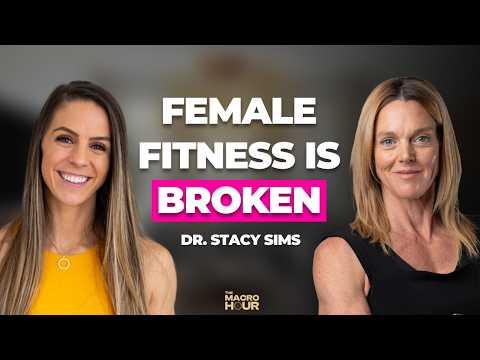 1 hr 3 min
Why a 1200-Calorie Diet Fails Women Over 40
With Dr. Stacy Sims
 55 min
Lifting, Under-Eating and Perimenopause: Truths After 40
Episode 300 · Oct 6, 2025
 15 min
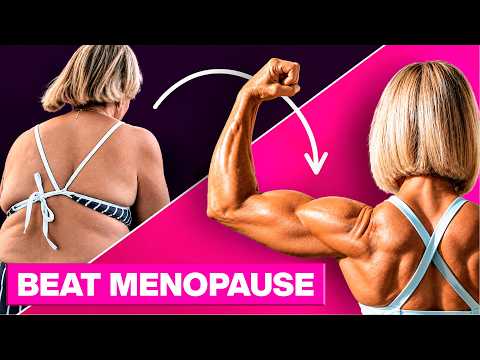
Quit Cardio, Ate More, Lost 60 Pounds in Menopause
Video · Oct 12, 2026
Best of Metabolism, Eating More & Reverse Dieting
All 218 → 28 min
Signs You're Not Eating Enough as a Woman Over 40
Episode 308 · Nov 3, 2025
 28 min
Reverse Dieting for Women Over 40: Do You Need One?
Episode 284 · Aug 11, 2025
 34 min
Is Metabolic Damage Real? How Long Metabolism Repair Takes
Episode 354 · Apr 20, 2026