

From 3 episodes
What should I do if my doctor dismisses my symptoms?
Answered by Nikkiey Stott · Updated
The short answer
Don't accept "it's just aging" or "it's stress" without data. Nikkiey says to push back politely and firmly, arrive with a weekly symptom log and a list of questions and tests, and remember you can get a second opinion or change doctors if yours won't engage.
Hear it answered
Tap play to start right where it's answered. It keeps playing while you browse.
Nikkiey on keeping a weekly symptom log so you can't be brushed off
Plays from 18:11 · Ep. 297: Normal Labs but Still Feel Awful? What to Ask Your Doctor
Nikkiey on refusing the "it's just aging or stress" answer
Plays from 26:09 · Ep. 375: What Lab Tests Should Women Over 40 Ask Their Doctor For?
Esther Blum on advocating for yourself and finding a hormone-literate doctor
Plays from 59:06 · Ep. 130: How to Navigate Menopause: Protein, Carbs, HRT and Lifting
Nikkiey on second opinions and saying "I hear you, but I am not okay"
Plays from 20:44 · Ep. 297: Normal Labs but Still Feel Awful? What to Ask Your Doctor
The full answer
On Ep. 375, Nikkiey says most women are told their symptoms are just part of aging or probably stress, and she wants you to refuse that. As she puts it, these symptoms are often tied to hormone fluctuation, and there are evidence-based options worth discussing. Her suggestion is to open with something like: I'm noticing symptoms I haven't had before, and I think they may be related. Then bring your questions. She adds that if a doctor shuts down a conversation about HRT without engaging the current evidence, she would personally push back, and in her opinion, look for a physician who is up to date.
On Ep. 297, Nikkiey explains how to make yourself harder to dismiss:
- Skip "I just feel off." Keep a weekly log of sleep, energy dips, cycle changes, mood, digestion, cravings, soreness and recovery.
- Use it as evidence. When you hear "you're fine," you can point to what happened two weeks ago and last week.
- Know what to ask for. Her list includes a full thyroid panel (TSH, free T3, free T4, reverse T3, antibodies), cortisol, progesterone, estrogen, testosterone, vitamin D, B12, iron, insulin and A1C.
If your doctor still won't run the tests, Nikkiey says direct-to-consumer labs or a functional medicine company are options. You are allowed to change doctors and get second opinions, and you are allowed to say: I hear you, but I am not okay.
On Ep. 130, Esther Blum says some of her clients bring research to their appointments and ask to try a treatment for three months. If a provider won't engage, she suggests calling a compounding pharmacy in your area to ask which hormone-literate doctors send prescriptions through them, or searching ifm.org, then confirming the office prescribes bioidentical hormones. She notes this is often out of pocket. Whatever you decide, make it with a doctor who listens and works with you.
From WarriorBabe's coaches (how we write our answers). For education, not medical advice: talk to your doctor about your own health.
Women also ask
More on Women's Health & Aging →Women's Health & Aging
When should women get a bone density scan?
Nikkiey's take: don't wait until 65. That's the standard recommendation for a DEXA scan in women of average risk, but she considers it too late. She suggests asking your doctor for a baseline scan in your 30s or 40s, and pushing harder if you have risk factors or are in perimenopause or menopause.
Read the answer →

Women's Health & Aging
Can exercise fix diastasis recti?
Not according to Dr. Rady Rahban on Ep. 365. The board-certified plastic surgeon says no amount of crunches or core work will close a diastasis gap. Core training still matters because it strengthens your obliques and rectus muscles, but in his view the separation itself won't sew back together.
Read the answer →

Women's Health & Aging
Does lifting weights help your mental health?
Yes. On The WarriorBabe Show, Nikkiey explains that lifting gives the stress your body carries somewhere to go, triggers endorphins she calls the brain's natural antidepressants, and builds confidence every time you lift heavier. She also cautions that not every way of exercising is good for your mind, especially when your training is driven by guilt.
Read the answer →

Women's Health & Aging
Can I strength train after a knee or hip replacement?
Yes, according to several women on The WarriorBabe Show who did it. Johanna lifts three days a week after two total knee replacements and says she has no programming limitations. Peggy started about four to five months after her surgeries with one modified session a week. Follow your surgeon's guidance and modify every movement.
Read the answer →
Women's Health & Aging
Does strength training help bone density in menopause?
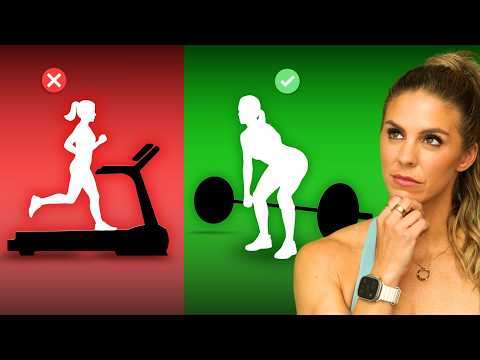
Yes. Nikkiey explains that strength training puts stress on your bones, which triggers them to rebuild stronger and denser, raising bone mineral density and lowering osteoporosis risk as estrogen drops in menopause. On the show, she and guest Sal Di Stefano agree that walking and cardio don't come close to resistance training for bone.
Read the answer →

Women's Health & Aging
How lean is too lean for a woman?
You're too lean when your body stops running its basic functions. The WarriorBabe Show gives no body fat number. Nikkiey Stott and Maggie Topham point to signals: losing your period, constant fatigue, irritability, low energy and losing muscle. Ida Bergfoth adds that competition-level body fat isn't healthy or sustainable, especially for women.
Read the answer →
Watch or listen in full
More on this topic → 1 hr 6 min
How to Navigate Menopause: Protein, Carbs, HRT and Lifting
With Esther Blum
 36 min
What Lab Tests Should Women Over 40 Ask Their Doctor For?
Episode 375 · Jul 3, 2026
 26 min
Normal Labs but Still Feel Awful? What to Ask Your Doctor
Episode 297 · Sep 26, 2025