

The short answer
Nikkiey explains that when you stop a GLP-1, your appetite comes back. But if you lost muscle while on it, your body now burns fewer calories at rest than before you started. That is why the weight tends to return, often faster. She cites a study where people regained about two-thirds of the lost weight within 12 months.
Hear it answered
Tap play to start right where it's answered. It keeps playing while you browse.
Nikkiey on why less muscle means the weight returns after stopping a GLP-1
Plays from 9:41 · Ep. 358: Do GLP-1s Cause Muscle Loss in Women Over 40?
Why appetite roars back while calorie burn has dropped after Ozempic
Plays from 9:29 · Ep. 301: Does Ozempic Cause Muscle Loss in Women Over 40?
Nikkiey on building a plan for life after the medication
Plays from 23:53 · Ep. 358: Do GLP-1s Cause Muscle Loss in Women Over 40?
The wrong way to use these drugs and why it sets up the rebound
Plays from 15:31 · Ep. 301: Does Ozempic Cause Muscle Loss in Women Over 40?
The full answer
On both Ep. 301 and Ep. 358, Nikkiey traces the regain back to muscle. If you lose muscle while on the medication, she says, your metabolism is the first thing to take the hit. When you stop, hunger comes roaring back while your capacity to burn calories has dropped. On Ep. 301 she makes the point that it's not because the drug stopped working. Your metabolism slowed while you were on it. That's why so many people gain the weight back, and often more.
On Ep. 358 she cites a study in which participants regained an average of two-thirds of the weight they had lost within 12 months of stopping. She adds an important detail: this was among women who didn't maintain a behavioral change while on the medication. She also points out that most women do stop eventually, whether by choice, because of cost, because of side effects or because the prescription ends.
That's why her non-negotiable is having a plan for what comes after, ideally built while you're still on the medication:
- Strength train. Cardio has real value, but in her view only resistance training tells your muscle to stay and grow.
- Prioritize your protein.
- Track body composition, not just weight. Push for DEXA or InBody scans at baseline, during and after.
- Build a nutritional foundation that can hold up without appetite suppression.
On Ep. 301 she describes the wrong way to use these drugs: skipping meals, eating around 600 calories a day, and dropping weight training. That breaks the body down and sets up the rebound. If the weight came back after you stopped, that isn't a personal failure. It's what happens when the plan didn't protect your muscle. Decisions about starting, staying on or stopping a medication belong with your doctor. The strength training and nutrition are the parts you can build alongside it.
From WarriorBabe's coaches (how we write our answers). For education, not medical advice: talk to your doctor about your own health.
Women also ask
More on GLP-1s & Muscle →GLP-1s & Muscle
Do GLP-1 medications cause muscle loss?
They can, according to The WarriorBabe Show. Nikkiey Stott cites analyses estimating that up to 40% of weight lost on GLP-1 medications comes from lean mass, not fat, and says the share may be higher for women in midlife. She points to too little protein and dropped strength training as the main reasons.
Read the answer →
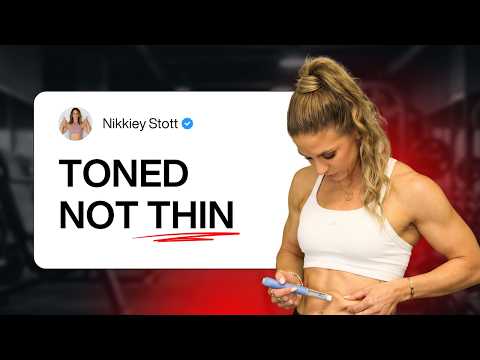
GLP-1s & Muscle
How often should I strength train on a GLP-1?
Nikkiey recommends strength training three to four days a week while on a GLP-1, with challenging weight that increases over time. Focus on compound lifts like squats, deadlifts, rows and presses. It doesn't need to take over your life: a focused, planned 45-minute session is enough, and cardio doesn't replace it.
Read the answer →
GLP-1s & Muscle
How do I know if I'm losing fat or muscle on a GLP-1?
The scale can't tell you, so track other markers. Nikkiey says to watch your strength numbers, take consistent progress photos and measure your waist, hips, arms and thighs about once a month. If strength drops or measurements stall while the scale falls, you may be losing muscle. DEXA or InBody scans show lean versus fat mass.
Read the answer →
GLP-1s & Muscle
How do I avoid losing muscle on Ozempic?
Nikkiey's answer is to pair the medication with the habits that protect muscle. Strength train two to three times a week. Eat at least 0.8 to 1 gram of protein per pound of your goal body weight every day, even when you're not hungry. Don't let calories drop too low. She calls the medication a temporary bridge.
Read the answer →

Building Muscle After 40
Why is muscle so important for women over 40?
Muscle matters after 40 because it drives your metabolism and protects your long-term health. Nikkiey explains that women lose about 3 to 8 percent of muscle per decade after 30, and less muscle means a slower metabolism. She calls muscle the engine of your metabolism and, borrowing Dr. Gabrielle Lyon's phrase, the organ of longevity.
Read the answer →
Watch or listen in full
More on this topic → 31 min
Does Ozempic Cause Muscle Loss in Women Over 40?
Episode 301 · Oct 10, 2025
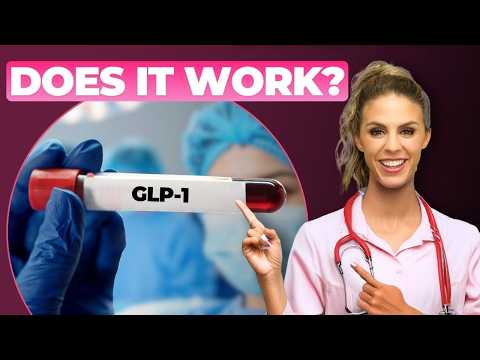 29 min
Do GLP-1s Cause Muscle Loss in Women Over 40?
Episode 358 · May 4, 2026