

Chapters
In this video
If you have spent years doing cardio, eating less and trying to shrink yourself while the cellulite stayed put, this video explains why. The woman sharing her story ran marathons, raced triathlons, taught aerobics and ate as little as 800 calories a day. She lost muscle, plateaued and regained the weight four times. Her view is that the missing piece was never effort. It was muscle, and the protein to build and keep it.
She walks through what changed when she stopped the excess cardio and started lifting. She focused on compound movements like squats, deadlifts, pressing and pulling, used progressive overload, and ate 30 to 40 grams of protein at each meal and snack. She also explains why spot reduction doesn't work. Her skin got smoother and clung closer to the muscle she built, even before the scale came down. Nikkiey Stott also shares the story of Laura, a CFO who swapped heavy cardio and restriction for lifting and hitting her macros.
The bigger lesson is time. Her previous attempts were measured in weeks. This one took five years, with fast changes in the first year and compounding results after that. Along the way she let go of the scale, ended years of food obsession, made sleep a priority and stopped feeling guilty for putting herself higher on the list.
Key takeaways
- Stop trying to spot reduce: planks won't burn belly fat and tricep work won't burn arm fat, so train your whole body and fuel it to build muscle.
- Build your workouts around compound movements: squats, deadlifts and other hip hinges, upper body pressing like push-ups, and upper body pulling like pull-ups and lat pull-downs.
- Use progressive overload: when you reach 13 to 15 reps with a couple still left in the tank, increase the load, and aim to finish sets with only one or two good-form reps left.
- Get the form right first, even if that means lifting lighter, so you are triggering the right muscles and actually having an effective workout.
- She ate 30 to 40 grams of protein at breakfast, lunch, her snack and dinner, and recommends eating your target body weight in grams of protein.
- Make sure your last meal of the day has enough protein, because she explains that overnight is when your body does its deepest muscle repair.
- Think in years, not weeks: her first year brought quick changes, but years two to five were where the results compounded.
- Prioritize sleep without guilt: she saw on her Oura Ring how much better her recovery, blood sugar and heart rate variability were on seven or eight hours versus three or four.
Questions answered
Can cardio get rid of cellulite after 40?
In her experience, no. She did hours of cardio for 30 years and the cellulite stayed, because the cardio and restriction cost her muscle, and it was building muscle that changed the structure and texture of her skin.
Can you spot reduce fat with targeted exercises?
No. The video explains that planks won't make you lose belly fat on their own and tricep work won't make you lose arm fat on its own. What works is training every part of your body and fueling it to build muscle.
How much protein should I eat to build muscle and reduce cellulite?
She recommends eating your target body weight in grams of protein. She ate 30 to 40 grams at breakfast, lunch, her snack and dinner, and stresses getting enough at your last meal for overnight muscle repair.
What does lifting heavy mean for a woman in her 40s or 50s?
It is different for everyone, and good form comes first. Once your form is solid, she increases the weight when she can do 13 to 15 reps, and she pushes each set until only one or two good-form reps are left.
How long does it take to see cellulite improve from strength training?
For her it was a five-year process. She saw changes fairly quickly in the first year and noticed her cellulite changing while she was still 40 pounds heavier, but years two to five were when the results really compounded.
Can you build muscle in a calorie deficit?
She says it is nearly impossible, and that she tried for years. Her body only started changing, instead of just getting smaller and bouncing back, once she ate enough, especially enough protein.
Ask Nikkiey
Questions this video helps answer, with what Nikkiey says across everything WarriorBabe teaches.
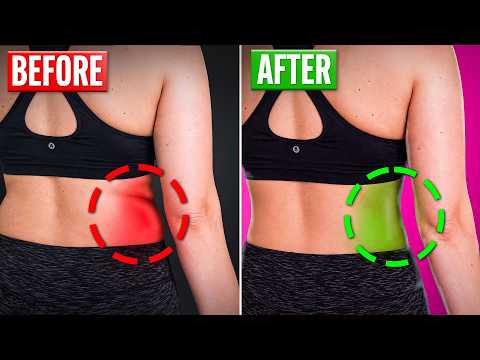
How to Get Toned
Can you spot reduce fat with targeted exercises?
No. Nikkiey is clear that you can't target fat loss to one area. Planks won't burn belly fat and tricep work won't burn arm fat on their own. What works is training your whole body, especially with compound lifts, and eating enough protein to build muscle while you lose fat overall.
Read the answer →
How to Get Toned
How do I get rid of cellulite after 40?
You probably won't erase cellulite completely, but you can reduce it. Nikkiey says the lasting approach is building muscle. Strength train with challenging weight at least four times a week, eat enough food with about your body weight in grams of protein, cut processed foods, and treat it as a lifestyle rather than a quick fix.
Read the answer →
Full transcript
Guest: Cellulite is one of the most common things women want to get rid of. In this video, I am revealing exactly how I was able to go from dealing with cellulite to getting rid of it after the age of 40. But before I ever got there, I tried everything, like most women do. I ran marathons, I did cardio daily, and I had more exercise in my life than almost any woman watching this video right now. And the cellulite did not care. It wasn't until I consistently committed to the practices I'm about to share that I finally started feeling my best.
That is exactly what I'm going to walk you through today. So make sure to pay close attention, and let's get into it.
Why nothing you've tried has worked before. Before we dive into what did work, I need to tell you what didn't work. Because if you've been doing cardio, eating less, trying to shrink yourself, and the cellulite is still there, it's not your fault. You were just given the wrong information. So you've been working incredibly hard at the wrong thing. Believe me, I get it. I did the wrong thing for 30 years. That's what I was taught to do. I remember first seeing cellulite on my body when I was about 15 years old.
It didn't leave until just recently. And that's because I finally had the right framework. I was doing hours and hours of cardio. I was trying to spot reduce fat. The more leg lifts I did, surely my cellulite would disappear. It doesn't really work that way, and we're going to talk you through it. My whole life, I thought the more I moved and the less I ate, I was sure to get rid of my cellulite. I remember being in my cheer uniform, looking at other girls and wondering why they didn't have cellulite and why I did. So I would teach aerobics classes. I would lead HIIT. I would play tennis. I'd play pickleball. I'd play racquetball. I'd go rollerblading.
I would spend every extra moment I could doing cardio. I love being outdoors and I love exercising, but I was doing it for the wrong reason. I was trying to get rid of fat. And never once did I think about how important it was that I hold on to muscle. It was always about shrinking, shrinking, shrinking and watching that scale go down. And I didn't care if I lost muscle or not. As long as that scale went down, I was a happy camper. So when I first figured out that there was something called fasting, and I actually had permission to go hours and hours and hours without eating, I thought I was home free.
And of course, it worked at first. It was easy to calorie restrict when you're only eating for two to four hours a day. So I thought I'd hit the jackpot. This is finally working. But of course, I plateaued. And again, I was trapped. I'm eating 800 calories. Now where do I go? Usually when someone gets to that point, they just add more cardio. So the cycle continued. After that plateau, I noticed I still didn't have much muscle. I actually lost quite a bit of muscle restricting that much. And that's the reason excess cardio does not work, especially after 40. No one had taught me this. The reason cardio doesn't touch your cellulite is not a matter of how much effort you put in.
It's all about biology. And it's actually a lot simpler than you might think. So let's break down what that means, because it changes everything. After 40, your body becomes resistant to protein. You actually need more of it, not less, just to maintain the muscle you already have. Muscle is your metabolism. Every pound of muscle you lose slows down the rate your body burns fat at rest. Who wants that? When you're resting and sleeping, overnight is when your body does its deepest muscle repair work.
But only if it has the protein available to do it. Without enough protein at your last meal, your body will break down muscle tissue overnight to find what it needs. Once I understood why the tool I'd been using for 30 years wasn't built for what I was trying to fix, everything changed. But it didn't change overnight. And that's the part nobody wants to tell you about.
What five years actually looked like. The first year of fixing was the hardest for me. Not because the workouts were brutal, but because I had to let go of an identity I had built my entire life around.
You have to understand that I started teaching aerobics classes when I was 15 years old. I didn't even have my license. My mom had to drop me off to teach my classes. From that point on, it was work, work, work, work. And when you're younger, you see the payoff a little more. So by the time I got into my 40s and this stopped working, none of it made sense to me. It had always worked before. What was happening to my body? So when I finally took the plunge and decided to try a whole different tactic, which meant stopping the cardio and adding weight training, that was tough on me.
But what I was doing wasn't working. My only choice was to dive in head first and test it out. I felt like I wasn't doing enough. It was strange to me to go to the gym and not completely smash myself. Being able to walk out of the gym and not be completely drenched in sweat meant I wasn't working hard enough. It took me a while to believe that what I was doing was actually changing my body. But once I saw it, I was sold. It was my kids who actually got me to go to the gym. My son is a football player.
He had a lot of experience in the gym. And I myself had been a trainer. I had trained people, but never with heavy lifting. So it was a whole new atmosphere for me. I always just walked by the weights and went to the cardio machines. So to actually stop where everyone was lifting heavy weights was strange. I felt awkward. I felt a little weak, a little embarrassed that I couldn't lift as heavy as everyone else. But that changed really quickly. You see, there's something called newbie gains. You get to see the results quicker than anyone else. And that was fun. I remember about week three or week four getting to about 15 reps.
And my son said, I think you can lift heavier, and he added just another plate on. I remember doubting myself, but then going into the squat and thinking, I did it. And I felt good. My body felt strong and in control. That's when things started to actually shift for me. When I started feeling different, I noticed that I was looking different too. My clothes just started feeling more comfortable. But my focus wasn't on getting smaller anymore. It was on getting stronger and seeing definition.
That was the first time in my life I had ever focused on something other than the scale going down. And it felt so good and so free. I was excited to see these changes. I found myself going to bed at night thinking, I hope I ate enough to feed my muscle, because I was working so hard for it. I wanted to keep every little bit I had. But years two to five were where all that compounded interest kicked in. You see, the first year, you see changes pretty quickly. But by years two to five, it was a habit. I knew I was going to get my workouts in every single week.
I never miss. I love the way I feel when I walk out of the gym. I love the way I feel when my body and muscle are stimulated in the right way. I loved feeling strong. I had never felt strong before. Usually my workouts went until I felt completely exhausted, drained, wanting to land on the floor in a sweat pile. This is when I really had to learn about progressive overload. It didn't happen as fast as it did in that first year. I had a pretty set routine by now, but I started to be more intuitive about my workouts. This is how progressive overload works for me. I know if I get to rep 13, 14, 15 and I still have a couple left in the tank, it's time to up my load.
I know that if I'm going to failure at about 10 to 12 reps, it's time to up my load. And we also need to be aware that women are different. At certain times in our cycles, we feel stronger, more aggressive. We're ready to go for it. At other times, we might lighten up a little bit and do a few more reps. But always, I push my body as hard as I can to activate that stimulus, to force my body to adapt to something that's really hard. And that's my payoff. That's what feels good to me. That's what fires my dopamine.
I love feeling my body feel alive like that. Alive and strong. In the past, I would go to bed every night rating myself. Was today a good food day or a bad food day? If I had overeaten, it was a bad food day. I felt horrible about myself when I went to sleep. And I would usually have fat dreams, dreams that I was overweight and couldn't stop myself from eating. This changed completely. I found myself going to bed thinking, did I eat enough protein? Am I taking care of this muscle I'm working so hard for? That completely changed my relationship with food.
After years and years of restriction, this was a gigantic shift for me. And it felt fabulous. Of course, I was able to do this because I was watching my body change. It wasn't changing fast, but it was changing. And I especially loved the way I felt. That was the biggest change, more than anything. Feeling strong kept me motivated. I love going to the gym. I love watching my muscles flex in the mirror as I push as hard as I can. And noticing those changes, and how protein helped to stimulate and support that muscle, I was sold.
I remember a particular trip where we went to Hawaii. That was still 40 pounds ago. I remember feeling very good about myself, putting on a swimsuit, walking around. I didn't hide from the camera. I felt so proud of the work I had put in. I look back at pictures, and yes, I was much bigger than I am now. But the cellulite wasn't there. I looked strong. My skin was smoother. My skin clung closer to the muscles I had worked so hard for. That's when I first noticed that the cellulite was changing on my body.
The actual structure and texture of my skin was changing due to the muscle I had put on. By year five, my body looked completely different, because I had built muscle, I fueled it properly, and I stayed consistent. And now I want to show you the commitments that drove every bit of that change. The things that actually changed my body. What I'm about to tell you is exactly what changed my body and started getting me real results, without spending hours on the treadmill and making no progress at all.
In order for this to make sense for you, I need to debunk one of the biggest lies you've been told about fitness. You cannot target specific areas to lose fat. Doing planks won't make you lose belly fat on its own. Doing tricep workouts won't make you lose arm fat on its own. So much fitness content spreads this misinformation to get you to click, because targeting specific areas of fat would make it a lot faster for you to reach your goals. But unfortunately, it's too good to be true. What actually works is training every part of your body, not just the part where you want to lose fat, and making sure you're properly fueling your body to build muscle.
Muscle is what makes you actually burn the fat overall. But you need to make sure your training routine is actually effective, so you're actually getting results and not just wasting your time. The routine that I personally use to lose cellulite is nothing special. It's actually pretty boring and pretty classic, and it has been proven time and time again to be the most effective. Why reinvent the wheel if you don't have to?
As women, we're pretty busy. So I want to be the most efficient when I get into the gym. I like to do compound movements that really push my body, especially in a natural, functional way that is going to help me age well. It's going to be good on my joints, and it's going to build muscle in more than one area. For instance, a squat. You're going to work your glutes, your quads, your hamstrings and your core. And there are plenty of ways to do squats. You can do a back squat. You can do them with dumbbells. But I always make sure I get my squats in. Also deadlifts, anything with hip hinges, upper body pressing and upper body pulling.
Take deadlifts. That's a natural movement your body's going to do: bending down, picking up something heavy. Groceries, grandkids. You need to have those supporting muscles. Again, the glutes, the hamstrings, the quads, the calves, and the strong core, which is going to support your lower back. Upper body pressing: think of doing a push-up. If you were down on the ground, what muscles would you use to push yourself up off the floor? A push-up. Those muscles are your chest, your shoulders, your triceps, your biceps.
Those are all muscles you need to use to be functional and strong. They're also what gives you great shape, support and posture in your upper body. And then anything that pulls: a pull-up, a lat pull-down, anything that's going to work that upper body. It's going to work your biceps, your back, your lats, your shoulders, your rhomboids, your traps. Again, it's going to support not only your bone mass, but your posture, your core, how you carry yourself and how you move throughout your day.
What does lifting heavy actually mean for a woman in her 40s or 50s? Lifting heavy is going to mean something different for all of us, especially as women in midlife. Some women have been athletic their whole life. They understand the movement and what muscles need to be stimulated to get that motion done, and done correctly with good form. That's one of the most important things. So many women go in afraid they're going to look weak if they lift something a little lighter. But what's most important is that you get the motion done with the right form, triggering the right muscles, so that you're actually having an effective workout.
Once you hit that, you can push your body a little harder. Like I said, if I get to 10, 12, 13, 14, 15 reps, it's time to up my weight a little bit. I always want to push to where I only have one or two left that I can do with good form. That's what makes my body stronger. That's what forces it to adapt. And why do I love compound movements? Because they get the job done efficiently. Think about it. If I'm doing a pull-up, I'm working so many muscles, even my bicep, as I pull my body up.
I don't have to spend 10 or 15 minutes just working my biceps alone. Compound movements work all of the important muscles, and they work the accessory muscles as well. All of it is going to make you stronger, make you look better, and increase your metabolic rate, your body's ability to use fat for fuel, because you have more muscle mass. These aren't difficult exercises. They build the most muscle in the least amount of time, especially when done consistently. And it's the muscle that changes the appearance of the skin above all.
But even if you stay completely consistent with these exercises, if you're not fueling your body properly, you're not going to get the results you're looking for. Just today, I had a girl stop me in the grocery store and say, I've worked out so hard for so many years. She was in her 30s. She said, I just don't see any changes. I asked her how much protein she was eating, and she had no idea. How sad. Think how much more efficient she could have been, how much further along in her muscle building journey she would be if she'd been giving herself the right nutrients to support that muscle growth, that hypertrophy, the quality muscle.
Not only the quality of the muscle and the way it looks, but her actual strength, and being able to add on to that as her body adapts and gets stronger and starts to add more muscle to her frame. Adding more protein is one of the very first things I did, because I didn't want those workouts to ever go to waste. I wanted to get the very most I could out of the exercises I was doing every single day. My breakfast started with 30 to 40 grams of protein.
My lunch, 30 to 40 grams of protein. My snack, 30 to 40 grams of protein. And of course, my dinner. It meant that much to me to see these changes, and I noticed the better I ate, the more I saw my body react to the stimulus I was giving it. The RDA recommends a minimal amount of protein, which isn't quite enough, especially for women in midlife. It has been proven over and over again: you need to eat your target weight in grams of protein to effectively stimulate muscle protein synthesis, support that muscle growth, support that muscle repair and actually build muscle.
It's hard enough to keep the muscle you have. So if you want to build muscle, you have to be very intentional about how many times you hit that protein target per day. The more you stimulate muscle protein synthesis, the better. You cannot build muscle in a calorie deficit. It's nearly impossible to build muscle in a calorie deficit. I know because I tried for years. The moment I started eating enough, specifically enough protein, my body started actually changing instead of just getting smaller and bouncing back. And that goes for everything else as well.
For example, my friend Nikkiey, who you may know, was telling me a story about a woman who came in after years and years of cardio and restriction. She started strength training and eating properly and saw her body composition change in ways cardio never produced. What did she do? What did she stop doing? What shifted for her? What is the macro method, and why is it the foundation you'd point anyone to right now?
Nikkiey: Laura was a CFO running a $50 million company, working out six days a week, eating as little as possible to try to stay lean. On paper, she was doing everything right, but she was exhausted. Her joints were wrecked and her mind was foggy. She thought that was just life now. What changed? She stopped trying to burn everything off and started actually fueling her training. She was lifting heavy. She hit her macros. That was it. No more joint pain. Her energy came back. The brain fog cleared. Her husband saw what was happening and he joined her. She ended up competing in figure twice in 2024. The thing is, cardio never would have gotten her there. You can't out-cardio a broken metabolism. You have to feed it. You have to build it. And that's exactly what the macro method is built around.
Guest: If you want to grab the macro method for yourself and make this easy, the link is in the description. Now let's keep going, because there's one more piece of this that I almost glossed over, and it's the one that determines whether any of this actually sticks. Every other time I tried to change my body, I was thinking in weeks. Four previous attempts, four times, I did everything right for a month, maybe two, and then either quit or got pulled back into old habits because the results weren't showing up fast enough.
If you've ever lost a significant amount of weight, you know how hard it is. You give it your all. You think about it night and day. You go to the store. You cook. You prep. You restrict. You feel horrible. You go to bed hungry. That's why every time I gained it back, it broke my heart. It broke my confidence. I got horribly depressed. My body changed. It was different every time I gained the weight back. Every time it came back fluffier, and I got sicker and more depressed. I remember the last specific attempt. I thought, this is it.
I'm doing triathlons. There's no way I can gain weight back exercising this much. I was running, I was swimming, I was biking. I was doing all of that every day. And I was trying to race every weekend, because the more I raced, the more I would train. So for sure, the weight was going to stay off this time. The second I stopped racing, it came back. And I remember the day it started. I was at my brother's birthday party and there was cake. I thought, I'm just going to take one lick of that frosting. I love that frosting. And I did. I took one lick, and before I knew it, I didn't leave that cake.
I stayed by that cake and ate a whole side of frosting. And it was downhill from there. It's like my body and my mind gave up and I just crashed. That weight came on faster than it ever had before, and I was devastated. I had a son who was getting ready to get married, and that weight came on so fast. The dress that I bought for his wedding didn't fit by the time his wedding came. I had to get a new dress. That's how fast that weight came back. And I was broken. There was no way I could have continued to race and exercise at the pace I was.
No one has time to exercise two to three hours a day. For the period of time while I was racing, it worked. But it wasn't sustainable. My son was getting married. I had kids in high school. I had ball games to attend. I had a life I needed to attend to. When that weight came back on that last time, I threw in the towel. I thought that was it. There's no way I can keep this up, and I don't know what my other options are. I think that's what most women do. That's why most women give up at this point. The women I see trying to fix cellulite in 30 days are going to be in the exact same place 30 days from now.
The women who do what I did are going to look back in five years the way I do now. This time was different because I changed what I was trying to achieve. I wasn't trying to get skinny anymore. I didn't even look at the scale. I know that's hard for some women. For me, it wasn't a healthy place, and it actually stopped mattering to me. The way I looked and the way I felt, that's what mattered. I hadn't felt that healthy. I hadn't felt that amount of food freedom for years. So I didn't care what the scale said.
I was watching my body change with my own eyes. I was hearing comments from other people. My son took a picture of my back and I couldn't believe it was my back. I'd never seen muscles like that on my own body before. So my goal changed, because that felt so good. The more muscle I saw, the more muscle I wanted, because I felt good. I liked the way it looked and I loved the way my body felt. I finally felt like me again, and I wasn't swimming upstream. I wasn't hitting my head against a brick wall.
It wasn't a fight to stay there. It wasn't a fight to get results. It was enjoyable, and I loved the way I felt. The result was worth every single year, and not just for what I look like. I want to be really specific here, because just saying that I feel better really isn't enough. Here's what actually shifted, because I want you to understand what's available to you on the other side of this. I want to walk you through the areas that changed the most. First of all, just how I looked at myself.
I wasn't disappointed because I couldn't restrict all day. My confidence started to grow because I was fueling my body. I was making good food choices because it was easier to make good food choices. Eating the food I knew was going to stimulate muscle and fuel my body with what it needed changed my whole relationship with food. So day after day, my mood around food was just better. And when your mood around food is better, you're not feeling that constant disappointment in yourself, in your lack of willpower.
You don't even have to think about those things. Feeling confident going out to eat or going to the grocery store, and being able to stop eating when you actually feel satisfied, feels like control. It feels good, and it raises your confidence and your trust in yourself. My relationship with myself, my body and food changed my quality of life dramatically. It was the first time in my life I wasn't obsessed with food. I wasn't angry about food. I wasn't mad if I had a cookie. This changed my mood and my relationships.
It made me a better mom. It made me a better wife. It made me a better coworker, a better friend. I don't think I realized how much of my energy was spent trying to deprive myself, trying to get control of something I couldn't get control of, because my body didn't want me to live off 800 calories a day. This changed everything. Not being obsessed with food, fueling my body and feeling good about what was happening changed my quality of life. Also, not being obsessed with the scale. I remember the first time I had a jumpsuit that fit tight, and I put it away after Christmas time.
The next time I brought it back out, because the weather got cold again, I was scared to try it on, because in the past it never would fit. I'd always put on weight. So I was so scared to try this jumpsuit on, and I pulled it on and it zipped up and was looser than it had ever been. That had never happened to me before. Not without restricting, not without feeling miserable. Just slowly watching my body change, putting on muscle and fueling it, was changing my body composition. Over and over and over, I had proof this was happening.
It was happening slowly, but people around me were noticing. Not that that's why I did it, but no one's going to lie: we all love to hear that someone's noticing our hard work. It feels good. I also started understanding the importance of sleep. That was a hard one for me, especially when I had kids at home. When kids are growing up, we feel like we need to be the last one in bed all the time. I think moms just do that. Tuck the kids in, do the rest of the dishes, fold a batch of laundry, go to bed. That changed for me. I started being the first one to go to bed. And the best part is I didn't let myself feel guilty for it, because I knew that's what my body needed.
And my body responded very well. My cortisol levels went down. My blood sugar was regulated throughout the day. I saw the data on my Oura Ring, and it was black and white. It was so easy for me to see what happened to my body, my blood sugar, my recovery and my heart rate variability when I got three to four hours of sleep, and what happened when I got seven or eight hours of sleep, how much better I felt. What happened to my recovery? My body was rested, ready to tackle the day, ready to tackle a hard workout.
I've spent a lot of my life feeling guilty when I put myself first, or even just higher on the list. I think that's something moms do sometimes. It's in our nature. We're going to put our kids first. We're going to put our spouse first. We're going to put the people at work first. That changed for me, because I started to notice that taking care of myself actually made me a better mom, a better coworker, a better spouse, a better housekeeper, a better daughter. When I started taking care of myself, it didn't take away from those relationships. It actually gave to those relationships. There was more of me to go around, more of me to share and to help, and more than anything, to contribute to the people I love.
My goal is to contribute to their lives. And I'm able to do that now that I have the energy and the strength and the stamina, and feel so much less depressed. I'm able to share myself a lot more with the people I love. This whole plan I shared with you was not only what I did to fix my cellulite, but the exact foundation that really changed everything for me. If you're ready to stop chasing the shortcut and actually start building something real, the macro method is linked in the description. It will show you exactly how to fuel your body with what it actually needs so you can get started right away. Thanks for watching.
Up next
Everything → 30 min
Why Am I Lifting Weights But Not Seeing Muscle?
Episode 281 · Aug 1, 2025
 28 min
How to Get Toned After 40 Without Getting Bulky
Episode 356 · Apr 27, 2026
 15 min
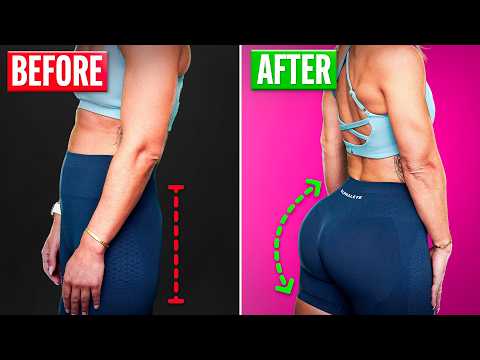
Best Glute Exercises for Women Over 40 to Fix a Flat Butt
Video · Apr 11, 2026
Best of How to Get Toned
All 67 → 20 min
How to Get Lean After 40: What Actually Works for Women
Episode 402 · Oct 5, 2026
 9 min
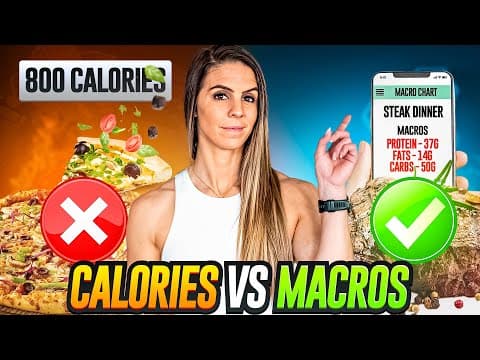
Macros vs Calories: Which Is Better for Fat Loss?
Episode 77 · Jul 7, 2023
 30 min
Why Isn't the Scale Moving When I Eat Well and Lift?
Episode 139 · Mar 18, 2024