

Chapters
In this video
Nikkiey Stott spent 30 years doing crunches, cardio and cutting calories. At 47, in full menopause, her belly fat had gotten so bad she had to undo her pants to tie her shoes. In this video she shares the four exercises she credits with giving her a leaner stomach at 52 than she had at 35. She starts with why menopause belly fat is different. In her view, falling estrogen makes it harder to hold onto muscle, fat shifts from the hips and thighs to the belly, and rising cortisol pushes fat storage toward the midsection.
The four exercises are sprint interval training, walking, squats and push-ups. For sprint intervals she gives a protocol: short all-out efforts with full rest, kept brief because the intensity is the point. For walking she covers pace, daily steps and timing. For squats she explains form and why you have to progressively overload them. For push-ups she shows how to keep your core under tension the whole time, with modifications and progressions.
She closes with what she calls the number one driver of a lean stomach, which is nutrition. What you put in your body trumps all four exercises.
Key takeaways
- Nikkiey explains that menopause belly fat behaves differently than it did in your 30s, so long cardio sessions and starving yourself can work against you.
- For sprint interval training, warm up for 3-5 minutes, sprint at maximum effort for 20-30 seconds, rest completely for 90 seconds to 2 minutes, and repeat for 3-8 rounds.
- Keep sprint intervals short and don't do them too often, because in Nikkiey's view going longer keeps cortisol elevated and leads to more belly fat and exhaustion.
- Walk at a pace where you can hold a conversation but are moving with purpose, aim for about 10,000 steps a day, and walk after your last meal whenever you can.
- Start squats with body weight to nail your form: chest tall, chin up, hips back, knees tracking over toes until your hips pass 90 degrees, then drive through your heels and squeeze your glutes at the top.
- Once your squat form is dialed in, add a bar and progressively overload over time, because going light forever means your body won't adapt.
- Do push-ups with hands under your shoulders, your body in one straight line, ribs down and glutes squeezed, and lower with control so your core stays under tension the whole time.
- If full push-ups are too hard, start with incline or knee push-ups, then progress to tempo push-ups, shoulder taps and deficit push-ups.
Questions answered
How do I do sprint interval training for belly fat?
Nikkiey recommends warming up for 3-5 minutes, sprinting at maximum effort for 20-30 seconds, and resting completely for 90 seconds to 2 minutes. Repeat for 3-8 rounds, starting small and working up, and use any method that gets your heart rate up, such as a treadmill, bike, stairs, rower or jump rope.
Why is belly fat different after menopause?
Nikkiey explains that as estrogen drops, so does your ability to hold onto muscle, and fat starts to shift from the hips and thighs to the belly and organs. She adds that cortisol rises during menopause and drives fat storage in the midsection.
Is walking good for losing belly fat after 50?
Nikkiey says walking puts less demand on your body, so it can go for fat stores instead of quick-releasing glucose. She suggests a purposeful conversational pace, about 10,000 steps a day spread out however you like, and a walk after your last meal when possible.
Will squats give me bulky legs?
Nikkiey used to worry about getting bulky or big legs, but the women in the weight room with the bodies she admired were squatting heavy. She says squats changed her body more than anything else. She now squats her body weight and her knees work better than before.
Can push-ups help flatten your stomach?
Nikkiey describes a push-up as a moving plank that works your abdominals and lower back as well as your upper body. The key is keeping your core under tension the whole time, because rushing removes that tension.
Ask Nikkiey
Questions this video helps answer, with what Nikkiey says across everything WarriorBabe teaches.
Menopause & Perimenopause Weight Loss
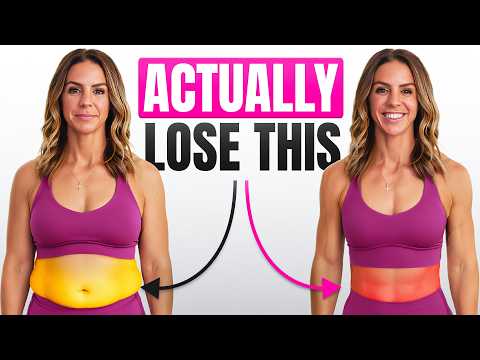
Why is menopause belly fat so hard to lose?
Nikkiey explains that menopause belly fat is hard to lose because falling estrogen shifts fat storage to your midsection, much of it as visceral fat that drives insulin resistance and more storage. Rising cortisol adds to it, and the usual fix of eating less and doing more cardio raises cortisol further, so the body holds on tighter.
Read the answer →
Menopause & Perimenopause Weight Loss
Is HIIT bad for women in menopause?
Not necessarily. Nikkiey explains that what backfires in menopause is long, frequent, exhausting cardio, which keeps cortisol elevated and encourages belly fat storage. Short sprint interval training, with 20 to 30 second all-out efforts and full rest, is one of her core exercises. For everything else, she favors low-impact incline walking.
Read the answer →
Menopause & Perimenopause Weight Loss
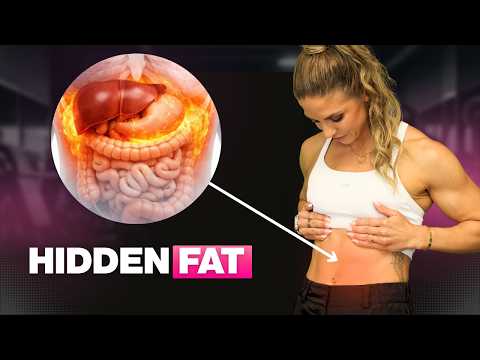
How do I lose visceral fat after menopause?
Nikkiey's approach is to build muscle rather than chase the scale. Strength train consistently, swap long cardio for short sprint intervals, walk daily, and take an honest look at alcohol. She says strength training can reduce visceral fat even when your weight doesn't change, so track your waist measurement, not just pounds.
Read the answer →
Full transcript
Nikkiey: I spent 30 years doing everything right. Crunches, cardio, cutting calories. And at 47, in full menopause, my belly fat had gotten so bad that I had to undo my pants just to tie my shoes. But what finally changed everything for me were four simple exercises. And they took me from that moment of complete frustration to having a leaner stomach at 52 than I had at 35. So if you are a woman who has been trying everything and still is not seeing results, this is the only video you are going to need.
And make sure you watch until the end, because I'm going to share the number one driver to getting a lean stomach. Let's get started.
Before I show you the four exercises, I need to explain something that most fitness advice completely skips over. Because if you don't understand this, nothing I'm about to say will even make sense. Belly fat in menopause is not the same as belly fat in your 30s. So if you're fighting it the wrong way, you're just going to make it worse.
What's actually happening in your body is that as your estrogen drops, so does your ability to hold onto muscle. As your muscle depletes, your body is going to get softer. It's going to change. It's going to deposit fat in different places than it ever had before. It shifts from your hips and thighs directly to your belly and your organs. On top of that, cortisol skyrockets during menopause. And cortisol's number one job is to store fat. Specifically, right here.
Once I understood this, I went from hours of cardio and starving myself with zero results to finally getting a flatter stomach with exercises that actually work for my body at this age. That's exactly what these four exercises changed for me. And they'll do the same for you.
Exercise one: sprint interval training, or SIT. This first exercise is non-negotiable. If you do nothing else from this video, do this one. And I say that because it's the only exercise that continues to burn belly fat for up to 24 hours after you finish. When I first started sprint interval training, it was when I had hit my first plateau. I noticed that adding it got me off that plateau. It got my body functioning at a higher level as I put a different demand on my body.
What do most women do wrong with cardio in menopause? Long sessions. They actually spike your cortisol, which signals your body to store more belly fat. Even when women try interval training, they go too long. They do it too often. That's going to keep cortisol chronically elevated, which means more belly fat, not less, and more exhaustion with nothing to show for it. Instead, SIT ensures that your body actually starts releasing that stubborn visceral fat instead of holding on to it.
Pick your sprint method. It can be a treadmill, a bike, an outdoor track, stairs, a rowing machine, jump roping. Whatever is going to get your heart rate up. Warm up for three to five minutes at an easy pace. Sprint at maximum effort for 20 to 30 seconds. Rest completely for 90 seconds to two minutes. And then repeat this for three to eight rounds. Start small and then work up to it. Do not go longer thinking more is better. The intensity is the point. It's not the duration.
Exercise number two: walking. I know what you're thinking. Walking? Really? But stay with me, because this is the exercise that shocked me most when I saw what it actually did for my body. This is an exercise that puts less demand on your body, so your body can go for fat stores instead of that quick-releasing glucose.
There are a few tricks you can implement when you're walking that will switch you into fat-burning mode. Walk at a pace where you can hold a conversation but feel like you're actually moving with purpose. Aim for about 10,000 steps a day. It does not have to happen all at once. Walk after your last meal whenever possible. It helps your body clear out the glucose and keeps insulin, the fat storage hormone, low.
Now, exercise three is the one most women are most afraid of, but it's the one that changed my body more than anything else. Squats. For years I told myself exactly what most of you are probably thinking right now: I don't want to get bulky or get big legs. And then I actually paid attention to the women in the weight room with the bodies I admired. And they were squatting. And they were squatting heavy. I couldn't argue with what I was seeing. I would see women throwing heavy plates on a bar, putting it on their back, and going all the way to the ground.
For one, I didn't think my knees could handle it. That's why it's important to start low and work up to it. Knees that used to never get me down the stairs now allow me to squat my body weight and go all the way to the ground. My knees function better, and my body is stronger and more resilient than it ever has been.
And here's exactly how to do it properly, so you start building the muscle that actually changes your body composition. Start with body weight squats to nail your form before adding any load at all. Chest tall. Chin up. Hips back. Knees tracking over your toes until your hips go past 90 degrees. Drive through your heels to stand, squeezing your glutes at the very top. Once your form is dialed in, add a bar to your upper back and start progressively overloading it with time. Do not go light forever. Your body won't adapt.
When I started, I could barely do 10 body weight squats. But now I squat my full body weight for working sets and do 50 reps as a warm-up. That progression is exactly what changed my stomach.
And now for the last exercise. This one surprises everyone, but it might be my favorite of all four. Push-ups. Most people hear push-ups and think it works the upper body, like arms, chest, shoulders. But that is only half of what is actually happening. And the other half is exactly why this made my stomach flatter.
When you're doing a push-up, you have to keep your entire body supported. That means tightening and flexing every muscle that is involved: your abdominals, your lower back. You're going to strengthen every muscle involved in performing that moving plank.
Most women either skip push-ups entirely or drop straight to their knees and rush through them. Rushing kills the tension on the core completely. And it's that core tension that is the entire point of this exercise for belly fat. No tension, no abdominal strength, no change to how your stomach looks. The core has to be working the entire time. That is what makes this exercise change your stomach.
And if you're not seeing results yet, here is exactly what to fix. Hands directly under your shoulders. Body in one straight line from head to heel. Ribs down. Glutes squeezed tight before you even begin. Lower your chest with complete control. Do not let your hips sag or your lower back arch. If you need to modify, start with incline push-ups or knee push-ups. Progress to tempo push-ups, shoulder taps and deficit push-ups as you get stronger.
These are all four workouts. But the final thing that trumps all of it is what you put in your body. And that is exactly what the Macro Method covers: the full step-by-step nutrition plan that supports just what I walked you through. It has helped over 20,000 women finally see results in menopause. For example, it took Tina from being overweight to losing 35 pounds just by finally understanding what her body actually needed. So if you're ready to stop guessing, the link is in the description. Thanks for watching.
Up next
Everything →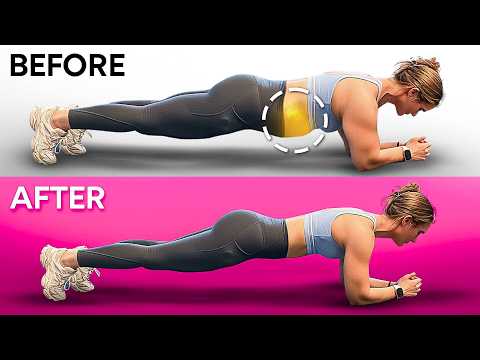 7 min
25-Minute Dumbbell Workout for Menopause Belly Fat
Video · Sep 24, 2025
 9 min
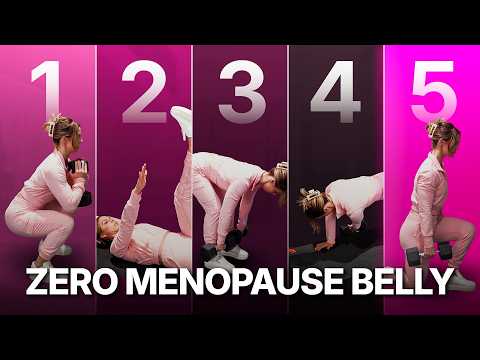
5 Dumbbell Exercises for Menopause Belly Fat at Home
Video · Feb 7, 2026
 28 min
How Hormone Changes Affect Fat Loss and Muscle After 45
Episode 75 · Jul 3, 2023
Best of Menopause & Perimenopause Weight Loss
All 75 → 55 min
Lifting, Under-Eating and Perimenopause: Truths After 40
Episode 300 · Oct 6, 2025
 1 hr 1 min
Early Perimenopause Signs Women Over 40 Should Know
With Dr. Jolene Brighten
 1 hr 0 min
How Menopause Changes Your Metabolism and Fat Burning
With Michal and Merav