

From 3 videos
What should I eat to lose menopause belly fat?
Answered by WarriorBabe's coaches · Updated
The short answer
Build each meal around lean protein, fiber-rich carbs and healthy fats, and eat enough. WarriorBabe coaches say losing menopause belly fat is about eating right, not eating less: chicken, salmon or eggs; sweet potatoes, quinoa or berries; avocado, olive oil or almonds. Limit sugary foods, juice, refined carbs and trans fats rather than banning them.
Hear it answered
Tap play to start right where it's answered. It keeps playing while you browse.

The protein, carb and fat grocery list for losing menopause belly fat
Plays from 0:00 · Video: Menopause Belly Fat Grocery List: What to Buy and Skip
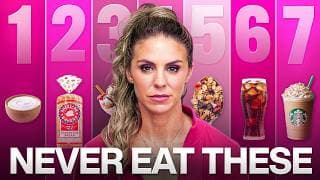
Why juice and refined carbs keep belly fat stuck, plus easy swaps
Plays from 4:26 · Video: 7 Foods to Limit for Menopause Belly Fat and Easy Swaps

Why under-eating and skimping on protein backfire after 40
Plays from 0:58 · Video: 25-Minute Dumbbell Workout for Menopause Belly Fat
The 35/27/38 macro split for menopause and why it isn't keto
Plays from 1:48 · Video: Menopause Belly Fat Grocery List: What to Buy and Skip
The full answer
Start with the plate. In a grocery-list video, one WarriorBabe coach puts protein at about 40% of your plate because it builds muscle, speeds up your metabolism and keeps you full longer. Carbs make up about 30%, chosen for fiber, and healthy fats the other 30% because, as she explains, they support hormones and help you feel satisfied. In the same video she gives the macro split WarriorBabe provides women: 35% protein, 27% carbs and 38% fat. She is clear this is not keto, which she describes as closer to 10% carbs and harder for building muscle. The exact numbers shift a little; the principle stays the same.
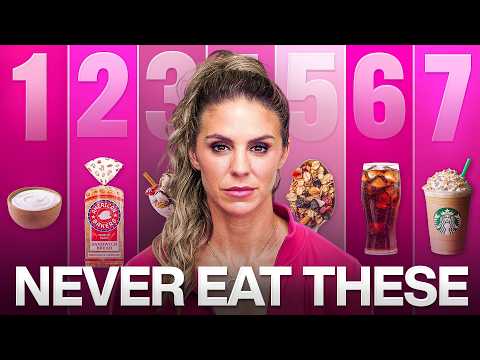
Then limit, don't ban. Another coach frames these as not-everyday foods, because never-eat rules don't last:
- Fruit juice: eat the whole apple or orange instead for the fiber, water and chewing.
- White bread, pasta and white rice at most meals: swap in sourdough or sprouted grain, quinoa or brown rice.
- Flavored yogurts, which she says can carry as much sugar as a candy bar.
- Pastries, sugary snacks and drinks, and trans fats in chips and margarine, which she says can increase inflammation.
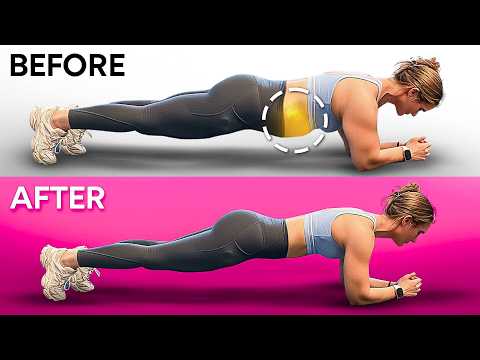
Finally, eat enough. In a workout video, a coach describes women afraid to eat over 1,200 calories who couldn't lose fat until they actually fed their metabolism. She shares that she thought she ate enough protein until she tracked, and that hitting about 1 gram per pound of body weight is when her own softness started to go. She also used to flinch at rice and sweet potatoes; now she uses carbs to fuel muscle.
If your belly won't budge on foods you thought were healthy, the coaches' point is that the plan stopped fitting your body, not that you failed. If you have a medical condition, check any changes with your doctor.
From WarriorBabe's coaches (how we write our answers). For education, not medical advice: talk to your doctor about your own health.
Women also ask
More on Menopause & Perimenopause Weight Loss →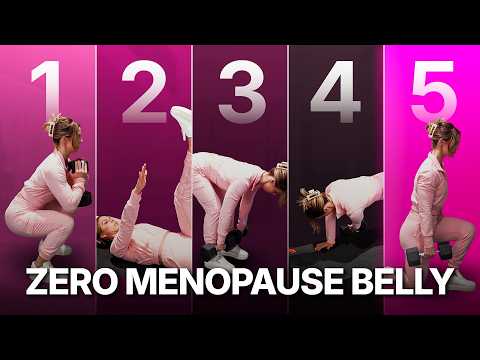
Menopause & Perimenopause Weight Loss
What is the best exercise for menopause belly fat?
The best exercise for menopause belly fat is progressive strength training, not more cardio or crunches. The show recommends compound moves like squats, deadlifts, presses, hip thrusts and lunges, done two to four times a week and paired with daily walking. You can't spot reduce belly fat. You lose it by building muscle.
Read the answer →

Menopause & Perimenopause Weight Loss
How many calories should I eat in menopause to lose weight?
On The WarriorBabe Show, Maggie Topham says most women over 40 who lift weights three to four days a week need roughly 1,700 to 2,200 calories a day, not 1,200 or less. Eating more, with enough protein, is what lets muscle rebuild and your metabolism recover so fat loss can actually happen.
Read the answer →
Menopause & Perimenopause Weight Loss
Is HIIT bad for women in menopause?
Not necessarily. One WarriorBabe coach explains that what backfires in menopause is long, frequent, exhausting cardio, which keeps cortisol elevated and encourages belly fat storage. Short sprint interval training, with 20 to 30 second all-out efforts and full rest, is one of her core exercises. For everything else, she favors low-impact incline walking.
Read the answer →

Menopause & Perimenopause Weight Loss
What are the best macros for weight loss during menopause?
WarriorBabe's menopause macros run slightly higher in fat, because the coaches say fat is the one macronutrient that directly supports hormones. One video gives 35% protein, 27% carbs and 38% fat; another gives 40% protein, 30% carbs and 30% fat. Neither is keto. Both keep protein high and keep carbs in the plan.
Read the answer →
Menopause & Perimenopause Weight Loss
Should I eat fewer carbs during menopause?
Moderately, yes, but not to keto levels. Nikkiey explains that WarriorBabe lowers carbs and raises fats during perimenopause and menopause because insulin resistance changes how your body handles carbs, using a split of 35% protein, 27% carbs and 38% fat. Carbs are never eliminated, and guest Louise Digby warns that going too low can slow your metabolism.
Read the answer →

Menopause & Perimenopause Weight Loss
How do I lose weight after menopause?
Stop eating less and doing more cardio, and start building muscle while eating enough. Nikkiey Stott explains that after menopause you lose roughly 1% of your muscle a year, so strength training, fueled by enough protein, carbs and fats, is what changes your body. Kelly stalled on 1,200 calories, while Annette and Maggie lost weight eating more.
Read the answer →
Watch or listen in full
More on this topic →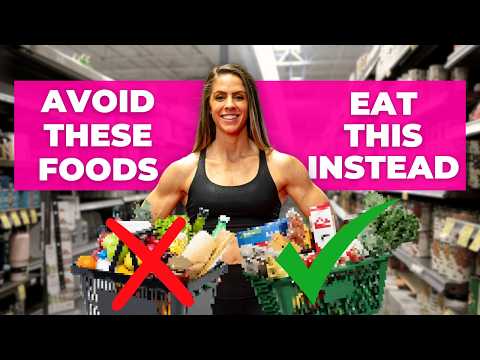 3 min
Menopause Belly Fat Grocery List: What to Buy and Skip
Video · Mar 11, 2025
 7 min
25-Minute Dumbbell Workout for Menopause Belly Fat
Video · Sep 24, 2025
 10 min
7 Foods to Limit for Menopause Belly Fat and Easy Swaps
Video · Feb 28, 2026