

Chapters
In this video
At 47, she had gained 60 pounds for the fifth time, was on rising doses of antidepressants and was working out 20 hours a week. She had taught fitness since she was 16, ran marathons and triathlons, and every time the scale went up she added more cardio. In menopause, that same effort stopped producing anything except more weight, more exhaustion and less of herself.
The turning point came when she held her first grandchild and felt nothing. That day she quit cardio cold turkey, committed to four days a week of strength training with progressive overload, and let her coach raise her food, even though every increase scared her. She prioritized 150 grams of protein a day, switched to whole foods and now eats around 2,500 calories a day. She explains how, in her view, muscle and carbs work together to help with insulin resistance in menopause, and how HRT later supported a foundation she had already built.
You'll also hear Angela's story: a 51-year-old studio owner who was exercising 12 to 13 times a week in perimenopause and still gaining weight. By backing off, lifting heavy and eating 400 to 500 more calories a day, she lost 20 pounds and four inches off her hips in under a year and, most importantly, got herself back. If you're stuck in the more-cardio, less-food cycle, this is what doing the opposite can look like.
Key takeaways
- If more cardio and less food has stopped working in menopause, adding even more of the same is not the answer, and doing the opposite is what finally worked for her.
- She quit cardio completely and moved from about 20 hours of training a week to about five, and later trained four to five days a week for about an hour.
- Lifting light dumbbells for 20 minutes after a two-hour run is an afterthought, not strength training; real strength training means progressive overload, real weight and real programming.
- She explains that in menopause muscle acts as a disposal for glucose, so you need carbs to fuel the muscle and muscle to handle the carbs, and starving yourself means losing both.
- Prioritize protein: she aims for 150 grams a day and it is the only thing she still tracks.
- Switching from processed food to whole foods gave her more volume on her plate, more energy and, in her experience, better blood sugar stability.
- Choose a non-scale goal: her first goal was buttoning a pair of size 10 jeans, which took a year.
- Chasing healthy instead of skinny changed everything; she says HRT helped, but it supported the muscle, nutrition and recovery she had already built rather than building it for her.
Questions answered
Can you lose weight in menopause by doing less cardio?
In this video, she lost 60 pounds after quitting cardio entirely and cutting from about 20 hours of training a week to about five, focused on strength training. She says the more-cardio approach that worked for decades produced nothing once she hit menopause.
How much protein should I eat in menopause to lose fat?
She shares that she aims for 150 grams of protein a day, and it is the only thing she tracks. She doesn't count the rest of her food.
Should I cut carbs after menopause?
She had a massive fear of carbs, but explains that in her view muscle becomes a disposal for glucose in menopause, so you need carbs to fuel the muscle and muscle to handle the carbs. She says starving yourself guarantees you lose both.
How much should I lift weights in menopause?
She committed to four days a week with progressive overload, real weight and real programming, and now trains four to five days a week for about an hour. Angela started lifting heavy three days a week, then four, resting between sets.
Is HRT enough to lose weight in menopause?
She says starting HRT a couple of years in helped, but mostly her results came from the foundation she had in place: muscle, nutrition and recovery. In her words, the hormones supported what she had already built and didn't build it for her.
How long does it take to see results after switching to lifting and eating more?
Within three months she noticed her sleep, energy and mood improving, and within a year she was back into her size 10 jeans. Angela lost 20 pounds, four inches off her hips and three inches off her waist in less than a year.
Ask Nikkiey
Questions this video helps answer, with what Nikkiey says across everything WarriorBabe teaches.
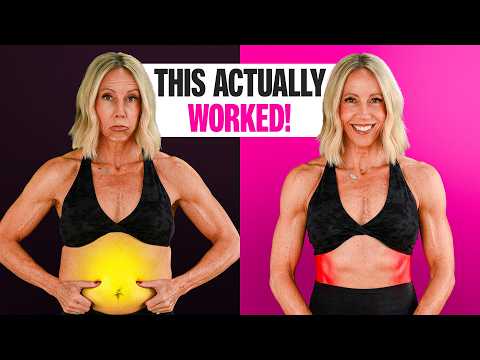
Menopause & Perimenopause Weight Loss
Do I need to do cardio to lose weight in menopause?
No. Nikkiey says cardio isn't what drives fat loss in menopause, and leaning on it can backfire. She explains that too much cardio spikes cortisol and burns muscle, especially in a calorie deficit. What she recommends instead is strength training as the foundation, plus enough protein, daily walking and proper recovery.
Read the answer →

Menopause & Perimenopause Weight Loss
How fast can I lose menopause belly fat?
Nikkiey says many women see early changes within 30 days: less bloating in the first week, clothes fitting better, a tighter-looking midsection and more energy by the end of the month. Bigger body changes take longer. In her own story and her client Angela's, real fat loss and inches came over months to a year.
Read the answer →

Hormones & Hormone Health
Is HRT enough to lose weight in menopause?
No. Across the episodes, the answer is consistent: HRT can help, but it isn't what produces the results on its own. Dr. Brighten says HRT is not enough by itself, Alicia Erickson says you still have to do the work, and a woman who lost 60 pounds in menopause credits muscle, nutrition and recovery first.
Read the answer →
Full transcript
Speaker: If you're in menopause and you feel like your body has completely turned on you, you're gaining weight no matter what you do. You're exhausted. You're on medications you never thought you'd need. And you're starting to think that maybe this is just what life is from here on out. I need to tell you my story, because six years ago, I was exactly where you are. I was 47. I'd gained 60 pounds for the fifth time. I was fatter and sicker than I'd ever been in my whole life.
My doctor kept upping my antidepressants. My hair was falling out. I wanted to quit my job. I wanted to end my marriage. And there were mornings that I dreaded opening my eyes. And I was working out 20 hours a week. Today, I'm going to tell you exactly how I went from that to where I am now: the leanest, the strongest, the healthiest I've ever been in my entire life. Not by working out more. By doing the opposite of everything I had been doing for 30 years.
Let me take you back so you understand how far gone I was. I've been teaching fitness classes since I was 16 years old. That's not an exaggeration. 16. Cardio was my entire identity. I owned a dance studio and I spent my life in a leotard and working out. If I wasn't dancing, I was usually running, hiking, biking, or in a fitness class. And for decades, it worked. When I was 30, I started running marathons. I got pretty lean. I lost my period from how hard I was training.
And then I stopped and I gained it all back. So I just started again. Triathlons this time, in my mid-40s, right as perimenopause was starting. I was working out 3 or 4 hours a day, running for 2 hours before I'd even touch a weight. And then the scale went up. I did the only thing I knew how to do. I just kept adding more. More miles. More classes. More hours. This pattern, lose 50, 60 pounds and then gain every pound back, happened 4 times in my life.
The 5th time, that was different. The 5th time, I was 47. I hit menopause. And the exact same effort that used to produce results produced nothing. I was doing more cardio than I'd ever done, and I was gaining weight faster than I ever had. And it wasn't just the weight. When you lose estrogen, your cortisol levels go through the roof. You become less emotionally resilient. The stress that you used to just kind of absorb starts to crush you.
I wasn't sleeping. I had gut issues. My relationships were suffering because I wasn't available to anyone. I was working a full-time job. I was getting kids out of the house. Grandkids were on their way. And I was trying to maintain 3 to 4 hours a day of training on top of all of it. Just the stress of that schedule paired with the decline of hormones, it was really destroying me from the inside out. My doctor's answer was to continue to up the antidepressants. And then up them again. And then again.
And I just kept getting more and more depressed. More anxious. More tired. More sick. Just feeling more flat. More disconnected from everything and everyone I loved. I felt like a robot. I wasn't who I wanted to be. I wasn't who I recognized. And then my first grandbaby was on the way. My first grandchild. When that baby was born, I walked into the hospital and I felt flat. I stood there looking at this brand new life, this baby that I knew I was supposed to be overwhelmed with joy about.
And I still felt flat. I couldn't access the emotions I knew I should have. I couldn't reach it. It was like there was a wall between me and the moment that was supposed to be one of the most important moments of my whole life. And I knew. I knew right then, standing in that hospital, that something was fundamentally broken. Something wasn't right. Not in my body. Not in my approach. And everything I'd been doing for 30 years to try and fix it.
That was the day I decided everything had to change. Not next month. Not after one more race. That day. Here's what I did. And I want to be honest with you: some of this felt insane at the time. I knew I had to do something different. I quit cardio. Cold turkey. No tapering. No "I'll just run twice a week." I stopped completely. After 30 years of being a marathon runner, a triathlete, a group fitness instructor who was teaching and attending classes every single day.
I stopped all of it. And I was terrified. I genuinely thought my body was going to explode. My mind was going to explode. I had to educate myself enough to trust the process, because every instinct I had was screaming at me to go run. I started strength training. I'd always dabbled with weights. But dabbling meant running for two hours and then picking up light dumbbells for 20 minutes or so. That's not strength training. That's an afterthought. At 47, I committed fully.
Progressive overload. Four days a week. Real weight. Real programming. I went from working out for 20 hours a week to about five. And every fiber of my being was convinced that I was making a huge mistake. I started eating more. Way more. This was the hardest part. I had wanted to be at zero calories. My goal used to be 800 calories, and then burn 800 calories. Net zero. That's what I was chasing. My coach started bringing up my food.
And every increase terrified me. I had a massive fear of carbs, because that's what we'd been taught. Carbs are the enemy, especially after menopause. Here's what I didn't understand. In menopause, you have fewer hormone receptors. You produce more insulin resistance. But when you build muscle, that muscle becomes a disposal for your glucose. You need the carbs to fuel the muscle. You need the muscle to handle the carbs.
They work together. And starving yourself guarantees that you lose both. I prioritize protein. 150 grams a day. That's what I aim for. That's the only thing I even track anymore. I don't count the rest. I'm probably eating around 2,500 calories a day. More food than I've consumed at any point in my entire life. I cut out processed food. Not because of some clean eating trend, but because when I switched to whole foods, I felt so much better.
More volume. More food on my actual plate. More energy. And the insulin resistance started improving, because I had the muscle to handle the glucose and the food quality to keep my blood sugar stable. Here's what happened, and how fast it happened. Three months in, I started titrating off my antidepressants. Three months. After years of my doctor increasing my dose, I was coming down. Not because I decided to on my own. Because my body was finally responding.
The inflammation was dropping. The cortisol was coming down. My sleep was finally coming back. And for the first time in longer than I can even tell you, I wanted to be awake in the morning. I wanted to be present. I wanted to live fully. I wanted to show up as me. People started making comments. Not about the weight at first, but just about the energy. About the look on my face. About the fact that I was laughing again. And then the body just started catching up. Within a year, I was back into my size 10 skinny jeans.
That was my first real goal. Not on a scale. A pair of jeans that had been sitting in my closet for years. Putting those on and buttoning them up without holding my breath. That took a year. And it was worth every single day of it. I really just wanted to feel healthier. The second year, why not get a little leaner without cutting a ton of calories? So I added more gym time. Not cardio. More lifting. More progressive overload. And my body kept changing. By giving it what it needed, the food, the stimulus, the recovery, it just kept responding.
My son showed me a picture one day. I was facing away from the camera. And I couldn't believe that it was my back in that picture. I didn't recognize myself. Not in the way I used to not recognize myself. This time, it was because I looked strong. People started saying it: "Hey, you're ripped." Friends. Strangers at the gym. People I hadn't seen in a year. They'd look at me and say, "What are you doing?" And that's when something shifted beyond my own transformation. People kept coming up to me.
Saying, "What are you doing? How did you do this? Can you help me?" Woman after woman after woman, all asking the same question. And I realized that so many women needed this information. They were stuck in the exact same cycle I'd been in. More cardio. Less food. More exhaustion. More weight. And nobody was telling them to stop. So what did I do? I went back to school. Years ago, I was IDA certified. Then integrative health coaching through the Institute for Integrative Nutrition.
Then board certified as a nationally certified integrative health coach, because I wanted to get as close as I could to helping other women who were exactly where I had been. I'm 52 years old. I'm leaner than I've ever been in my entire life. I eat more than I've ever eaten. I work out 20 to 25% of the time I used to. And I'm healthier mentally and physically than I've ever been at any point in my 52 years. I wanted to keep working. I actually wanted to switch jobs and do something I love to do.
I love my husband again. I can cry when I hold a grandchild. I've been a size zero for two years. And I never wanted to reach a size zero. That was never my goal. My body got there because the strategy was finally right. I got to quit fighting so hard. Not because I starved my way there. Not because I ran my way there. Because I ate enough, I lifted enough, and I recovered enough for my body to do what it was always capable of doing. I started HRT a couple years ago.
That helped too. But mostly it was because I had the foundation in place. The muscle. The nutrition. The recovery. The hormones supported what I'd already built. They didn't build it for me. My goal changed at the bottom. I completely stopped chasing skinny and I started chasing healthy. I just wanted to feel like a functioning human being again. I just wanted to be present for my kids, my grandchildren, my family, my own life. I wanted to participate. And ironically, when I stopped trying to be skinny and started trying to just be healthy, I became both.
And I want to tell you about someone who was going through the exact same thing that I was. Angela is 51. She lives in Ketchikan, Alaska. She runs a fitness studio. She teaches classes. For 15 years, everyone knew her as the Energizer Bunny. The person with the most energy in every room. The person who was always on, always up, always there for everybody. And then perimenopause hit and she lost herself. She was severely depressed. She had anxiety she'd never experienced before.
The woman who lived for being around people didn't want to leave her bed. She didn't want to greet her guests at the fishing lodge she'd run every summer. She didn't want to teach her classes. She didn't recognize the person she'd become. And she could not understand why, because nothing in her life had even changed. Family was good. Her work was good. Her life was good. But her hormones were rewriting everything. And she was doing what every woman in the fitness space does when things start slipping.
More. She was exercising 12, 13 times a week. Teaching spin classes. Then body pump. Then boot camp. Then going for a five-mile run. And she was gaining weight. She was puffy. Inflamed. Cellulite she'd never seen before, spreading across her body. And she couldn't understand how that was even possible, because she was doing everything right. She found us. Her coach Donna asked her to do the one thing that felt impossible.
Back off. Cut the classes. Start lifting heavy three days a week. Then four. Rest between your sets. And eat more food. 400 to 500 more calories a day than she'd been eating. And Angela told herself the very same thing I did: this can't possibly work. How is eating more and training less going to fix this problem? But she trusted the process. In less than a year, Angela dropped 20 pounds. Four inches off her hips.
Three inches off her waist. The inflammation was gone. The puffiness was gone. Her muscles were fuller than they'd ever been when she used to compete. And the thing she was most proud of wasn't any of those numbers. She got herself back. The depression started lifting. The anxiety started fading. She was the Energizer Bunny again. She was Angela again. She told me something I'll never forget. She said there's no price tag on her life.
That this program saved her. And when I heard her say that, I thought about standing in that hospital six years ago, unable to cry. And I understood exactly what she meant. If you're where Angela was, or where I was, if the hormones are changing everything and you feel like you're losing who you actually are, I need you to hear that it doesn't have to stay that way. It didn't for me. It didn't for her. And it doesn't have to for you. Six years ago, I was 47 years old.
60 pounds overweight, on antidepressants, working out for 20 hours a week. And I dreaded every single morning. Today I'm 52. I eat around 2,500 calories a day. I train four to five days a week for about an hour. And I'm the leanest, the strongest, and the happiest I've ever been. It wasn't willpower. It wasn't discipline. It was the strategy. And the strategy was the opposite of everything I'd been doing for 30 years. If you want to see the exact exercises I start with right now, I break down the only five exercises your body needs after 40 in this video right here. Thanks for watching. I'll see you in the next one.
Up next
Everything →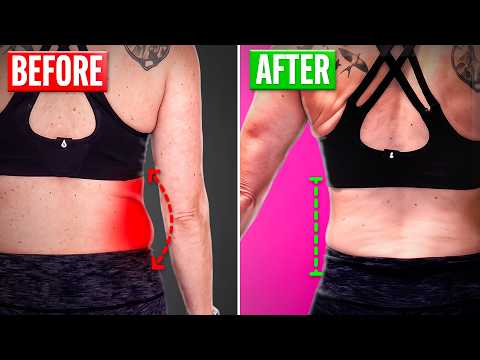 41 min
Can't Lose Weight After 50? What Finally Worked for Erin
Episode 357 · May 1, 2026
 55 min
Lifting, Under-Eating and Perimenopause: Truths After 40
Episode 300 · Oct 6, 2025
 43 min
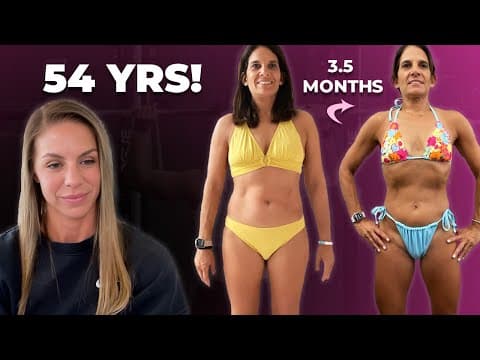
Eating More and Getting Leaner at 54: Jodi's Story
Episode 256 · May 5, 2025
Best of Menopause & Perimenopause Weight Loss
All 75 → 1 hr 1 min
Early Perimenopause Signs Women Over 40 Should Know
With Dr. Jolene Brighten
 1 hr 0 min
How Menopause Changes Your Metabolism and Fat Burning
With Michal and Merav
 51 min
How to Lose Body Fat in Menopause by Eating More
Episode 310 · Nov 10, 2025