

Chapters
In this video
Nikkiey Stott spent 30 years running marathons, teaching group classes and doing light dumbbell circuits, and her body never changed. What finally shifted things was the five exercises she had been told were too heavy, too risky or not for women her age. In this video she walks through each one, why women over 40 tend to skip it, and how to do it.
You'll learn why a loaded goblet squat strengthens the muscles that protect your knees, why the Romanian deadlift builds the posterior chain that supports your spine, why one overhead press does more for the back of your arms than a circuit of 2-pound kickbacks, why the hip thrust is her pick for building your glutes, and why the bent-over row is the fix for rounded shoulders. Each comes with simple form cues, sets and reps.
Nikkiey also shares the story of Chris, a 55-year-old assistant principal who stopped lifting for 25 years after being told she was getting too bulky. Once she went back to the weight room and started tracking macros, she went from a size 42 waist to a size 32 while eating over 2,100 calories a day. If you have been doing the safe, light version of everything and seeing nothing change, this is where to start.
Key takeaways
- Do a real loaded goblet squat, not a wall sit or chair tap: dumbbell at your chest, feet shoulder width, sit your hips back and down, chest up, knees tracking over your toes, for 3 sets of 8 to 12 reps two to three times a week, adding weight when it feels manageable.
- Nikkiey explains that knees often hurt because the muscles around them are weak, so avoiding squats doesn't save your knees; building the quads and glutes helps protect the joint.
- For the Romanian deadlift, start with dumbbells in front of your thighs, push your hips back with the weights close to your legs, keep soft knees and a neutral spine, feel the stretch in your hamstrings, then squeeze your glutes to stand, for 3 sets of 8 to 10 reps starting light.
- Swap light isolation moves like arm circles and 2-pound kickbacks for the overhead press, which works your shoulders, triceps and core at once; press straight overhead and lower with control for 3 sets of 8 to 10 reps.
- Choose an overhead press weight that is challenging by rep 8, not one you could do 30 reps with.
- For the hip thrust, put your upper back against a bench, feet flat, knees bent, weight across your hips, drive your hips to the ceiling, squeeze hard at the top and lower with control for 3 sets of 10 to 12 reps; if you feel it in your lower back, your feet are too close or too far away.
- Train your back directly with a bent-over row: hinge at the hips with a slight knee bend, pull the dumbbells toward your rib cage, squeeze your shoulder blades together and lower with control for 3 sets of 8 to 12 reps.
- Bodyweight kickbacks and band work are fine as a warmup, but Nikkiey says they don't provide enough load to build the glutes.
Questions answered
Are squats bad for your knees after 40?
Nikkiey says no: knees tend to hurt because the muscles around them are weak, and the squat is the best exercise to strengthen the quads, glutes and the chain that supports the knee. When she started doing goblet squats with real weight, her knee pain started to decrease within weeks.
Will deadlifts hurt my back?
In this video's view, a properly performed deadlift builds the posterior chain (glutes, hamstrings, lower back and core) that protects your spine. Nikkiey explains that a weak posterior chain is what causes back stiffness and rounded posture, and recommends starting light with the Romanian deadlift.
How do I tone the back of my arms after 40?
Nikkiey says the back of the arm doesn't change until you build real muscle there, and light kickbacks or arm circles won't do it because your body adapted to that weight long ago. She recommends the overhead press for 3 sets of 8 to 10 reps with a weight that's challenging by rep 8.
What is the best exercise to build glutes?
Nikkiey calls the hip thrust the single most effective glute exercise, because nothing else activates the glutes to the same degree under the same load. She recommends 3 sets of 10 to 12 reps, feeling it in your glutes rather than your lower back.
How can I fix rounded shoulders and posture after 40?
Nikkiey recommends training your back directly with the bent-over row, since the back muscles control your posture and pull your shoulders open. When she started rowing with real weight, her shoulders stopped rounding forward within weeks.
Ask Nikkiey
Questions this video helps answer, with what Nikkiey says across everything WarriorBabe teaches.
Strength Training for Women
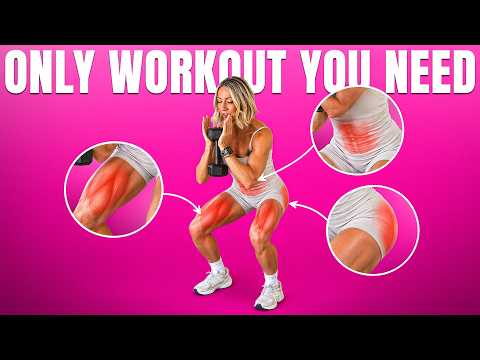
Will deadlifts hurt my lower back?
Done with good form and the right weight, deadlifts shouldn't hurt your lower back. Nikkiey explains they build your glutes, hamstrings, back and core, the chain that protects your spine. A weak posterior chain causes the stiffness and pain. If you feel deadlifts in your lower back, lower the weight, slow down and keep your back flat.
Read the answer →
Strength Training for Women
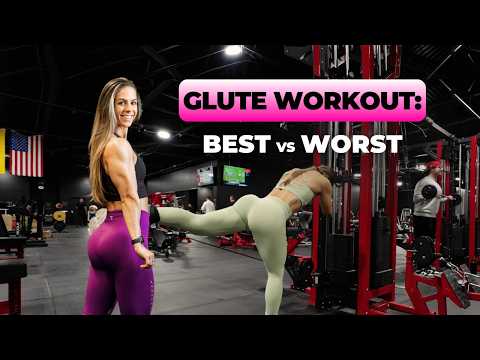
What is the best exercise to build glutes after 40?
Nikkiey names the hip thrust as the best glute exercise after 40: nothing else activates the glutes as much under the same load. She ranks Bulgarian split squats alongside it in the top tier. Start with 3 sets of 10 to 12 reps, feeling it in your glutes, not your lower back.
Read the answer →
Strength Training for Women
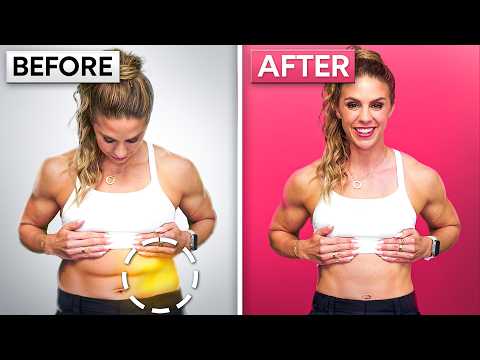
Are squats bad for your knees after 40?
No. Nikkiey explains that knees usually hurt because the muscles around them are weak, and the squat is the single best exercise for strengthening the quads, glutes and the whole chain that supports the knee. Avoiding squats doesn't protect your knees; it lets them get worse. Her own knee pain eased within weeks of goblet squatting.
Read the answer →
Full transcript
Nikkiey: If you're over 40 and you've been avoiding the weight room, or you go in there but you stick to the machines and the light dumbbells and the same safe exercises you've been doing for years, I need to tell you something. The exercises you're avoiding are the ones that will actually change your body. I know that because I avoided them for 30 years. I ran marathons. I taught group classes. I did every cardio class and every light dumbbell circuit you could name. And my body never changed. Not once. It wasn't until I started doing the five exercises I'd been told were too heavy, too risky, or not for women my age, that everything shifted.
Today, I'm going to show you the five exercises most women over 40 skip and why they're the exact movements your body actually needs the most right now.
The first exercise, and this is the one that most women over 40 either skip entirely or do so lightly it doesn't really count: the squat. Not a wall sit, not a chair tap, a real loaded squat. Women avoid this because they've been told that it's bad for their knees, that after 40 their joints can't handle it, that they should just stick to leg extensions or bodyweight work or walking lunges with no weight.
Here's what's actually true. Your knees hurt because the muscles around them are weak. The squat is the single best exercise to strengthen your quads, your glutes, and the entire chain that supports and protects the knee joint. Avoiding squats doesn't save your knees. It guarantees they'll get worse.
I ran for 30 years and I never squatted. 30 years of pounding my knees into the pavement without ever building the muscles that were supposed to protect them. And then I was shocked when my knees started aching, even in my sleep. The running was breaking them down and I was doing nothing to build them back up. The first time I did a goblet squat with real weight, I was terrified. I thought it would make the pain worse. Within weeks, the pain actually started to decrease, because the muscles around the joint were finally getting strong enough to do their job.
Here's a goblet squat. Start with the dumbbell at your chest. Feet shoulder width. Sit hips back. Chest stays up. Knees track over your toes. Get parallel to the floor. Hold the dumbbell at your chest. Feet shoulder width. Sit your hips back and down. Three sets of 8 to 12 reps, two to three times a week. When that feels manageable, add weight. Your knees will actually thank you for this.
The squat is the one most women half know they should be doing. The next exercise is the one most women are actively afraid of.
Exercise 2: the deadlift. This is the one that I hear the most fear around. Specifically, the Romanian deadlift. Women over 40 avoid this more than any other exercise, because they've been told it will hurt their back. That it's too risky. That it's a movement for young guys in the gym, not for them.
Here's the truth. A properly performed deadlift builds your entire posterior chain: your glutes, your hamstrings, your lower back, your core. That chain is what protects your spine. The women who avoid deadlifts because they're afraid of back pain are avoiding the one exercise that would prevent it. After 40, your posterior chain weakens faster than almost anything else in your body. That is what causes lower back stiffness, the rounded posture, the feeling like you can't stand up straight after sitting for an hour. The deadlift reverses all of that.
I was terrified of this exercise. 30 years of running and no posterior chain work left my back vulnerable. I assumed that the deadlift was the problem. It was the solution. The first time I hinged with real weight, I felt muscles fire in my glutes and hamstrings that I didn't know had gone to sleep. The back stiffness that had been building for years started to ease. Not because I was stretching more, but because I was finally strong enough to support my own spine.
Start with your dumbbells in front of your thighs. Feet about shoulder distance apart. Push your hips back. Weights drag close to the legs. Soft knees, not a bend. Spine stays neutral. Squeeze the glutes and stand up straight. You should feel the stretch in your hamstrings. Then squeeze your glutes to stand back up. Three sets of 8 to 10 reps. Start light. Build from there.
That's two exercises that most women avoid out of fear. The next one, most women skip for a completely different reason. They've been doing the wrong version of it their entire lives.
Exercise 3: the overhead press. This is the one that women skip not because they're afraid of it, but because they think they're already doing enough for their arms. Tricep kickbacks, arm circles, lateral raises with a 2-pound dumbbell. Little isolation movements that fitness content aimed at women over 40 loves to prescribe. None of them build the kind of upper body strength that actually changes how your arms and shoulders and your posture look.
The overhead press works your shoulders, your triceps and your core all at once. One movement that does what five isolation exercises can't. And it's the fastest path to fixing the part of their arms most women over 40 are frustrated with: the back of the arm. The back of the arm doesn't change until you build real muscle there. And 2-pound kickbacks don't build real muscle. Your body adapted to those 2 pounds decades ago.
I did arm circles with light dumbbells for months. The back of my arms never changed a bit. Not once. I was so consistent. I showed up every day. I did the reps and nothing ever happened. But the day I put those down and picked up a real dumbbell and pressed it over my head, that's when my arms started to change. One movement replaced the entire circuit of light isolation work that was doing nothing.
Press the dumbbells straight overhead. Lower them with control. Three sets of 8 to 10 reps. Start with a weight that's challenging by rep 8, not a weight you could do 30 of.
Three exercises your upper and lower body have been missing. The fourth one targets a muscle group that most women over 40 don't realize is the key to everything.
Quick thing. If you're watching this and you're realizing your current routine might be missing some of the exercises that actually matter, the free quiz is in the description. We'll show you exactly where your starting point is. It takes two minutes. Go grab it.
The fourth exercise, and this is the one most women over 40 have either never heard of or felt too awkward to try: the hip thrust. Your glutes are the biggest muscle group in your body. They drive your metabolism. They protect your lower back. They stabilize your hips and your knees. And after 40, they're the muscle group that shuts down the fastest, especially if you sit for most of your day.
Most women try to train their glutes with bodyweight kickbacks or band work. Those are fine as a warmup, but they don't provide enough load to actually build the muscle. The hip thrust is the single most effective glute exercise that exists. Nothing else activates the glutes to the same degree under the same amount of load. Strong glutes change your posture. They reduce your lower back pain. They make every other exercise in this video work better. And they're the muscle most responsible for the shape that women over 40 think they've lost for good.
Nobody ever told me to do hip thrusts. Decades of fitness classes, decades of running, decades of group workouts, and not a single one of them programmed this movement. When I started doing them, I felt my glutes activate in a way that I hadn't felt from anything else. And the difference it made in my lower back, in my posture, and how I felt standing and walking was immediate.
Your upper back is going to be against the bench. Your feet flat on the floor. Knees bent. Dumbbell or barbell across your hips. You're going to drive your hips to the ceiling. Glutes squeeze hard at the top, and then lower with control. Feel it in your glutes, not your lower back. Three sets of 10 to 12 reps. You should feel this in your glutes, not in your lower back. If you feel it in your back, your feet are too close or too far away.
The last exercise, and this one makes the biggest difference in what you see looking back at you, even though it trains the muscles you can't see: the bent-over row. Women over 40 almost never train their back directly. They focus on what's in front of them. Arms, chest, abs. The muscles in the mirror. But the muscles you can't see are the ones controlling your posture, preventing that rounded shoulder hunch that gets worse every year, and protecting your spine from what sitting and screen time are doing to it.
A strong back changes everything. It pulls your shoulders open. It lifts your chest. It makes you stand taller. And it's the muscle group that prevents the forward-leaning posture that ages your appearance faster than anything else.
I never thought about training my back. For 30 years, it wasn't on my radar because I couldn't see it. When I started rowing with real weight, my posture shifted. Within weeks, my shoulders stopped rounding forward. That end-of-the-day neck pain that I thought was just stress started to disappear. And other people noticed before I did. My friends, my family, they'd say something looked different. I was standing differently. I was carrying myself differently. It was my back.
The thing I regret most about the 30 years I spent avoiding these exercises is the time. I can't get those years back. I can't go back and tell my 30-year-old self to put down the pink dumbbells and pick up the barbell, but I can tell you right now that you still have time to change the direction your body is headed.
Hinge at the hips. A slight bend in the knees. Pull the dumbbells toward your rib cage. Squeeze your shoulder blades together at the top. Lower with control. Three sets, 8 to 12 reps. You will feel muscles you forgot you even had.
And I want to tell you about someone who avoided the weight room for even longer than I did. This is Chris. She's 55. She's an assistant principal at a middle school in the suburbs of Chicago. And for 25 years, she didn't lift. She'd actually started in college. She was a three-sport athlete in high school: volleyball, basketball and softball. When she got to college, she joined the powerlifting club. She was strong. She was built for it. And then her partner at the time told her she didn't like how big she was getting. So Chris stopped. At 25 years old, she walked away from the weight room because someone told her she was getting too bulky.
So for the next 25 years, she tried everything else. Jenny Craig, keto, calorie counting, miracle pills from Instagram. She was diagnosed with Crohn's disease at 29. She spent decades watching her weight go up and down while the medical community couldn't quite tell her what to do about it. She gained the weight back every time she lost it.
When she was 52, she finally went back to lifting. She found a personal trainer, and within two years she was back squatting 210 pounds and deadlifting 235 at 52. But the trainer had her focus only on calories in, calories out. She asked him about macros, and he told her it was just garbage. She was building muscle under the fat, getting stronger, but her body composition wasn't changing. And his answer was to do more cardio.
She didn't do more cardio. She found us instead. She started counting macros, and then she joined the program. Chris went from a size 42 waist to a size 32. That's 10 sizes. She went from an extra large to a small. She's eating over 2,100 calories a day with 215 grams of carbohydrate, and her body is still changing.
But the part of her story that stuck with me isn't the measurements. It's what she said about how she used to walk. She told me she spent most of her life looking down. Her eyes would look at the ground, not forward. And now she stands up straight. She walks tall. She said she almost worries people think she's trying to look like a badass. I told her, you are a badass.
Chris didn't need another diet. She didn't need more cardio. She needed to stop avoiding the weight room, fuel her body properly, and pick up real weight. It took her 25 years to get back there. Don't let it take you that long.
Squats aren't bad for your knees. Weak muscles around your knees are bad for your knees. Deadlifts aren't bad for your back. A weak posterior chain, that's what's causing your back pain. Arm circles won't change your arms. An overhead press will. Your glutes are the biggest muscle group in your body, and they drive your metabolism. Hip thrusts wake them back up. And the muscles you can't see, your back, are the ones controlling your posture, your confidence, and how your body ages from here.
Stop avoiding. Start lifting. I spent 30 years doing every exercise except the ones that actually mattered, and my body paid for every one of those years. You don't have to make that same mistake.
If you want to know what to eat alongside these exercises to actually see results, I break down exactly what to eat and avoid to lose belly fat during menopause in this video right here. Thanks for watching. I'll see you in the next one.
Up next
Everything → 8 min
How to Get Rid of Batwings After 40: 2 Exercises
Video · Mar 14, 2026
 41 min
How to Get Lean and Strong at 51 With Lifting and Protein
With Alicia Erickson
 7 min
6 Joint-Friendly Exercises to Build Muscle After 40
Video · Sep 4, 2025
Best of Strength Training for Women
All 266 → 1 hr 1 min
Why Building Muscle Is Key to Aging Well After 40
With JJ Virgin
 30 min
Why Am I Lifting Weights But Not Seeing Muscle?
Episode 281 · Aug 1, 2025
 31 min
Full Body Workouts vs Bro Splits: Which Is Better After 40?
Episode 64 · Jun 5, 2023