

 56 min
Are Seed Oils Bad for You? What's Wrong With Modern Food
With Steven Rofrano
Guest on the show
56 minWith Steven Rofrano
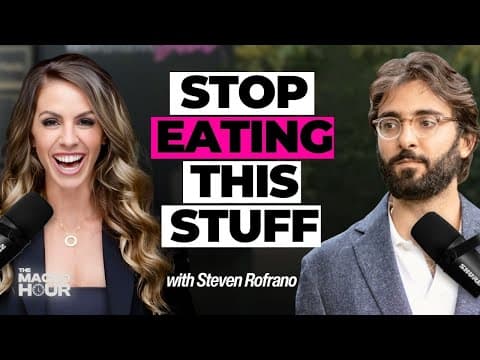
If you feel like you're doing everything right and still don't feel your best, this conversation looks at food and home habits most of us never question. Nikkiey Stott sits down with Steven Rofrano, co-founder and CEO of Ancient Crunch. Steven turned years of childhood gut problems and constant sickness into a mission to get back to real, traditionally made food.
Steven makes his case against seed oils: where they came from, how Crisco and post-war industry pushed them into the food supply, and why he believes they drive inflammation and are stored in body fat for years. He explains why real food tastes good, why the Romans conquered the world on bread and cheese, and why he thinks his own problem was never gluten. He points instead to how modern bread is grown and made.
You'll also get practical swaps. Skip fried foods cooked in seed oils, read ingredient lists using the great-grandma test, and replace kitchen plastics with wood, glass or stainless steel. Steven suggests cotton sheets, ditching synthetic fragrances and turning off the Wi-Fi at night. He also offers a simple framework for ranking changes so clean living doesn't take over your life.
Steven explains that the unsaturated fatty acids in seed oils break apart and form reactive molecules that pull electrons from surrounding tissue, which he says drives inflammation throughout the body. He also points out that seed oils make up roughly 25 to 30 percent of the average American's calories, so the volume eaten makes the impact large.
Steven says to start with fried foods and avoid them unless they're fried in a good fat like beef tallow or coconut oil. After that, watch baked goods, read grocery labels and skip anything with seed oils, and ask for swaps at restaurants that cook their own food.
Steven says seed oils are stored in body fat. He cites one study suggesting they stick around for up to seven or eight years, though he thinks a deliberate effort might clear them faster. Based on what he's read, including Dr. Cate Shanahan's book Dark Calories, people often report feeling different within about 30 days of stopping.
Steven says most nutrition panels aren't lab-tested. Manufacturers add up values for each ingredient from a USDA database, so the numbers may be directionally true but not precise. That's why he focuses on the ingredient list instead.
Steven doesn't think so. He calls bread and dairy two of the most delicious foods and notes the Roman army conquered the known world on bread and cheese, as long as the bread is made the right way. He favors sourdough made from organic flour over industrial bread with additives.
Steven believes his issue wasn't gluten itself but industrial Wonder Bread-style products. He points to folic acid fortification, pesticides like glyphosate, and higher-gluten wheat that isn't sourdough fermented as the likely culprits, and suspects many people with gluten issues are reacting to the same things.