

 45 min
Do Pilates and Yoga Help With Menopause Symptoms?
With Philippa Butler
Guest on the show
45 minWith Philippa Butler
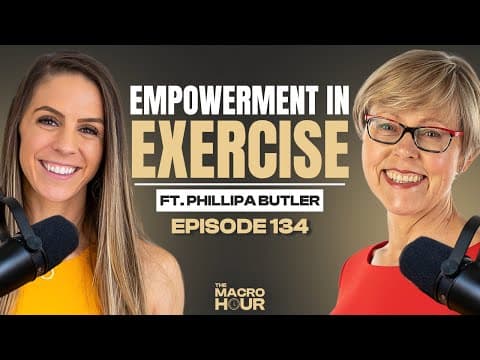
Philippa Butler is a physiotherapist and Pilates and yoga teacher with more than 30 years of experience. She tells Nikkiey Stott how perimenopause hit her like a bus at 45: night sweats, crippling insomnia, cravings, palpitations, thinning hair, heavy periods, anemia, anxiety and low mood. She had always taken a natural approach to health, and it wasn't enough. That sent her on a decade of learning what happens in a woman's body through this transition and how movement can make it smoother.
They cover what Pilates and yoga each offer. In Philippa's view, Pilates is precise, core-focused, mindful movement and a safe entry point if you're new to exercise. Yoga adds a wider range of breath practices that work on the nervous system, plus more dedicated lengthening of muscles. Nikkiey asks how to fit both alongside a strength training routine. Philippa shares her own balanced week: one Pilates session, one yoga session, two or three strength sessions, and zone 2 cardio.
Philippa's message for every woman in menopause is that there isn't one symptom that doesn't respond to movement. Her one daily habit is to take every joint through its full range of movement once a day, from top to toe. She walks through the neck sequence and explains how to extend the neck properly instead of just tipping your head back.
Philippa's view is that there isn't one symptom of menopause that doesn't respond to movement, from muscle, bone and mood to vaginal atrophy and even eye health. She describes Pilates as mindful, core-focused movement that helps with stress, and yoga as offering breath practices that work on the nervous system.
For someone strength training four days a week, Philippa suggests one day of Pilates and one day of yoga. Her own balanced week is one Pilates session, one yoga session, two or three strength sessions, plus zone 2 cardio.
Philippa says a yoga session is dedicated to lengthening muscles, while reformer Pilates usually saves stretching for the end of the session. She calls Pilates stretching for stiff people, so it suits you if yoga feels like too much for your body right now.
Yes, in Philippa's view. Pilates teaches you how your body feels as it moves, switches on the core with every movement and starts at a slow, measured pace, so you're much less likely to hurt yourself. You can then build up to more challenging work or add load.
Philippa recommends taking your joints through their full range of movement at least once a day, working from top to toe. For the neck, that means turning side to side, tipping each ear to the shoulder, nodding the chin to the chest, and extending to look at the ceiling by moving from the base of the neck up, bone by bone.
Starting at 45, Philippa had night sweats, insomnia, afternoon cravings, palpitations, dry skin, thinning hair, heavy periods, iron deficiency anemia, anxiety and mood disturbances. Her symptoms continued into her early 50s.