

 38 min
How Fitness Supports Mental Health: Karena Dawn's Story
With Karena Dawn
Guest on the show
38 minWith Karena Dawn
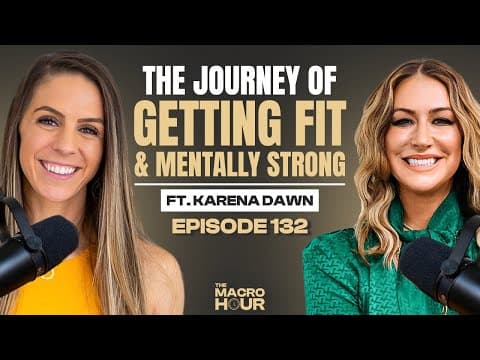
Karena Dawn, co-founder of Tone It Up and host of The Big Silence podcast, sits down with Nikkiey Stott for the most personal conversation the show has had about mental health. Karena grew up in the 80s and 90s with a mother diagnosed with schizophrenia, at a time when no one talked about mental illness. She describes hiding what was happening at home, going through her own teenage depression, surviving a suicide attempt, and the moment in her early twenties when she decided her life had to change. She traded club nights for sunrise bike rides, runs and ocean swims, trained for a triathlon, and says fitness is what pulled her out of the dark.
From there the two get practical. Karena explains why the stigma runs so deep, shares the story of her mother's change of heart in her final days, and lays out the resources she points people to, including the anonymous Crisis Text Line, NAMI support groups, and The Big Silence's therapy scholarship. She also covers the basics she leans on: water, gut health, moving your body, getting outside, and meditation that can be as simple as five deep breaths.
Nikkiey talks about restarting therapy this year and about how hard it was to ease back into lifting and being around people after two weeks sick with the flu. They close with what to say if you are struggling in silence, and how to check in on someone you love without judgment.

Women's Health & Aging
Yes. On The WarriorBabe Show, Nikkiey explains that lifting gives the stress your body carries somewhere to go, triggers endorphins she calls the brain's natural antidepressants, and builds confidence every time you lift heavier. She also cautions that not every way of exercising is good for your mind, especially when your training is driven by guilt.
Read the answer →
Karena points to the happy hormones you get from working out, and says taking the best care you can of your body also reduces stress. Both she and Nikkiey notice their mood declines after just a few days without moving.
Karena suggests the anonymous Crisis Text Line, where you text HELLO to 741741 to reach a counselor 24/7. She also recommends NAMI support groups, the resources page at The Big Silence, and its Therapy for All program, which offers therapy scholarships.
If you notice their habits changing, check in with absolutely no judgment, ask how they're doing, and listen, because most people want to be heard. Karena says you're not there to be their counselor; ask how you can help and look at resources together.
Karena describes it as intergenerational: older generations were taught not to talk about it, while kids and teenagers today are talking about it more normally. She says much of it comes down to fear of how you'll be perceived and judged.
No. Karena says many people think they're not doing it right, but meditation is just breathing, and it can be as simple as sitting with your eyes closed and taking five deep breaths.