

From 4 episodes
What is the difference between complete and incomplete protein?
Answered by Nikkiey Stott · Updated
The short answer
A complete protein contains all nine essential amino acids, the ones your body can't make and must get from food. An incomplete protein is missing one or more. Complete sources are mostly animal-based, like chicken, eggs, fish, Greek yogurt and whey. Incomplete sources are mostly plant-based, like nuts, beans, lentils and oats.
Hear it answered
Tap play to start right where it's answered. It keeps playing while you browse.
Nikkiey defines essential amino acids and what makes a protein complete
Plays from 3:57 · Ep. 338: Complete vs Incomplete Protein for Women Over 40
Why leaning on incomplete proteins quietly stalls results after 40
Plays from 9:26 · Ep. 404: 5 Protein Mistakes Holding Women Over 40 Back
Abbey Sharp on why you don't need to combine plant proteins at each meal
Plays from 43:49 · Ep. 306: How to Stop Food Cravings Without Restrictive Dieting
Nikkiey compares animal, plant and powdered protein sources
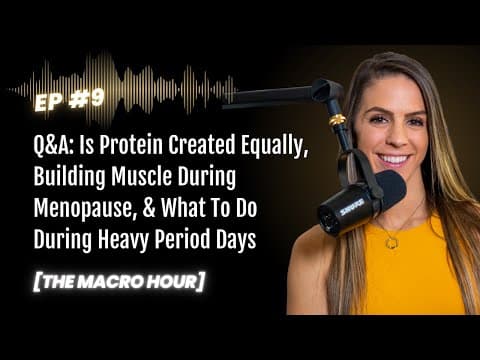
Plays from 2:22 · Ep. 9: How to Build Muscle During Menopause and Choose Protein
The full answer
Nikkiey explains on Ep. 338 that there are 20 amino acids in total, and nine are essential because your body cannot make them. Complete proteins give you the full set of building blocks for muscle repair, strength and body recomposition. Her list: chicken, turkey, beef, eggs, fish, Greek yogurt, cottage cheese and whey. Incomplete proteins such as nuts, seeds, rice, oats, beans and lentils still count as protein and still have value. They are just missing one or more of those key pieces.
On Ep. 404 she calls relying on incomplete sources a quiet mistake. Peanut butter on toast, a handful of almonds or oats and fruit all add grams in your tracking app, but they may not deliver the full amino acid profile that drives muscle protein synthesis. You can hit your number and still miss the response you want. Her fixes:
- Anchor every meal around a complete protein.
- If you eat mostly plants, be more intentional, and pair two incomplete sources, like nuts and oatmeal, to make a complete protein.
There is some nuance between episodes. On Ep. 306, registered dietitian Abbey Sharp says the body keeps a reservoir of amino acids, so you don't need to combine specific plant proteins at the same meal. Eating a variety of protein sources is generally enough. Her exception is protein powder: whey has a good amount of leucine, the trigger amino acid for muscle protein synthesis, while most plant-based powders don't.
On Ep. 9, Nikkiey adds that whey and dairy-based powders are complete, but whole foods like chicken and meat also bring vitamins and minerals that processed powders and bars lack. Use those to fill gaps, not as most of your daily protein.
From WarriorBabe's coaches (how we write our answers). For education, not medical advice: talk to your doctor about your own health.
Women also ask
More on Protein for Women →Protein for Women
What is leucine and why does it matter for building muscle?
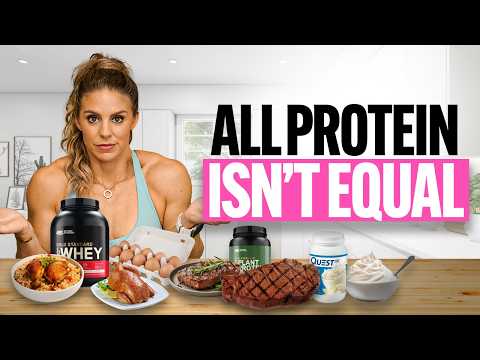
Leucine is the amino acid most responsible for switching on muscle protein synthesis. On Ep. 404, Nikkiey calls it the key that starts the engine: you need roughly 2 to 3 grams per meal to fully trigger the muscle-building response. Animal proteins, especially whey, are rich in it, while plant proteins are much lower.
Read the answer →
Protein for Women
Are protein bars a good way to get more protein?
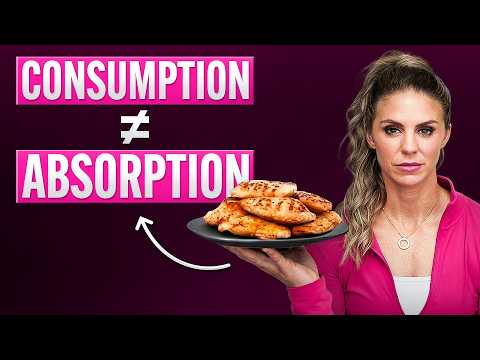
Not usually. Many bars, like Clif bars, carry only about 10 grams of protein from ingredients that don't give your body the amino acid profile it needs, and a daily bar costs $60 to $90 a month. Four hard-boiled eggs and a piece of fruit give more protein for about 50 cents.
Read the answer →
Protein for Women
Why do women need more protein as they get older?
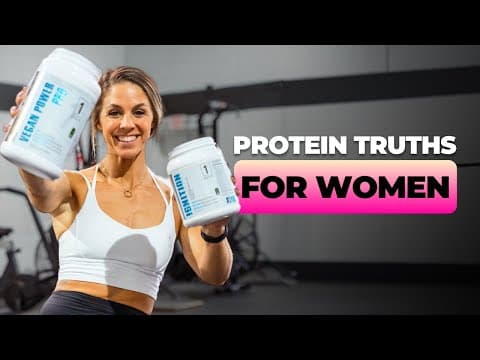
Women need more protein with age because they lose muscle every decade and their bodies get worse at turning protein into muscle, which Nikkiey calls anabolic resistance. To get the same muscle-building response as a younger woman, you need more protein, not less. Eating less to lose weight usually works against you.
Read the answer →
Protein for Women
Is it bad to eat most of my protein at dinner?
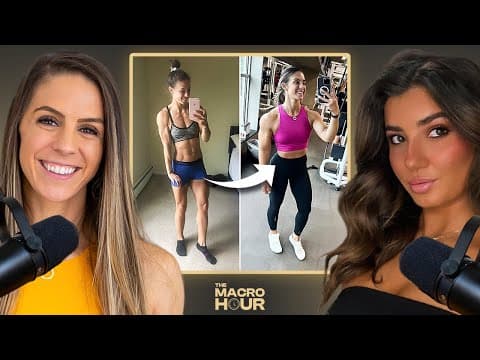
Nikkiey says yes, it works against you. Your body can only use roughly 30 to 40 grams of protein per meal to trigger muscle protein synthesis, so a big protein-heavy dinner triggers it once, while the excess is used for energy or excreted. Spreading the same total across four or more meals triggers it several times a day.
Read the answer →
Protein for Women
Are protein shakes as good as real food?
Not quite. Nikkiey's view is that protein shakes and bars are a useful tool, not a replacement for whole foods. They're processed and lack the vitamins, minerals and other nutrients you get from chicken, eggs, fish or tofu. She suggests about 80% of your protein from whole foods and roughly 20% from shakes and bars.
Read the answer →

Protein for Women
How much protein should a woman eat a day to lose weight?
Most WarriorBabe guidance lands at roughly 0.7 to 1 gram of protein per pound of body weight, with 100 grams a day as the floor. Nikkiey Stott's rule is about your body weight in grams, or your goal weight if you have a lot to lose. Spread it across meals and build up gradually.
Read the answer →
Watch or listen in full
More on this topic → 20 min
5 Protein Mistakes Holding Women Over 40 Back
Episode 404 · Oct 12, 2026
 50 min
How to Stop Food Cravings Without Restrictive Dieting
With Abbey Sharp
 20 min
How to Build Muscle During Menopause and Choose Protein
Episode 9 · Jan 27, 2023