

From 3 episodes and 1 video
Can you lose fat while eating at maintenance calories?
Answered by Nikkiey Stott · Updated
The short answer
Yes, for many women over 40. Nikkiey explains that eating at maintenance while strength training lets you build muscle and slowly lose body fat at the same time, a slight recomp. WarriorBabe clients have lost weight this way without ever doing a cut. If you have 30-plus pounds to lose, she says a cutting phase may fit better.
Hear it answered
Tap play to start right where it's answered. It keeps playing while you browse.
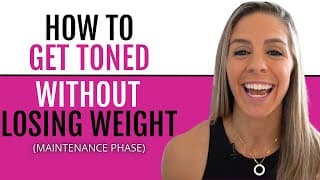
Nikkiey on building muscle and losing body fat at maintenance
Plays from 2:57 · Video: Skinny Fat? Why a Maintenance Phase Beats Cutting Calories
Megan G lost 27 pounds in nine months without leaving maintenance
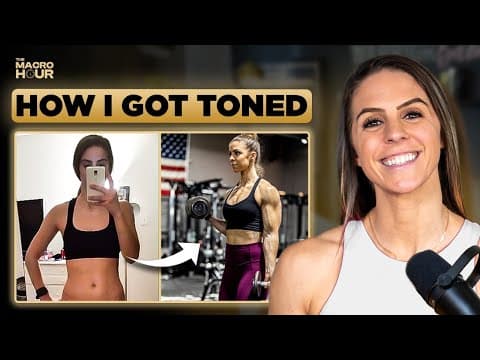
Plays from 24:28 · Ep. 163: How to Take Control of Your Fitness Results After 40
Danielle lost weight and built muscle without ever doing a cut
Plays from 22:31 · Ep. 383: Can Eating More Help You Lose Fat and Build Muscle Over 40?
Luisa on a year at maintenance healing from years of under-eating
Plays from 22:29 · Ep. 261: How a 51-Year-Old Woman Got Strong Without Starving Herself
The full answer
Maintenance means you're not in a deficit and not in a surplus. Nikkiey explains in her video on skinny fat that the goal is to hold your weight roughly steady, give or take a few pounds, while you build muscle and slowly shift body composition. She also lists better energy, mood, sleep, digestion and strength, and a stronger metabolism because you're eating more. Her rough estimate for time spent there is 6 to 12 months, depending on where you are.
The client stories show how far this can go:
- On Ep. 163, Nikkiey shares that Megan G lost 27 pounds in about nine months while her coach kept her at maintenance the whole time, fueled and strength training.
- On Ep. 383, Danielle did a short retrain, lost weight at around 1,800 calories in maintenance, then moved into a build at about 2,400 calories and visibly added muscle without ever doing a cut.
- On Ep. 261, Luisa spent most of her first year at maintenance as her coach slowly raised her macros after years of under-eating and overtraining. She did one mini cut, and noticed less bloating and better-fitting clothes before big visual changes.
There is some nuance. In the video, Nikkiey says maintenance is best suited to the skinny fat woman who wants more shape and muscle, and that someone looking to lose 30 to 50 pounds or more is usually better served by a cutting phase. Yet Megan lost 27 pounds at maintenance, so the right phase depends on your history and starting point, which is why coaches adjust it person to person.
If you've been dieting hard with nothing to show for it, the problem may not be your effort. Eating enough to fuel training and recover can be the step that finally moves things.
From WarriorBabe's coaches (how we write our answers). For education, not medical advice: talk to your doctor about your own health.
Women also ask
More on Metabolism, Eating More & Reverse Dieting →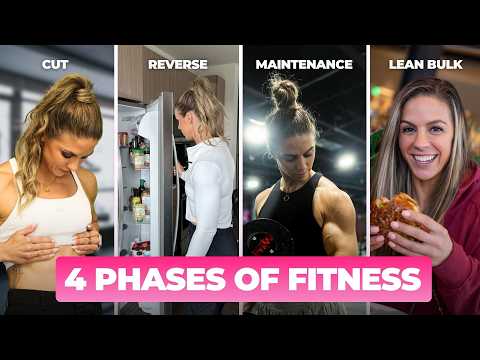
Metabolism, Eating More & Reverse Dieting
Why is my weight going up during maintenance?
Your weight usually rises in maintenance because your daily calorie burn shifts with activity, sleep, stress and your cycle, and because you're likely building muscle. Nikkiey says your maintenance weight is your two-to-four-week average, not one morning's number, and a rise of around three pounds, up to about seven at most, isn't all fat.
Read the answer →
Metabolism, Eating More & Reverse Dieting
Do I need a calorie deficit to lose the last 5 to 10 pounds?
Usually not. Nikkiey says most women with only 5 to 10 pounds to lose are skinny fat, and they don't need a calorie deficit at the start. Instead she recommends a maintenance phase: hold your weight, eat enough to build muscle and let body fat come down. That's where she says body composition changes happen.
Read the answer →
Metabolism, Eating More & Reverse Dieting
How long should I stay in a maintenance phase?
There's no fixed number, but Nikkiey's rule of thumb is to stay in maintenance at least as long as your previous phase lasted, so about 12 weeks after a 12-week cut. If you want a hard estimate, she suggests roughly six to twelve months, and longer if you've under-eaten for years.
Read the answer →
Metabolism, Eating More & Reverse Dieting
Is a maintenance phase a waste of time if I want to lose weight?
No. Nikkiey says a maintenance phase is just as important as a fat loss phase, if not more so. It's the foundation that helps your results stick, and after a long calorie deficit it helps reverse some of the metabolic slowdown. Skipping it and cutting again keeps the lose-and-regain cycle going.
Read the answer →

Metabolism, Eating More & Reverse Dieting
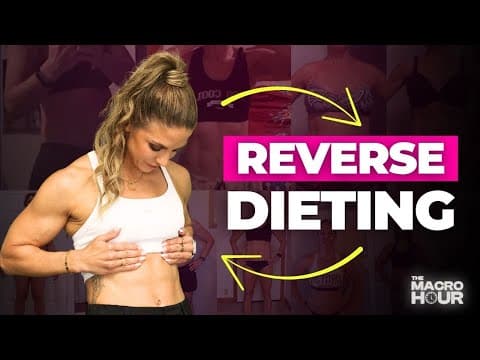
What is reverse dieting?
Reverse dieting is the intentional, gradual increase of calories over time, usually after a fat loss phase or years of under-eating. Nikkiey explains that the goal isn't weight gain. It's bringing your metabolism back up, improving energy, mood and sleep, and keeping your results so your next fat loss phase starts from more food.
Read the answer →
Metabolism, Eating More & Reverse Dieting
Will I gain weight when I start eating more?
Probably a little, and that's expected. Nikkiey explains that when you start eating more during a retrain or reverse diet, your weight will usually fluctuate about two to five pounds from water, glycogen, food volume and salt, not fat. If the gain keeps climbing or holds around five pounds, the increase was likely too fast.
Read the answer →
Work out yours
All calculators →Watch or listen in full
More on this topic →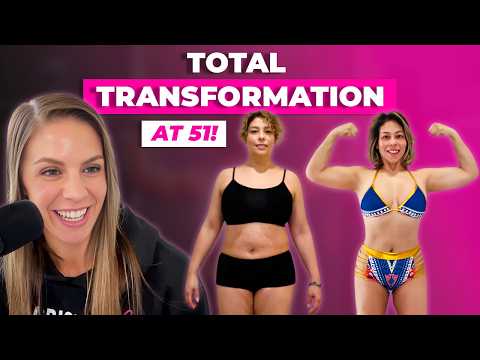 49 min
How a 51-Year-Old Woman Got Strong Without Starving Herself
Episode 261 · May 23, 2025
 8 min
Skinny Fat? Why a Maintenance Phase Beats Cutting Calories
Video · Jan 25, 2022
 39 min
How to Take Control of Your Fitness Results After 40
Episode 163 · Jun 10, 2024