

The short answer
Mostly no, according to the show. Guests on The WarriorBabe Show cite research showing metabolism stays fairly steady through midlife. What slows it is losing muscle, which happens quietly from your 30s on unless you strength train and eat enough protein. Nikkiey adds that moving less as we age plays a big part too.
Hear it answered
Tap play to start right where it's answered. It keeps playing while you browse.
Nikkiey on why muscle loss, not age, is what slows your metabolism after 40
Plays from 6:46 · Ep. 398: How Women Over 40 Lose Fat When the Scale Won't Move
Maggie on research showing metabolism barely changes from 20 to 64
Plays from 35:37 · Ep. 315: Why Am I Gaining Weight Eating Clean and Working Out?
JJ Virgin on muscle loss and the hormonal shifts that favor fat storage
Plays from 16:21 · Ep. 371: Why Building Muscle Is Key to Aging Well After 40
Nikkiey on how becoming more sedentary is the big reason metabolism slows
Plays from 18:57 · Ep. 75: How Hormone Changes Affect Fat Loss and Muscle After 45
Abbey Sharp on why midlife bodies need more support, not less food
Plays from 39:37 · Ep. 306: How to Stop Food Cravings Without Restrictive Dieting
The full answer
On Ep. 315, Maggie says studies show metabolism barely budges from about age 20 to 64. On Ep. 306, dietitian Abbey Sharp says the data shows it stays relatively consistent until about 70. On Ep. 371, JJ Virgin says the idea that metabolism slows with age doesn't really hold up. Her point is that what's changing is your muscle.
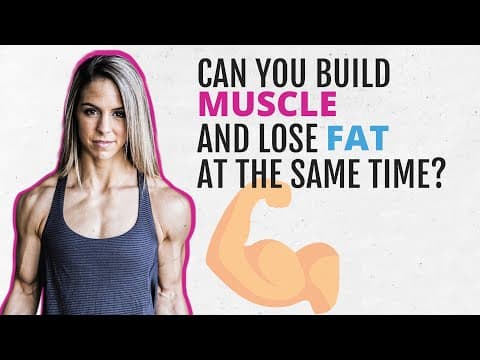
Nikkiey explains on Ep. 398 that without resistance training you lose roughly 3% to 8% of your muscle every decade after 30. Muscle drives your metabolism, so every pound you lose means your body burns fewer calories at rest. By the late 40s or early 50s, without consistent lifting, metabolism can be significantly slower, and she says that isn't age. On Ep. 303 she ties it to years of under-eating, especially protein. Maggie adds that muscle and bone are both metabolically active, so losing them leaves less of a glucose sink and extra energy gets stored as fat.
There is nuance. JJ Virgin says falling estrogen, rising insulin resistance, higher cortisol and poorer sleep can make you better at storing fat, particularly around the midsection. Abbey Sharp says fat distribution shifts with estrogen and the body needs more support at this stage, not necessarily less food. On the older Ep. 75, Nikkiey says the body does burn somewhat fewer calories at rest, but the big reason is that people slow down, becoming more sedentary at work and at home. If you have questions about your own hormones, those are worth taking to your doctor.
The practical takeaway across these episodes:
Your metabolism isn't broken. The old plan just wasn't protecting your muscle.
- Lift weights consistently to keep and build muscle.
- Prioritize protein, ideally at every meal and most snacks, as Abbey suggests.
- Don't slash calories; Nikkiey warns against living around 1,100.
- Move more in your daily life.
From WarriorBabe's coaches (how we write our answers). For education, not medical advice: talk to your doctor about your own health.
Women also ask
More on Metabolism, Eating More & Reverse Dieting →
Metabolism, Eating More & Reverse Dieting
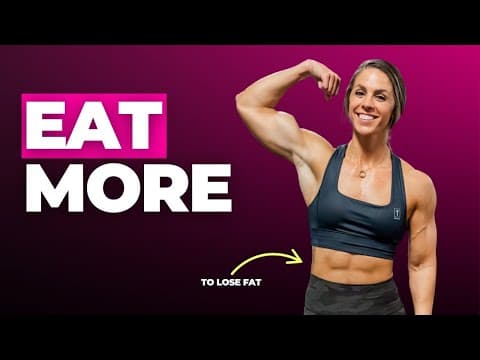
How do I know if I'm not eating enough?
Nikkiey points to five signs: constant fatigue, irritability or anxiety, bloating and constipation, poor sleep and recovery, and stalled fat loss or weight gain while eating less. Not feeling hungry on very little food is another red flag. The only way to know for sure is to weigh and track what you eat for a week.
Read the answer →
Metabolism, Eating More & Reverse Dieting
How do I eat more without gaining weight?
Raise your calories slowly instead of all at once. Nikkiey's approach is to track what you actually eat for a week to find your baseline, then add roughly 50 to 150 calories at a time, mostly from carbs and fats. Keep protein steady and watch sleep, mood, energy and hunger before each next increase.
Read the answer →
Metabolism, Eating More & Reverse Dieting
What should I know before starting my first cutting phase?
Expect to feel hungry, and plan for it. Nikkiey's three rules for a first cut are daily consistency, drinking more water when hunger hits, and eating quality macros with protein in every meal. Go slowly, keep eating foods you enjoy in smaller amounts, and start a cut when you feel strong and energized, not depleted.
Read the answer →

Metabolism, Eating More & Reverse Dieting
What is a refeed day?
A refeed day is a planned, temporary increase in calories, mostly from extra carbs and fats, that you still track before going right back into your deficit. Nikkiey uses refeeds to relieve the stress of dieting and support your metabolism. It's a strategy, not permission to eat whatever you want.
Read the answer →
Metabolism, Eating More & Reverse Dieting
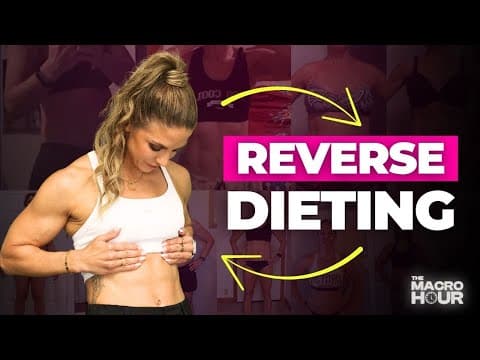
How many calories should I add each week when reverse dieting?
WarriorBabe's coaches suggest adding roughly 50 to 150 calories per week, after first tracking a full week to find your true starting intake. Bring protein up first, then carbs and fats. Hold each increase for one to two weeks while watching energy, sleep, mood, digestion and your weight trend before adding more.
Read the answer →

Metabolism, Eating More & Reverse Dieting
Will I gain weight when I start eating more?
Probably a little, and that's expected. Nikkiey explains that when you start eating more during a retrain or reverse diet, your weight will usually fluctuate about two to five pounds from water, glycogen, food volume and salt, not fat. If the gain keeps climbing or holds around five pounds, the increase was likely too fast.
Read the answer →
Work out yours
All calculators →Watch or listen in full
More on this topic → 31 min
How Women Over 40 Lose Fat When the Scale Won't Move
Episode 398 · Sep 21, 2026
 1 hr 1 min
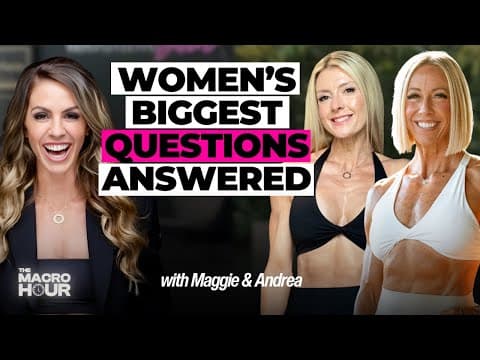
Why Building Muscle Is Key to Aging Well After 40
With JJ Virgin
 1 hr 1 min
Why Am I Gaining Weight Eating Clean and Working Out?
Episode 315 · Nov 28, 2025