

Chapters
In this video
Anybody can lose weight. Crash diets and restrictive plans will move the scale, but Nikkiey Stott explains that the weight you lose that way is a little bit of everything: fat, muscle, fluids, even organ size. Lose muscle along the way and you end up a smaller version of yourself with no tone underneath, plus a slower metabolism that sets you up for fat gain over the long term.
In this video Nikkiey breaks down why the scale is the worst indicator of your progress, how muscle and the mitochondria inside it are where fat actually gets metabolized, and why you need to train with real intensity and eat enough to build and keep that muscle. She also explains why 1200-calorie fad diets work against you.
Finally, she shows why fat loss is far more linear than weight loss, and gives you better ways to measure it: body fat scans like InBody or DEXA, and progress photos. The goal is not a smaller number. It is less fat and more lean muscle.
Key takeaways
- Make your goal fat loss, not weight loss: preserve or even gain muscle while losing as much body fat as possible.
- Expect the scale to fluctuate from water, sodium, inflammation, stress and your period, and remember a 1-2 pound jump the week of your period is not fat.
- A pound of muscle and a pound of fat weigh the same, but muscle takes up far less space, so you can weigh the same or more and look leaner.
- Give your body a reason to build more fat-burning mitochondria by lifting challenging weights, limiting distractions, getting off your phone and training with intensity.
- Muscle is active tissue that needs constant energy from food, so losing it slows your metabolism and makes fat gain more likely.
- Skip 1200-calorie fad diets and fuel your muscles with enough of the right foods, because you need that food to build muscle and get toned.
- Track body fat percentage instead of scale weight, for example with a monthly InBody scan, an Amazon Halo Band, or a DEXA scan every few months.
- Take progress photos, because they can show your progress even when the scale does not move.
Questions answered
Why can focusing on weight loss lead to fat gain?
Nikkiey explains that when you only chase a smaller number on the scale, you lose a bit of everything, including valuable muscle. Since muscle is active tissue that keeps your metabolism burning, losing it slows your metabolism and the weight keeps coming back on.
Why do I weigh more the week of my period?
According to the video, you can weigh one to two pounds more the week of your period because of inflammation and water retention. It is a normal fluctuation, not fat.
How does muscle help you burn fat?
Muscles contain mitochondria, the cellular power plants where fat is metabolized. Nikkiey says training with intensity and challenging weights forces your body to create more mitochondria, and more muscle mass makes it easier to burn body fat.
How should I measure fat loss instead of using the scale?
Nikkiey recommends measuring body fat percentage, such as monthly InBody scans at your gym, an Amazon Halo Band, or a DEXA scan every few months. She also recommends progress photos.
Why is fat loss more linear than weight loss?
Body fat percentage and lean muscle mass do not change when you drink a glass of water or eat a big meal, but body weight does. That is why your weight can swing several pounds in a day while fat loss follows a steadier downward line.
Ask Nikkiey
Questions this video helps answer, with what Nikkiey says across everything WarriorBabe teaches.
The Scale & Tracking Progress
Why do I weigh more the week before my period?
You weigh more the week before your period because shifting hormones in the luteal phase cause water retention and bloat, not fat gain. Nikkiey Stott says the scale is almost guaranteed to rise that week. A WarriorBabe video puts it at about one to two pounds. It's a temporary fluctuation that balances out.
Read the answer →
Full transcript
Nikkiey: Hey everyone, Nikkiey here with WarriorBabe. So getting right to it: anybody can lose weight. You can jump into crash dieting, where you basically just don't eat anything, like every restricted diet out there. And yes, you will lose weight. But losing weight this way will just leave you looking like a skinnier, smaller version of a fat person, because you will have no muscle tone underneath your skin. You'll understand exactly why by the end of this video.
When you just lose weight this way, unfortunately, the weight that you lose will be a little bit of everything: fat, muscle, fluids, organ size. If you are only concerned with seeing a smaller number on the scale, you may be losing valuable muscle instead, which can result in long-term weight, meaning fat, gain. I'll dive deeper into that throughout this video.
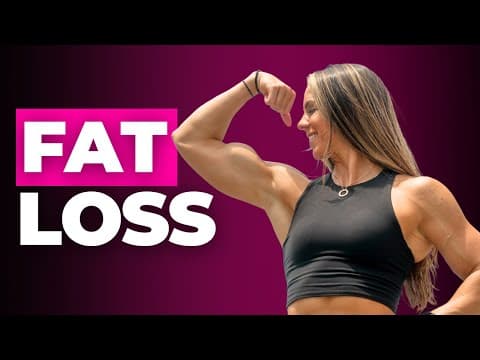
Plus, it's counterproductive to your goals. The ultimate goal for successful fat loss is to preserve as much muscle as possible on your body, or even gain some, while at the same time losing as much body fat as possible. Your body fat percentage, along with many other data points, is a key indicator of your success, not the number on the scale.
So today let's talk about why your scale weight is the worst indicator of your progress, how muscle is key to your success in losing fat, and finally, last of all, you'll understand how fat loss is far more linear than weight loss.
But before I dive into this, it would help me out tremendously if you obliterated the like button for the YouTube algorithm. It seriously helps out this new channel and it really does make a huge difference. I appreciate you guys so much for doing that. Thank you, thank you, thank you.
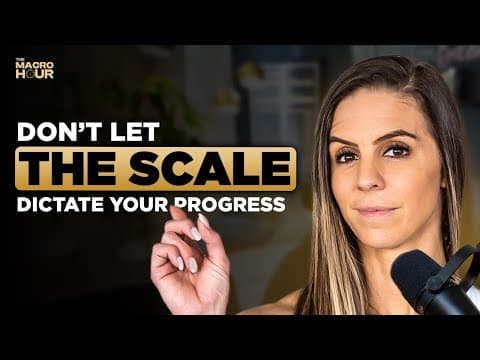
Let's get to it. First of all, your scale weight is the worst indicator of your progress, especially if you're attached to it. How many of you still get hung up on that scale number? You get emotionally charged, either good or bad, from what you see when you step on it.
When people attempt to change the way their body looks and they don't see pounds coming off the scale each week, they tend to get pretty freaking discouraged. And you know what? You still get discouraged even if you do see inches coming off, even if you see differences in before and after pictures, even if you see increased energy during your workouts, you're getting stronger, or your clothes are fitting better. And you guys, this disappointment stems from thinking that in order to change your body composition, you must lose weight.
Wrong. As a friendly reminder, muscle, fat, bone, water, excess sodium, inflammation from stress, or your monthly period all contribute to the number you see on the scale every second, minute, hour and week that you weigh yourself. So, for example, it's true that you could weigh one to two pounds more the week of your period due to inflammation and water retention. Fluctuations like this are completely normal.
But it's just that, a fluctuation, guys. It's not fat. To put it into another perspective, in order to gain one pound of fat, you need to eat 3,500 calories in a day. That means in order to gain two pounds of fat in one day, you'd have to eat 7,000 calories. Now, you and I both know that's not happening.
Also, as you begin to change your body composition, muscle will weigh more than fat. So if you are only worried about your weight, you aren't seeing the big picture. A pound of muscle and a pound of fat weigh the same, but muscle takes up significantly less space. So if you were to put five pounds of fat next to five pounds of muscle, you'd see that fat takes up significantly more space and volume than dense, lean muscle does.
And you guys, this is how it is possible that you can weigh the same, or even more, and appear leaner and more toned than another person with the same weight and similar height as you, because of the difference in your body composition. This is how it is possible, if you have more muscle mass on your body, to weigh more than you ever have before, yet look completely different body composition-wise.
To put it in perspective, when I first started my fitness journey, I weighed 140 pounds. And now I weigh around exactly the same, yet I look completely different. The difference is having more dense, lean muscle than fat.
Next, muscle is vital to your success in losing fat. I'm about to get a little science-y here, so turn on your brains and listen to me closely. Muscles have these little fat-burning powerhouses called mitochondria. Mitochondria are cellular power plants that are responsible for the production of energy, and it's in the mitochondria that fat is metabolized.
Now, if you followed me there, you're probably wondering, how can I get me some more mitochondria to burn off this unwanted body fat? The answer is, you need to give your body a reason to create more of these little power plants, to create more mitochondria. And you do this by putting more intensity behind your workouts. You do this, you guys, by getting off your freaking phone, by limiting distractions, by making your muscles work by lifting challenging weight, and by actually putting intensity and meaning and intention behind all of your workouts.
When you do this, you create a large demand for energy, above and beyond what your body can already produce. And in this state, your body is forced to create new mitochondria in order to be prepared for the next time your muscles call on that extra energy. New mitochondria, more fat being metabolized. The more muscle mass on your body, the easier it is to burn more body fat.
And you guys, the coolest thing about this correlation between muscle and mitochondria is that they are both active tissue. Like I said at the beginning of this video, if you are only concerned with seeing a smaller number on the scale, you may be losing valuable muscle instead, which can result in long-term weight, meaning fat, gain. Why? Well, unlike fat, these muscles and mitochondria need constant energy to maintain themselves. Energy like food.
Since muscle is active tissue, it lights your metabolism furnace, keeps it brisk, and keeps it burning fat all throughout the day. So if you focus on just weight loss, you also end up losing muscle, which means your metabolism furnace slows down, it gets sluggish, and the weight keeps coming on and on and on. That's why so many of you have probably tried everything out there and you still aren't seeing the results that you want. Light bulb moment.
Now, this is where 1200-calorie fad diets are killing you. In order for all that I mentioned above to happen, your nutrition is key. By that, I mean you have to be fueling your body and your muscles with enough of the right types of food to produce these effects inside your body and get these little powerhouses to metabolize your unwanted body fat.
Lastly, fat loss is far more linear than weight loss. Fat loss is a way more steady indicator, as opposed to a constantly fluctuating one like weight loss, as mentioned earlier. For example, our body fat percentage or lean muscle mass does not fluctuate when we drink a glass of water or eat a big meal and then step on the scale. Only our body weight does this.
If you weigh yourself at the beginning of the day and then again at the end of the day, there can be several pounds of difference when you step on the scale. But guys, remember, this doesn't mean that you've actually put on weight and fat throughout the day. Again, it's a combination of so many different factors: water weight, sodium intake, inflammation from working out, which cause your body weight to fluctuate so often.
Keep this as a reminder. The next time you step on the scale, don't let that number determine your success, because more often than not it will leave you feeling absolutely, completely defeated. Put more of your energy into measuring your body fat percentage. I personally recommend monthly trips to your local gym's InBody scanner, or purchasing the Amazon Halo Band, or a pricier option is getting a DEXA scan. You can go to one of those every few months to see the downward linear line of body fat dropping, if you are consistently showing up with your prescribed programming. So fat loss is far more linear; weight loss is all over the place.
Your energy is also better spent focusing on progress photos. While your weight may not move, if you are doing everything right, photos will tell you an amazing story of your progression.
So in recap: to look like a fit, healthy person, losing fat, having muscle, and eating enough to preserve that muscle is absolutely freaking necessary. In your journey, if done right, you will be losing fat but gaining and preserving lean muscle mass, which in turn is what will change your body composition.
Along the way, you will need to be reminded that fat loss is different from weight loss, as we discussed. The scale is not an indicator of your success, and it can actually take away from your big-picture goal if you are so tied to it. Muscle and mitochondria are active tissue, and they need constant energy to maintain themselves, and that energy is food. So please don't be afraid of eating more. You need it to hit your goals, to build muscle and get toned. And fat loss progress is way more linear than weight loss progress.
If you want help to make sure you are doing the right prescribed macro plus workout plan for your individual needs, and to be able to control your results forever, be sure to check out warriorbabe.com.
Guys, thanks so much for tuning in and watching today's video. If it brought you lots of value and tons of aha moments, please let me know in the comments below. I love reading through them, and I appreciate you guys so much. To be sure you know when I drop more videos like this, hit the subscribe button right now. And I'll see you guys next time.
Up next
Everything → 23 min
Why Muscle and Mitochondria Beat the Scale for Fat Loss
Video · Aug 15, 2019
 7 min
How Cardio, Sleep and Muscle Change Your Metabolism
Video · Mar 22, 2022
 50 min
Cut, Reverse, Maintenance or Build: Which Phase Are You In?
Episode 33 · Mar 24, 2023
Best of The Scale & Tracking Progress
All 103 → 31 min
How Women Over 40 Lose Fat When the Scale Won't Move
Episode 398 · Sep 21, 2026
 30 min
Why Isn't the Scale Moving When I Eat Well and Lift?
Episode 139 · Mar 18, 2024
 26 min
What Is Biofeedback? Signs Your Fat Loss Plan Is Off
Episode 295 · Sep 19, 2025