

Video18 min
A 30-Day Plan to Reduce Visceral Fat After 40
Chapters
In this video
Visceral fat is the fat you can't pinch. It wraps around your liver, heart and intestines, and the coach explains that after 40, and especially through menopause, the body starts storing more of it. In her view, it doesn't respond like the fat under your skin. It is driven by insulin and cortisol, which is why eating 1,200 calories and doing cardio five days a week can make it worse instead of better.
This video lays out five steps that change those signals: build every plate around protein, vegetables, a fist of complex carbs and a thumb of healthy fat; lift three days a week with six compound exercises and progressive overload; take a 10-minute walk after your biggest meal and aim for 6,000 to 8,000 steps; lower your cortisol by training less, eating enough and following the plan 80% of the time; and sleep 7 to 8 hours. She then maps the steps onto a four-week timeline.
The coach also shares how client Deb, who had been diagnosed with type 2 diabetes, went from XL tops and size 12 to 14 pants to medium tops and size 8 to 10 while losing only about 10 pounds on the scale. The message is clear: judge your progress by your waist, your clothes and how you feel, not the number on the scale.
Key takeaways
- Build every meal with a palm-sized portion of protein, half a plate of vegetables, a fist-sized portion of complex carbs and a thumb-sized portion of healthy fat to keep blood sugar steady.
- Aim for roughly 25 to 30 grams of protein per meal, three to four times a day, because the coach explains that muscles become less responsive to protein after 40.
- Cut processed foods and sugary drinks, which the coach says spike blood sugar and insulin quickly.
- Lift three days a week for 30 to 45 minutes, alternating Day A (goblet squat, bent-over row, overhead press) and Day B (Romanian deadlift, floor press, hip thrust).
- Do three sets of 8 to 12 reps with 60 seconds of rest, choose a weight where the last two to three reps feel hard, and add reps or weight each week.
- Take a 10-minute walk after your biggest meal and aim for 6,000 to 8,000 steps a day, rather than chasing 10,000 to 15,000.
- Lower your cortisol load by training three days instead of six, eating enough instead of 1,200 calories, and hitting the plan 80% of the time without two bad meals in a row.
- Target 7 to 8 hours of sleep by keeping your room cool, cutting screens 30 minutes before bed and avoiding late-night training when you can.
Questions answered
Why doesn't eating less and doing cardio get rid of visceral fat?
The coach explains that visceral fat is driven by insulin and cortisol rather than a simple calorie deficit. In her view, calorie restriction and excessive cardio both spike cortisol, which tells the body to store fat around the organs, so working harder can make visceral fat worse.
What should I eat to reduce visceral fat after 40?
This video recommends building each plate with a palm-sized portion of protein, half a plate of vegetables, a fist-sized portion of complex carbs like sweet potatoes, rice or oatmeal, and a thumb-sized portion of healthy fat like avocado, olive oil or nuts. She also recommends cutting processed foods and sugary drinks.
What workout helps reduce visceral fat?
The coach recommends lifting three days a week for 30 to 45 minutes, alternating Day A (goblet squat, bent-over row, overhead press) and Day B (Romanian deadlift, floor press, hip thrust). Do three sets of 8 to 12 reps with 60 seconds of rest, and increase the weight or reps over time.
Does walking after meals help with visceral fat?
This video recommends a 10-minute walk after your biggest meal. The coach explains that sitting after eating keeps blood sugar and insulin elevated longer, and she says research shows three 10-minute post-meal walks control blood sugar better over 24 hours than one 30-minute walk.
How many steps a day do I need to lose visceral fat?
The coach suggests 6,000 to 8,000 steps a day and says you don't need 10,000 to 15,000. She says the health benefits plateau around 7,500 steps and that walking supports the plan but lifting is what changes your body.
Why isn't the scale moving if I'm losing visceral fat?
The coach explains that you may be building muscle and losing visceral fat at the same time, which she calls body recomposition. She suggests judging progress by how your clothes fit, your waist measurement, photos and how you feel instead of the scale.
Work out yours
Full transcript
Coach: There are two types of fat on your body. The fat that you can pinch: annoying, but mostly harmless. Then the fat you can't see: visceral fat. It wraps around your liver, your heart, your intestines, and after 40, especially during and after menopause, your body starts storing more of it, and fast. This is the fat that drives insulin resistance, increases your risk of heart disease, and makes your belly look bigger even when the scale hasn't changed.
And here's what nobody tells you. You cannot remove it with calorie restriction and cardio. In fact, those two things can make it worse. I've coached over 100,000 women through this. The ones who actually lost visceral fat did the same five things. Not a crash diet, not hours on the treadmill. Five specific things that change the hormonal signals driving visceral fat storage. I'm going to walk you through each one so that you can start this week.
Before I give you the five steps, you need to understand why visceral fat doesn't respond the same way as regular fat does, because once this clicks, the steps are going to make perfect sense.
Subcutaneous fat, the fat under your skin, responds to a basic caloric deficit. Eat less, burn more, and it eventually shrinks. That's the fat most diet plans are designed for. Visceral fat doesn't work that way. Visceral fat is hormonally driven. It responds to insulin. It responds to cortisol. And after 40, when estrogen drops, your body literally changes where it stores fat. It shifts from your hips and your thighs to your midsection. That's not a willpower problem. That is the hormonal shift happening inside of your body.
So when a woman over 40 goes on a 1,200-calorie diet and does cardio five days a week, here's what's actually happening. The calorie restriction spikes cortisol. The excessive cardio spikes it even more. And where does cortisol tell your body to store fat? Around your organs. So you're working harder and the visceral fat is actually getting worse. That's why the five steps I'm about to give you don't start with eat less. They start with changing the signals that tell your body to store visceral fat in the first place.
The number one driver of visceral fat storage is insulin. When your blood sugar spikes, insulin spikes. And chronically elevated insulin tells your body to store fat around your organs. Not under your skin, around your organs. That's visceral fat. So step one isn't about eating less. It's about eating in a way that keeps your blood sugar stable throughout the day.
Every meal, build your plate like this. One palm-sized portion of protein. Fill half of the plate with vegetables. Then a fist-sized portion of complex carbs: sweet potatoes, rice, oatmeal. And add a thumb-sized portion of healthy fats like avocado, olive oil or nuts.
Now, why protein first? After 40, your muscles become less responsive to the growth signal from food. Scientists call this anabolic resistance. You need more protein per meal to trigger muscle building. And muscle is your best tool against visceral fat. More on that in a minute. For now, a palm-sized portion every meal, three to four times a day. That's roughly 25 to 30 grams per meal.
And here's the one thing I need you to cut: processed foods and sugary drinks. Not because they're bad, but because they spike your blood sugar fast, which then spikes insulin fast, which then tells your body to store visceral fat. Whole foods keep your blood sugar stable. And when your blood sugar is stable, your body can actually access its fat stores instead of adding to them. No calorie app, no food scale. Just build the plate, keep your blood sugar stable, and your insulin stops driving visceral fat storage.
Now, what does this look like in real life? Scrambled eggs with spinach and avocado toast for breakfast. Chicken breast with roasted vegetables and rice for lunch. Salmon with sweet potato and broccoli for dinner. Nothing complicated, nothing that you can't make within 20 to 30 minutes.
This is a step that women over 40 are skipping, and it's the one that changes everything when it comes to visceral fat. Research shows that strength training reduces visceral fat even when the scale doesn't move. Cardio can reduce it too, but the effect stops when you stop. Muscle is metabolically active tissue, so it burns calories at rest, it improves your insulin sensitivity, and it creates a hormonal environment that makes it harder for visceral fat to accumulate. Every pound of muscle you build is like adding a permanent visceral fat burner to your body.
After 40, you're losing muscle every year. Every pound of muscle you lose makes you more insulin resistant, which makes it easier to store visceral fat. Lifting reverses that. Cardio doesn't.
Here's the exact workout. Three days a week, 30 to 45 minutes. You're going to alternate between two days. Day A is a goblet squat, bent-over row and overhead press. Day B is a Romanian deadlift, floor press and hip thrust. Alternate A and B across your three training days. So week one looks like Monday Day A, Wednesday Day B, Friday Day A. Next week you flip it. Six exercises total, full body coverage.
These are compound movements. They work multiple muscle groups at once. That matters because the more muscle you work at once, the bigger the signal you send to your body to change. A goblet squat will build your legs, your glutes and your core while improving your insulin sensitivity across your entire body. A tricep kickback builds one small muscle and does almost nothing for your metabolism.
Now, how heavy should you go? The last two to three reps of every set should feel hard. If you can breeze through 12 reps and feel like you could keep going, the weight is too light. You've got to go heavier. Do three sets of 8 to 12 reps per exercise and rest 60 seconds in between.
And here's the rule that makes this actually work: progressive overload. If you did 10 reps at 15 pounds last week, then do 11 reps this week, or do 10 reps at 20 pounds. The weight or the reps must go up over time. Staying at the same weight for months is the number one reason that women plateau.
Now, I already know what some of you are thinking. "I don't want to get bulky." You won't. Women don't have the testosterone to build bulky muscles from three days of lifting. What you will get is firm, defined, lean, and more importantly, you'll be building the only tissue in your body that actively fights visceral fat around the clock.
Or, "I've never lifted before." Perfect. Start with body weight or light dumbbells. Do wall push-ups, chair squats, five-pound overhead presses. The progression is the point. You'll be stronger in 30 days than you are today. And every pound of muscle you gain makes you more insulin sensitive and less likely to store visceral fat.
If you want to stop guessing and get a real plan for your body after 40, join our free live training. The link is in the description below. And if you want one-on-one coaching to see faster results, you can apply for WarriorBabe VIP. That link is in the description too.
This step is simple. It takes almost no time, it directly targets visceral fat, and almost nobody does it. A 10-minute walk after your biggest meal of the day. That's it.
Now, here's why this matters for visceral fat specifically. After you eat, your blood sugar rises. Insulin rises to bring it back down. If you sit down after a meal, that blood sugar stays elevated longer. Insulin stays elevated longer, and your body spends more time in fat storage mode, specifically visceral fat storage mode. Research shows that three 10-minute post-meal walks control blood sugar better over 24 hours than one 30-minute walk a day. Less insulin means less visceral fat signaling. It's that simple.
Beyond the post-meal walk, aim for 6,000 to 8,000 steps throughout your day. Not because of the calories burned, but because consistent movement keeps your insulin sensitivity up and your stress hormones down. Both of those directly reduce visceral fat accumulation. Walk while you're on the phone. Park further away at the store. Take the stairs. It doesn't need to be a dedicated workout.
And I want to save you some time. You don't need 10,000 to 15,000 steps. Chasing big step counts takes time away from what actually changes your body, which is the lifting. The research shows that health benefits plateau around 7,500 steps. After that, you're adding time without adding results. On the days you lift, your walking counts towards your daily total. On rest days, a longer walk is great. The point is this: walking supports the plan. It's not the plan.
So you're eating right, you're lifting, you're walking, but there's something that can undo all three of those if you're not paying attention. And for women over 40, it might be the most important one.
Cortisol is your stress hormone, and it has a direct relationship with visceral fat. Not subcutaneous fat, visceral fat. Let's be clear on this. When cortisol stays high, your body stores fat around your organs. Not your thighs, not your arms, your organs. Your body does this on purpose. It's a survival mechanism. When your body thinks you're under a constant threat, it stores energy in the most accessible place for a quick release. That place is around your organs.
So what elevates cortisol? The obvious ones: work stress, relationship stress, financial stress, not sleeping enough. But here are the ones most women don't realize. Overexercising: two-a-day workouts, six days a week of intense cardio. Under-eating: 1,200 calories or less for weeks or months. And obsessing over the plan being perfect.
That means a woman who's eating 1,200 calories, doing cardio five days a week and stressing about every meal is essentially tripling her cortisol load. She's working harder and her visceral fat is getting worse, because every one of those things is telling her body to store more of it.
Here's what to do instead. Train three days a week, not six. Eat enough food. The plate formula from step one is designed to fuel your body, not starve it. And stop trying to be perfect.
Which brings me to the 80% rule. You don't need to hit this plan perfectly every day. You need to hit it 80% of the time. That means roughly six out of seven days on plan. One bad meal doesn't reset anything. Just make the next one a good one. Never have two bad meals in a row. That's the whole consistency framework. Perfection just creates stress. Stress creates cortisol. Cortisol creates visceral fat. You see the cycle?
The goal is to get out of survival mode. When your body feels safe, when it's fed enough, rested enough and not under constant physical stress, it stops hoarding fat around your organs. That's when visceral fat starts to release.
This is the step that separates women who see results in 30 days from women who burn out in 10. Sleep is when your body actually does the work. Muscle repair happens during deep sleep. Growth hormone, the hormone that helps you build muscle and burn fat, is released primarily during deep sleep. And cortisol is supposed to drop to its lowest point while you sleep. That's your body's reset.
If you're sleeping five to six hours, here's what's happening. Your growth hormone release is cut. Your cortisol stays elevated overnight instead of dropping. And your insulin sensitivity gets worse the next day, which means everything you eat is more likely to be stored as visceral fat. Numerous studies have shown that people who slept less than six hours gained way more visceral fat over five years than those who slept seven to eight hours. Same diet, same activity level. The only difference was sleep.
Seven to eight hours. That's the target. And I know that's hard during menopause, when sleep disruption is one of the most common symptoms. So here's what helps. Keep your room cool. Cut screens 30 minutes before bed. Try magnesium before sleep; it helps with both sleep quality and muscle recovery. And don't train late at night if you can avoid it. The cortisol spike from a workout can keep you wired for hours.
Rest days are not lazy days. They're building days. Your muscles are repairing and growing on rest days. If you train seven days a week, you're not giving your body time to do the thing you're training it to do. Three days of lifting is enough. Trust the process.
Let me put all five steps on a timeline so that you know exactly what to do each week.
Week one: build the foundation. Set up your plate formula. Stock your kitchen with whole foods. Practice three to four protein-forward meals a day. Start lifting, even if it's light. Learn the six exercises and get comfortable with the movements. Start the post-meal walk habit after dinner, and focus on getting to bed on time. That's it. Don't try to be perfect. Just start.
Week two: lock in. The plate formula should feel automatic by now. Start pushing the weights. If week one felt easy, go heavier. Add a post-meal walk after lunch if you can. Daily steps are 6,000 to 8,000. You should be settling into a rhythm this week. Notice your energy. It should already feel different.
Week three is push: progressive overload every session. Something should be harder than last week. Your energy and your sleep should be noticeably better by now. If not, check your protein. You're probably still under-eating it. And don't add more training days. Three is enough.
Week four: assess. How do your clothes fit? Forget the scale. Visceral fat loss often doesn't show on the scale because you're building muscle at the same time. So take a photo and compare it to day one. If you've been consistent, your waist should be getting smaller, even if the scale hasn't moved much. That's visceral fat leaving.
Now, I need to say this clearly because it's the most important part. What happens after 30 days? You don't stop. This isn't a challenge. It's the way your body is designed to eat and train. The 30 days are just to prove to yourself that it can work. After that, you keep going and the results compound.
And do not judge your 30 days by the scale. You may build muscle and lose visceral fat, and the scale shows the exact same number. That's called body recomposition, and it's exactly what we want. Judge it by how your clothes fit, how your waist measures and how you feel. The scale is the worst measure of what's actually happening inside your body.
And if you need more proof, let me show you what this looks like in real life. I want to tell you about one of our clients, Deb. Before she found us, Deb had been on every diet you can think of. She jumped from one program to the next: lose a few pounds, give up, gain it back. She did Jazzercise five to six days a week until her knees started bothering her, and she still wasn't losing weight. She was afraid to eat carbs. In her own words, she felt like carbs were the enemy and that she gained weight every time she ate them. She had multiple sizes of clothing in her closet for the times she'd inevitably gain the weight back.
Then things got serious. She was diagnosed with type 2 diabetes. That's directly linked to visceral fat and insulin resistance, exactly what we've been talking about here. Her doctor put her on metformin, then a medication for cholesterol, then lisinopril for blood pressure. She went from one medication to three in a matter of months. That was the moment she decided something had to change.
She stopped the yo-yo dieting. She started eating real food: the right macros, enough protein, enough carbs to actually fuel her body. She started lifting compound movements. She committed to the process instead of chasing perfection.
Here's what happened. Deb only lost 10.6 pounds on the scale. Ten pounds. But she went from wearing extra-large tops and size 12 to 14 pants to wearing medium tops and size 8 to 10. Everything in her closet either fit or was too big on her. That's visceral fat loss and body recomposition happening at the same time. The scale barely moved, but her entire body changed. And in her own words, she stopped focusing on the scale for success or failure and started using other data points: how her clothes fit, how she looked, how she felt. That shift in mindset is what made it stick.
Visceral fat is not a willpower problem. It's not a discipline problem. It's a signal problem. And the signals change after 40.
So here's your checklist. Fix your plate: protein at every meal, half the plate vegetables, whole foods that keep your blood sugar stable. Lift heavy three days a week: six compound exercises, progressive overload, 30 to 45 minutes. Walk strategically: 10 minutes after your biggest meal, 6,000 to 8,000 steps daily. Lower your cortisol: stop overexercising, stop under-eating, hit the plan 80% of the time. And fix your sleep: seven to eight hours every night.
Erin came to us gaining a pound a week. She was doing Orangetheory three to four times a week and thought she ate decently. She wasn't eating enough protein and she wasn't doing focused strength training. Once she fixed those two things, her nutrition and her training, she became the leanest she's ever been in her life, and she felt amazing doing it. In her own words: "I see all these advertisements for menopause supplements and drugs to help with weight issues, but because of WarriorBabe, I'm the leanest I've ever been, with muscle, in my life."
Your body after 40 isn't broken. It's just responding to signals you didn't know you were sending it. These five steps change those signals.
If you want to see the exact exercises broken down with form cues and progressions, watch this next video. And if you're ready to stop guessing and get a real plan, the free live training link is in the description below. Thanks for watching, and I'll see you in the next one.
Up next
Everything →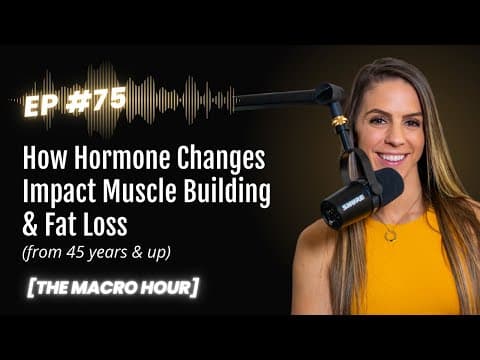 28 min
How Hormone Changes Affect Fat Loss and Muscle After 45
Episode 75 · Jul 3, 2023
 16 min
10,000 Steps a Day Not Working? What to Add After 40
Video · Jul 9, 2026
 14 min
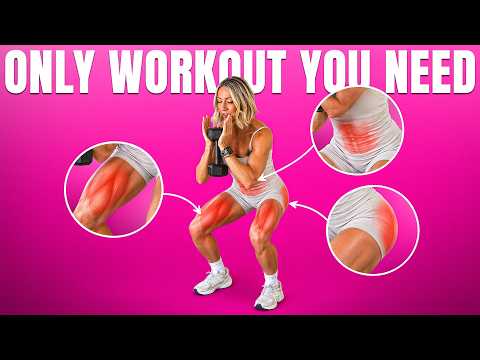
At-Home Dumbbell Workout After Menopause: 4 Key Moves
Video · Sep 16, 2026
Best of Fat Loss After 40
All 120 → 20 min
How to Get Lean After 40: What Actually Works for Women
Episode 402 · Oct 5, 2026
 30 min
Why Eating Less Isn't Helping You Lose Fat After 40
Episode 390 · Aug 24, 2026
 27 min
Why Eating More Helps You Lose Fat After 40
Episode 272 · Jun 30, 2025