

Chapters
In this video
Getting stage-lean is only half the story. In this clip from The WarriorBabe Show, Nikkiey Stott talks with Ida, a former bodybuilding competitor and coach, about what happens after the last show. Nikkiey shares that she gained 25 pounds back in one month after a competition. Ida describes how her body never felt normal again until years after she stopped competing.
Ida's first piece of advice is to pick a coach who will still be there when the show is over. That coach keeps you accountable, guides your reverse diet and helps with the mental side. Competition-level body fat is not healthy or sustainable, especially for women. Going from shredded back to normal is hard whether you do it carefully or gain weight fast. She also explains how a 56-week diet and back-to-back competitions and photo shoots wore her down.
She also talks about how her focus shifted to a job she loved and why she no longer feels drawn to competing. Her closing point applies whether you have ever stepped on stage or not: you won't feel good about your body until you become okay with who you are and stop defining yourself by what you weigh.
Key takeaways
- If you plan to compete, choose a coach who will stay with you after the show to keep you accountable, guide your reverse diet and support your mental game.
- Competition-level body fat is not healthy or sustainable, especially for women, so plan from the start to return to a healthy body fat percentage.
- Going from shredded back to normal is tough whether you do it correctly or gain 25 pounds almost instantly, so expect the transition to be hard.
- Being a coach or having experience doesn't mean you can skip having a coach of your own after competing.
- Very long dieting stretches wear you down: Ida's first competition year meant 56 weeks of dieting and left her exhausted and in pain.
- Moving straight from a final show into photo shoots and more competitions without a break was hard on Ida's body.
- Ida says it took her years after her last competition to find a physique she truly loved.
- Stop identifying yourself by how much you weigh, because that is what finally made Ida okay with her body.
Questions answered
Is it healthy to stay at competition body fat after a bodybuilding show?
No. Ida says it isn't healthy to stay at competition body fat, especially for women, and Nikkiey adds that it's so extreme that it isn't sustainable.
Do I need a coach after a bodybuilding competition?
Ida says it's one of the most important things to consider. Your coach should still be there when you're done to keep you accountable, help you reverse diet and help with your mental game, even if you're a coach yourself.
Is it normal to gain weight fast after a bodybuilding show?
Nikkiey shares that she gained 25 pounds back in one month after a competition. Ida says the transition from shredded back to normal is tough whether you do it correctly or gain the weight back right away.
How long does it take your body to recover after bodybuilding?
For Ida it took years. She last competed in 2017 and says her body didn't feel normal, and she didn't find a physique she loved, until a couple of years ago.
Why do some women stop wanting to compete in bodybuilding?
Ida says you'll never feel as victorious as you do at your leanest. That changes only when you become okay with who you are and stop identifying yourself by how many kilograms you weigh.
Full transcript
Nikkiey: Let's talk about this. So you did all the bodybuilding, you went through all of that jazz. I know you mentioned that there was a year where you were trying to get your body back to homeostasis, and it was a tough year. I want you to elaborate on that a little bit, because I know there are some people who come off of a competition and, I mean, I came off of mine and gained 25 pounds back in one month. I was like, what the hell just happened? So elaborate, share, because people who have competed or want to compete will relate, and they can understand what they could expect. What happened in that year?
Ida: Before I forget to say it, I think the most important thing is this. Whenever you go into a competition state of mind, like, okay, I'm going to compete, I'm going to find myself a coach and I'm going to do this right, one thing you really should consider is making sure that that coach will still be there when you're done. It's so important to have that person who keeps you accountable, who helps you reverse diet and helps you with your mental game.
Because trust me, for X amount of weeks you're going to fight your hardest to become your leanest. You're going to focus so much on getting these shreds. And then all of a sudden, you're going to have to focus on returning to a healthy body fat percentage, because it ain't healthy to be at a competition body fat percentage. It's just not.
Nikkiey: Especially for women.
Ida: Yeah, it is.
Nikkiey: Especially when you go through all of that for all of the time leading up to show day. And you're like, oh, man, I just want to maintain and keep my body. But that's not good. It's not healthy. It's not sustainable. It's so extreme, like you mentioned earlier, that you just cannot maintain that physique. So, yeah, share a little bit more. How did you get your body back to homeostasis? What did you have to go through?
Ida: Honestly, I don't think it ever went back to normal until a couple of years ago, and it's been so many years since I last competed.
I competed the entire 2015, right? And then I went off. And I did not keep my coach as close to me as I should have. And she did not really put an interest into that either. It's not her fault. I was just too new, right? And I was like, I can do this myself. I'm a coach too, I know. But no, it doesn't matter if you're a coach or if you're well experienced. It's always good to have that person.
But then I started to compete again, in late 2016. And that also went on, because the first year I competed, that was 56 weeks of dieting, because I had so many competitions.
Nikkiey: Holy moly. If y'all are watching on video, my jaw just dropped.
Ida: Yeah, it was a long, long diet. So I was so over it. I was so over being in that state of pain, because it's painful. And you're so tired. It's a nice feeling at the same time, but it's also a little bit dreadful.
But then 2016 also became very long, because I won. And then I won again, which took me to another one that came in 2017, in May. My last competition was at the end of November. Then I did a big photo shoot for a big magazine in mid-December. And then from December to May, you need to either go off a little bit or keep going a little bit. And that's when it got a little bit not good for my body.
It's always hard to go from the state of, okay, let's first get shredded, and then let's get normal again. And it doesn't even matter if you do it correctly or if you overeat everything and gain all those 25 pounds in an instant. It will still be tough.
Nikkiey: What made you, you know, you did all those years and then you decided to retire. I know we were catching up before the podcast and you were saying, I'm just not extreme. I'm just leading this lifestyle now, which we all admire. I admire it so much. I see you living the life of going through an awesome cut, then having the Fit Couple Foodies, which we'll talk about in a minute. But how is your lifestyle now compared to when you were a competitor?
Ida: Honestly, as I said, I never knew that it was the end when I stopped competing in 2017. I did not say the words "I'm done," because I expected myself to go back and compete. I was not done, because I was at the highest level as an amateur. I thought and I felt like the pro card could be a thing, but my entire focus shifted.
I got a dream job that I loved. And I was like, I can absolutely do this and compete at the same time. But am I willing to go to that extreme? I never got to that point, because I didn't feel ready. And not because I placed 10th or not, because again, it never bothered me what I placed or didn't place. That was not part of the idea. But I was really focusing on my profession and having my coaching business on the side, and I really needed to be present at my normal job.
I was just trying to find my way back to, okay, how can I eat? How should I plan my days around food and eating and training and all of that, when other people plan my day for me? There were just a lot of things that were mismatched. And then I moved.
Nikkiey: Is that when you moved to the States, in 2017?
Ida: No, 2019. So for two years, I was really going back and forth. Should I compete again or not? Or should I just focus on my job? So honestly, it took me until maybe two years ago to find my way back to a body, a physique, that I really loved. And that is why I don't feel the love for competing anymore, because you will never feel as victorious as you do when you're at your leanest, until you actually become okay with who you are and stop identifying yourself by how many kilograms you weigh.
Nikkiey: Oh my God. I just got the chills, girl.
Up next
Everything →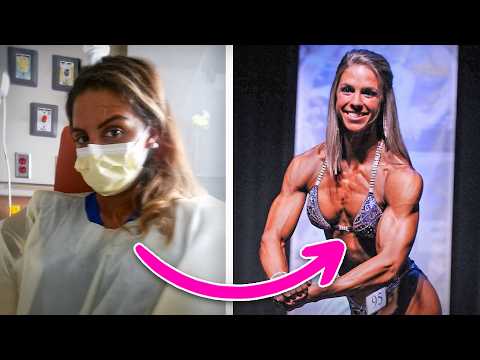 10 min
Why I Gained 25 Pounds After Winning a Bodybuilding Show
Video · Aug 28, 2025
 26 min
Why Does the Weight Keep Coming Back After a Diet?
Episode 278 · Jul 21, 2025
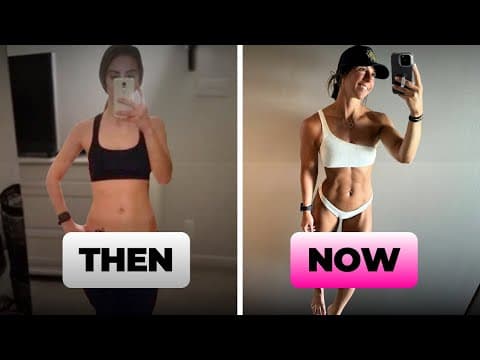 6 min
One Year of Reverse Dieting After 1,200 Calories
Video · Feb 1, 2025
Best of Metabolism, Eating More & Reverse Dieting
All 211 → 28 min
Signs You're Not Eating Enough as a Woman Over 40
Episode 308 · Nov 3, 2025
 28 min
Reverse Dieting for Women Over 40: Do You Need One?
Episode 284 · Aug 11, 2025
 34 min
Is Metabolic Damage Real? How Long Metabolism Repair Takes
Episode 354 · Apr 20, 2026